

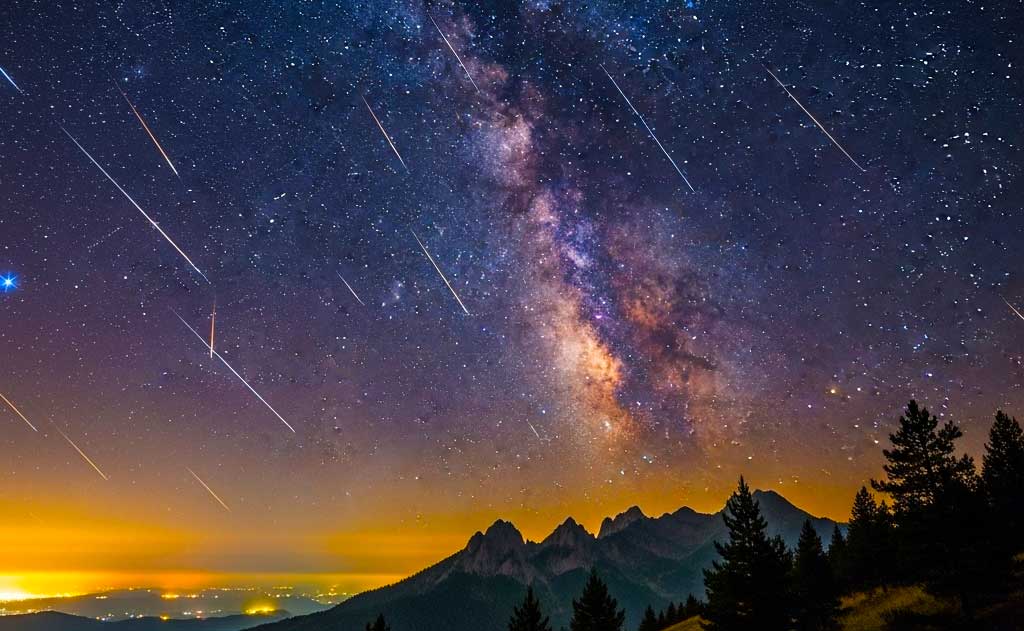
As the warm August nights of 2025 approach, the cosmos prepares to dazzle us with one of its most breathtaking performances—the Perseid meteor shower. Known as the “tears of Saint Lawrence,” this annual celestial event, peaking on August 11–13, promises up to 100 shooting stars per hour streaking across the sky at 36 miles per second. For stargazers across the USA, this is a bucket-list experience, but the key to unlocking its magic lies in finding the perfect dark-sky location and arming yourself with the right gear. Join us on a cosmic journey as we unveil the best spots to watch the Perseids in 2025, paired with essential gear recommendations, to ensure an unforgettable night under the stars for our readers at www.nriglobe.com.
The Perseid Magic: A Story Written in the Stars
Imagine lying on a blanket under a vast, inky-black sky, the air buzzing with anticipation. Suddenly, a brilliant streak of light slices through the darkness, followed by another, and then another. The Perseids, born from the debris of Comet 109P/Swift-Tuttle, are nature’s fireworks, igniting the Northern Hemisphere’s summer nights. This year, however, a waning gibbous moon (84% illuminated on August 12) will cast a glow that could dim fainter meteors. Fear not—by choosing a dark-sky location and timing your viewing wisely (late July to early August or after moonset in mid-August), you can still catch the shower’s brightest fireballs. The best time? After midnight until pre-dawn, when the radiant in the constellation Perseus climbs high.
To make your Perseid adventure truly spectacular, we’ve curated five premier stargazing spots across the USA, each paired with gear recommendations to elevate your experience. Whether you’re a seasoned astronomer or a first-time skywatcher, these destinations and tools will transform your night into a story you’ll recount for years.
1. Cherry Springs State Park, Pennsylvania: The East Coast’s Dark-Sky Gem
Nestled in the rolling hills of northern Pennsylvania, Cherry Springs State Park is a stargazer’s paradise, boasting some of the darkest skies east of the Mississippi. Designated as a Gold-tier International Dark Sky Park, it offers unobstructed views of the Milky Way and is just a 4.5-hour drive from New York City. Its Astronomy Field, equipped with concrete pads for setups and a reputation for hosting star parties, makes it ideal for Perseid viewing.
Why Here? The park’s remote location minimizes light pollution, and its high elevation ensures crisp, clear skies. Despite the bright moon in 2025, Cherry Springs’ darkness will let you spot the Perseids’ vibrant trails, especially after midnight.
Gear Recommendations:
- Telescope: Celestron NexStar 6SE ($1,099). This computerized Schmidt-Cassegrain telescope offers a 6-inch aperture for bright, detailed views of deep-sky objects like the Andromeda Galaxy between meteor sightings. Its GoTo mount tracks stars effortlessly, perfect for beginners and pros alike.
- Star Map: SkySafari 7 Pro App ($19.99, iOS/Android). This interactive planetarium app pinpoints Perseus and overlays real-time meteor radiant positions. Use its red-light mode to preserve night vision.
- Comfort Gear: A reclining camp chair (like the GCI Outdoor Freestyle Rocker, $70) and a warm blanket to stay cozy during pre-dawn hours.
Pro Tip: Arrive early to secure a spot in the Astronomy Field, and check the park’s website for Perseid viewing events hosted by the Cherry Springs Dark Sky Association.
2. Joshua Tree National Park, California: A Desert Sky Dreamscape
In the heart of Southern California’s Mojave Desert, Joshua Tree National Park is a surreal landscape of twisted trees and towering rock formations, crowned by some of the darkest skies in the West. Just 2–3 hours from Los Angeles, it’s a DarkSky.org-recognized haven where the Perseids will blaze against a star-studded canvas.
Why Here? The park’s arid climate and minimal light pollution create ideal conditions for meteor watching. Keys View, at 5,185 feet, offers panoramic skies, while Cottonwood Campground provides open, flat terrain for group viewing.
Gear Recommendations:
- Telescope: Orion SkyQuest XT8 Classic Dobsonian ($499). This 8-inch reflector telescope delivers stunning views of nebulae and star clusters, enhancing your Perseid experience. Its simple design suits all skill levels.
- Star Map: David H. Levy’s Guide to the Stars Planisphere ($12.99). This durable, 10-inch star wheel is tailored for 40°N latitude, perfect for Joshua Tree. Rotate it to August 12, 2025, to locate Perseus and Cassiopeia.
- Comfort Gear: A heavy-duty blanket (like the Rumpl Original Puffy, $125) for lying flat to scan the entire sky, plus a thermos for hot cocoa to ward off desert chills.
Pro Tip: Visit in late July (around July 24, near the new moon) to avoid moonlight interference, and use a light pollution map (like DarkSiteFinder.com) to pick the darkest spots within the park.
3. Central Idaho Dark Sky Reserve: America’s Darkest Frontier
Spanning 1,400 square miles, the Central Idaho Dark Sky Reserve is the only Gold-tier International Dark Sky Reserve in the USA. Towns like Stanley and Ketchum offer access to pristine skies where the Perseids will dazzle, even with a bright moon. This remote wilderness, flanked by the Sawtooth Mountains, feels like a portal to the cosmos.
Why Here? Its unparalleled darkness ensures vivid meteor trails, and wide-open valleys provide unobstructed views. The reserve’s commitment to preserving night skies makes it a bucket-list destination for 2025.
Gear Recommendations:
- Telescope: Meade Instruments Polaris 130mm Reflector ($229). Affordable yet powerful, this 5.1-inch reflector is great for viewing Jupiter and Venus (visible pre-dawn on August 12) alongside meteors. Its equatorial mount simplifies tracking.
- Star Map: National Geographic’s Stars Map ($24.95). This detailed, double-sided poster map highlights constellations and includes a Perseid radiant guide for August nights.
- Comfort Gear: A portable recliner (like the Nemo Stargaze Recliner, $249) for neck-friendly viewing, plus a red LED headlamp (Petzl Tikka, $34.95) to preserve night vision.
Pro Tip: Stay in Stanley and head to Redfish Lake for a serene viewing spot. Block the moon’s glare by positioning yourself in a valley shadow after midnight.
4. Mauna Kea, Hawaii: Stargazing Above the Clouds
Perched at 9,200 feet on Hawaii’s Big Island, Mauna Kea’s Visitor Information Station offers a once-in-a-lifetime Perseid experience. Renowned as a global astronomy hub, its high altitude and minimal light pollution deliver crystal-clear skies, even for Northern Hemisphere showers like the Perseids.
Why Here? Mauna Kea’s elevation places you above much of Earth’s atmosphere, enhancing meteor visibility. The Perseids’ radiant, though lower in the southern sky, still yields dozens of meteors per hour in this pristine environment.
Gear Recommendations:
- Telescope: Celestron StarSense Explorer DX 130AZ ($479). This 5.1-inch reflector uses your smartphone to navigate the sky, making it easy to find Perseus and deep-sky objects. Its alt-azimuth mount is beginner-friendly.
- Star Map: Stellarium Mobile Plus ($13.99, iOS/Android). This app offers high-precision star charts and a Perseid meteor shower simulation, ideal for Mauna Kea’s unique latitude (20°N).
- Comfort Gear: A warm sleeping bag (like the REI Co-op Magma 15, $429) to combat high-altitude cold, plus a tripod stool for quick setup.
Pro Tip: Join a guided stargazing tour at the Visitor Station, and arrive before sunset to acclimate to the altitude. Dress warmly—August nights here can dip below 40°F.
5. Goldendale Observatory State Park, Washington: A Northwest Stargazing Haven
Tucked in Washington’s Columbia River Gorge, Goldendale Observatory State Park is a Northwest gem built for astronomy. Its 5-acre hilltop site, equipped with public telescopes and regular star parties, is perfect for catching the Perseids’ peak under dark, rural skies.
Why Here? Goldendale’s low light pollution and open fields offer a clear view of the northeastern sky, where Perseus rises. The park’s educational programs add a layer of wonder to your meteor-watching night.
Gear Recommendations:
- Telescope: Sky-Watcher Heritage 130P FlexTube Dobsonian ($279). This compact 5.1-inch reflector is portable and delivers bright views of star clusters, ideal for Perseid downtime.
- Star Map: Pocket Sky Atlas by Roger Sinnott ($19.95). This compact, 80-page book features detailed charts for August skies, with Perseus clearly marked for Goldendale’s latitude (46°N).
- Comfort Gear: A lightweight camping pad (like the Therm-a-Rest Z Lite, $54.95) for ground viewing, plus a battery-powered hand warmer for chilly August nights.
Pro Tip: Attend a Perseid star party hosted by the observatory for telescope access and expert guidance. Bring a red flashlight to navigate without disrupting night vision.
Tips for a Stellar Perseid Experience
To maximize your Perseid adventure, follow these expert tips:
- Timing is Everything: Watch after midnight, ideally pre-dawn, when the radiant is highest. For 2025, late July (July 18–28) offers darker skies before the full moon on August 9. On peak nights, wait for the moon to set (around 3:30 a.m.) for better visibility.
- Go Dark: Use a light pollution map (like lightpollutionmap.info) to confirm your spot’s darkness. Avoid city lights and bright screens, which ruin night vision.
- Eyes on the Sky: No telescopes or binoculars are needed for meteors—they move too fast! Instead, lie flat, let your eyes adjust for 20–30 minutes, and scan 45 degrees from Perseus for longer trails.
- Capture the Moment: For photography, use a DSLR with a wide-angle lens (14–24mm, f/2.8), a tripod, and long exposures (30–90 seconds). Check Space.com’s astrophotography guide for details.
- Stay Comfortable: Bring layers, snacks, and a thermos. August nights can get chilly, especially at high altitudes.
A Cosmic Call to Adventure
The Perseid meteor shower of 2025 is more than an astronomical event—it’s a chance to connect with the universe and create memories that linger like a meteor’s glowing train. Whether you’re gazing from Pennsylvania’s forests, California’s deserts, Idaho’s mountains, Hawaii’s peaks, or Washington’s hills, these dark-sky havens promise a front-row seat to nature’s grandest light show. Armed with the right gear—a telescope for deep-sky exploration, a star map for navigation, and comfort essentials for long nights—you’re ready to embark on a stargazing journey that will ignite your sense of wonder.
For our www.nriglobe.com readers, this is your invitation to chase the stars. Plan your trip, pack your gear, and share your Perseid stories with us at contact@nriglobe.com. Let’s make 2025 a year of cosmic discovery under the Perseid sky!
Sources:






































nice