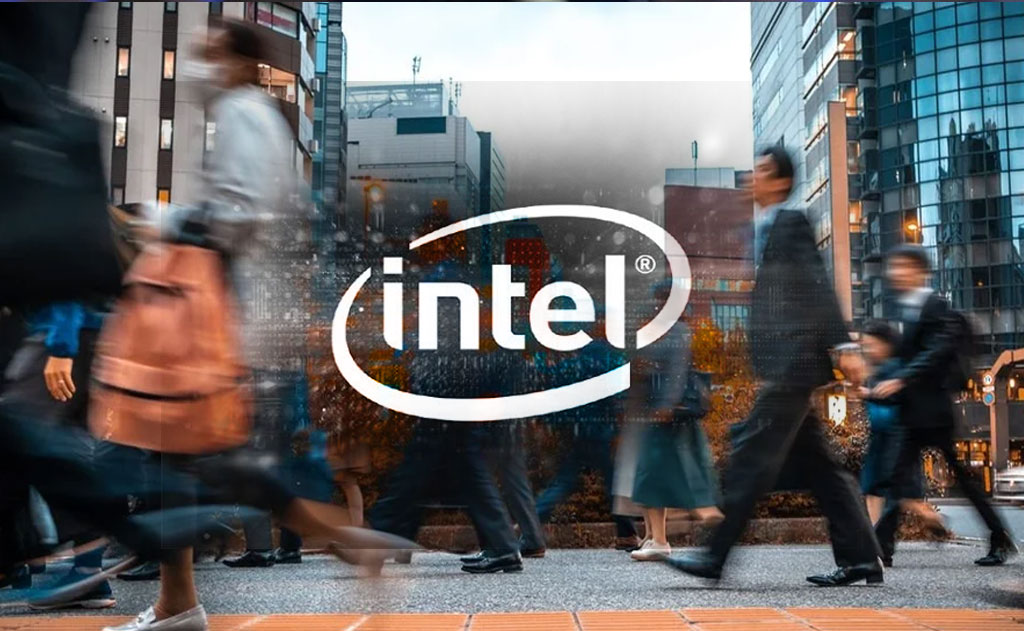
Santa Clara, CA, July 24, 2025 – Intel Corporation, a global leader in semiconductor manufacturing, has announced a significant wave of layoffs in July 2025, impacting over 5,000 employees across the United States. This restructuring, led by new CEO Lip-Bu Tan, aims to streamline operations, reduce costs, and refocus the company on its engineering-driven roots amidst fierce market competition and financial challenges. The layoffs, particularly affecting regions like Oregon, California, Arizona, and Texas, mark one of the largest workforce reductions in Intel’s history, raising concerns about job security in the tech industry.
Intel’s Massive Layoff Plan
Intel’s latest layoffs, announced in early July 2025, target 15% to 20% of its Intel Foundry division, which designs, manufactures, and packages semiconductors. With Intel’s workforce at approximately 108,900 as of December 2024, this could affect over 10,000 employees globally, with more than 5,000 job cuts confirmed in the U.S. alone. Oregon, Intel’s largest site, faces the heaviest impact, with 2,392 jobs slashed, a fourfold increase from initial estimates of 500. California follows with 1,935 layoffs, including 410 in Santa Clara and 174 in Folsom, while Arizona and Texas report 696 and several hundred job losses, respectively.
The layoffs span engineers, technicians, senior leaders, and back-office staff, with Intel Foundry’s manufacturing units hit hardest. CEO Lip-Bu Tan, who assumed leadership in March 2025, emphasized the need to eliminate bureaucracy and rebuild an “engineering-first” culture to regain Intel’s competitive edge. “The best leaders get the most done with the fewest people,” Tan stated in an April memo, signaling a leaner approach to operations.
Why Intel Is Cutting Jobs
Intel’s restructuring comes amid significant financial and competitive pressures. The company reported an $821 million loss in Q1 2025, following a $19 billion loss in 2024, as rivals like TSMC, AMD, and NVIDIA outpace Intel with advanced, cost-effective chips. Intel’s struggles in the AI chip market and slow progress in its contract manufacturing business have further strained its position. Plans to expand fabrication facilities in Ohio, Germany, and Israel have been paused due to declining revenue and shifting market priorities.
The decision to lay off workers follows a previous reduction of 15,000 jobs in August 2024 under former CEO Pat Gelsinger, bringing Intel’s total job cuts to over 20,000 in a year. The company is also exiting its automotive chip division and winding down its Clear Linux distribution, reflecting a broader pivot toward core competencies like the upcoming 18A process node, expected later in 2025.
Impact on Employees and Communities
The layoffs have sparked widespread concern among Intel’s workforce and local communities. In Oregon, where Intel employs 20,000, the cuts affect nearly 1 in 12 employees, with 450 jobs eliminated at the Jones Farm campus in Hillsboro alone. Employees have expressed frustration on platforms like X, with @thejobchick reporting, “Intel is cutting 15–20% of its Foundry workforce… over 10,000 jobs. No severance. Just job cuts based on performance scores, automation, and ‘strategic alignment.’” The lack of severance or buyouts has amplified anxiety among workers.
Local media in Oregon and Arizona note the economic ripple effects, as Intel remains a major employer in these regions. The company’s stock (INTC) rose 7.2% on July 15, closing at $23.59, possibly reflecting investor optimism about cost-cutting measures, though it later dipped 6.7% in premarket trading after Q1 earnings.
Industry Context and Future Outlook
Intel’s layoffs are part of a broader wave of tech industry downsizing in 2025, with over 80,000 jobs cut across 159 companies, including Microsoft (9,000), Indeed, and Glassdoor (1,300). The shift toward AI and automation is a key driver, with companies reallocating resources to remain competitive. Intel’s focus on its 18A and 14A process nodes aims to restore its technological lead, but skepticism persists, with @tomshardware noting Intel’s admission that it’s no longer among the top 10 semiconductor companies.
For Indian professionals, Intel’s cuts raise concerns about potential impacts on global hiring, especially in light of President Trump’s recent calls to prioritize American workers. While Intel has not explicitly linked its layoffs to Trump’s directive, the timing aligns with broader discussions about H-1B visas and offshore talent.
What’s Next for Intel?
As Intel prepares to announce Q2 2025 earnings on July 24, industry watchers expect further clarity on its restructuring plans. Tan’s vision of a “New Intel” emphasizes innovation and efficiency, but the scale of layoffs has drawn criticism. Posts on X, like @loomdoop’s, highlight tensions with U.S. policy, noting Intel’s $8.5 billion CHIPS Act grant in 2024, which promised 10,000 new jobs, now overshadowed by 20,000+ layoffs.
Intel’s future hinges on its ability to deliver on the 18A node and compete in the AI-driven market. For now, the layoffs signal a painful but strategic pivot for a company fighting to reclaim its position in a rapidly evolving industry.
Stay updated with NRI Globe for the latest on tech layoffs, industry trends, and more.