The Controversy Surrounding Trump’s AI Action Plan and Homelessness Executive Order
By NRIGlobe Staff
July 26, 2025
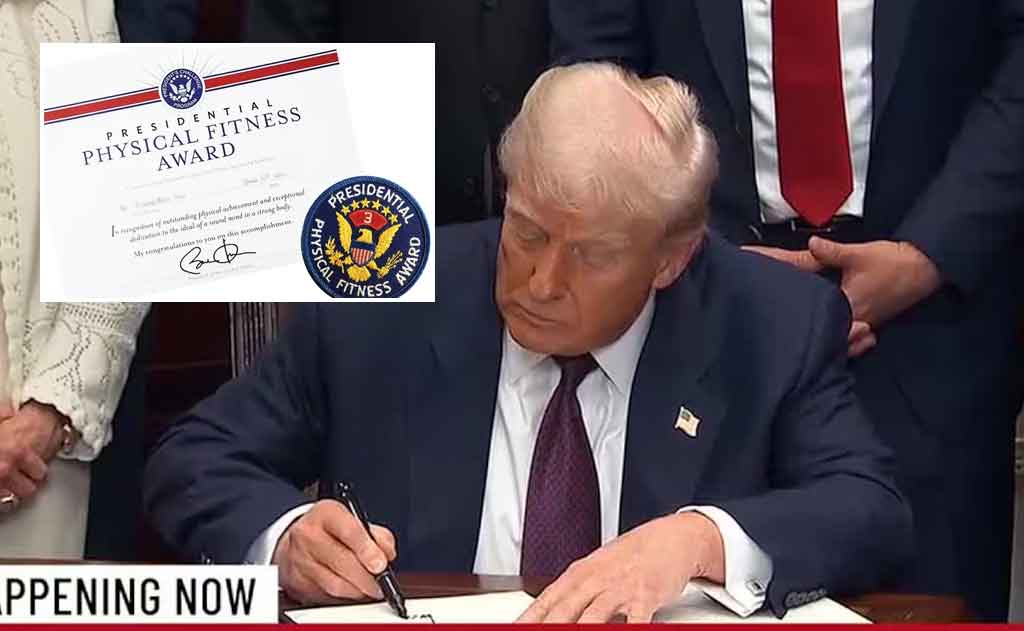
President Donald Trump’s recent executive actions have sparked heated debate, particularly his executive order on homelessness and the ambitious AI Action Plan. Signed on July 25, 2025, the homelessness order promotes involuntary civil commitment to address street encampments, while the AI Action Plan, unveiled a day earlier, aims to position the U.S. as a global leader in artificial intelligence by reducing regulations and fostering innovation. These policies, while distinct, intersect in their potential to reshape how the U.S. tackles social issues like homelessness through technology, but they also raise significant ethical concerns about civil liberties, equity, and efficacy.
Trump’s Homelessness Executive Order: A Push for Civil Commitment
The executive order on homelessness seeks to overhaul federal approaches to the crisis, which saw a record 770,000 people experiencing homelessness on a single night in 2024, according to the U.S. Department of Housing and Urban Development. The order encourages states and cities to reinstate civil commitment laws, allowing authorities to involuntarily place individuals with mental health issues or substance abuse disorders into treatment facilities if they are deemed a risk to themselves or others. It also redirects federal funding away from “housing first” policies—long supported by bipartisan consensus for prioritizing stable housing before treatment—toward programs requiring sobriety and mandatory treatment, and prioritizes grants for localities enforcing bans on urban camping, loitering, and drug use.
The White House frames the policy as a means to “restore public order” and provide “humane treatment” for those struggling with addiction or mental illness. “By removing vagrant criminals from our streets and redirecting resources toward substance abuse programs, the Trump administration will ensure that Americans feel safe,” said White House Press Secretary Karoline Leavitt. The order builds on a 2024 Supreme Court ruling allowing cities to penalize sleeping in public spaces, even when no shelter is available, and aligns with Trump’s campaign promise to clear homeless encampments.
However, critics argue the policy is punitive and disproportionately harms vulnerable groups. According to Axios, studies show civil commitment historically targets minorities, LGBTQ+ individuals, and people with disabilities, raising concerns about systemic bias. The American Psychiatric Association’s 2022 report notes that Black and multiracial patients are more likely to face involuntary hospitalization, even when controlling for confounding factors. The National Homelessness Law Center condemned the order, with spokesperson Jesse Rabinowitz stating, “Forced treatment is unethical, ineffective, and illegal. It does nothing to lower housing costs or help people make ends meet.” The ACLU echoed this, warning that institutionalization is “dangerous and deadly” and that the policy diverts resources from proven solutions like affordable housing and voluntary mental health care.
The AI Action Plan: A Tech-Driven Approach to Social Issues?
Announced on July 23, 2025, Trump’s “Winning the AI Race: America’s AI Action Plan” outlines over 90 policy actions to cement U.S. dominance in artificial intelligence. The plan, developed in response to a January executive order, emphasizes deregulation, infrastructure development, and workforce training to outpace global competitors like China. It includes three executive orders: one barring federal procurement of “ideologically biased” AI models, another streamlining permits for AI infrastructure like data centers, and a third promoting exports of American AI technology. The White House touts the plan as a pathway to economic prosperity, with Deputy Secretary of Labor Sonderling stating, “It will create a new era of economic prosperity for American workers.”
While the AI Action Plan does not explicitly address homelessness, its focus on workforce development and tech innovation opens the door to tech-driven solutions. For instance, the plan prioritizes AI skills training and partnerships with state governments to create industry-driven programs. Experts suggest AI could enhance homelessness interventions by optimizing resource allocation, predicting at-risk populations, or improving case management systems. For example, AI-powered platforms could analyze data from social services to identify individuals needing urgent housing or mental health support, potentially reducing reliance on coercive measures like civil commitment.
However, the plan’s deregulatory stance raises concerns. Critics, including Sarah Myers West of the AI Now Institute, argue it prioritizes corporate interests over public safety, potentially exacerbating issues like algorithmic bias. The Biden administration’s 2023 AI executive order, which Trump rescinded, emphasized safeguards against civil rights violations in AI applications. Without such protections, AI tools used in homelessness programs could perpetuate disparities, such as misidentifying minorities as high-risk for intervention, aligning with the same biases critics see in the civil commitment policy.
Ethical Concerns and Expert Opinions
The intersection of these policies—civil commitment and AI-driven solutions—has sparked a robust debate among experts. Dr. Talia Ringer, a computer science professor at the University of Illinois Urbana-Champaign, warns that poorly designed AI systems, like those lacking robust data quality controls, could amplify harmful outcomes. “If you disable safeguards to create ‘anti-woke’ AI, as some propose, you risk systems that reinforce biases or produce unreliable results,” she said, referencing recent controversies with AI models like xAI’s Grok.
On civil commitment, Dr. Ann Oliva of the National Alliance to End Homelessness calls the approach “unethical and ineffective,” citing evidence that forced treatment often fails to address root causes like housing shortages. A 2010 study noted that involuntary commitments dropped from 500,000 in the 1950s to 30,000 by the 1990s due to shifts toward community-based care, yet Trump’s order risks reversing this progress. The ACLU’s Deirdre Schifeling argues that combining civil commitment with Medicaid cuts—part of a recent Senate bill—will “increase bureaucracy and harm vulnerable Americans,” leaving fewer resources for voluntary care.
Proponents, however, see potential in integrating AI with civil commitment. Michael Kratsios, director of the White House Office of Science and Technology Policy, suggests AI could streamline mental health assessments, ensuring only those truly at risk are committed. Yet, without clear ethical guidelines, such applications could erode civil liberties, especially for marginalized groups historically overrepresented in institutional settings.
Why It Matters
Trump’s policies highlight a broader domestic policy debate: balancing public safety with individual rights and leveraging technology to address social challenges. The homelessness order’s push for civil commitment risks criminalizing poverty and mental illness, while the AI Action Plan’s deregulatory approach could either unlock innovative solutions or deepen systemic inequities. As cities like San Francisco and Washington, D.C., implement stricter anti-homelessness measures, the nation watches to see whether these policies will reduce homelessness or exacerbate the crisis.
For now, the controversy underscores the need for evidence-based, equitable solutions. As Jesse Rabinowitz of the National Homelessness Law Center notes, “Homelessness is a policy failure, not an individual one. Investing in housing and voluntary care, not forced institutionalization, is the path forward.” Whether AI can play a constructive role depends on whether the administration prioritizes ethical development alongside its quest for global dominance.
Stay informed on domestic policy and technology at www.nriglobe.com. For support or to learn more about homelessness solutions, visit the National Alliance to End Homelessness at www.endhomelessness.org.