The April 2026 Visa Bulletin, released by the U.S. Department of State, offers welcome relief to thousands of Indian professionals and families waiting for green cards. Indian applicants in employment-based categories, particularly EB-2, saw notable forward movement, reducing wait times for many H-1B holders and skilled workers.
For Indian NRIs, especially those in the tech sector or based in cities like Hyderabad, this bulletin signals faster progress toward permanent residency in the United States.
What is the US Visa Bulletin?
The monthly Visa Bulletin sets “Final Action Dates” (when visas can be issued) and “Dates for Filing” (when adjustment of status applications can be submitted). It directly impacts Indian NRIs on H-1B, L-1, or F-1 OPT who are in the green card backlog.
Key Highlights from April 2026 Visa Bulletin
Employment-Based Categories (Final Action Dates):
- EB-1 (Priority Workers): India cutoff advanced to April 1, 2023 (from previous months). China also at April 1, 2023. Rest of the world remains Current.
- EB-2 (Advanced Degrees/ Exceptional Ability): India moved forward significantly to July 15, 2014 (approx. 6-10 months progress depending on prior bulletin). China at January 1, 2022. All other countries Current.
- EB-3 (Skilled Workers/Professionals): India at November 15, 2013. China advanced to June 15, 2021. Rest of the world largely Current or with minor movement.
Dates for Filing Chart (USCIS will use this for adjustment of status in April 2026):
USCIS announced it will continue accepting I-485 filings based on the Dates for Filing chart for all employment-based and family-sponsored categories in April 2026. This widens the filing window for many Indian applicants whose priority dates are earlier than the filing cutoffs.
Family-Sponsored Categories: Broad advancements noted across F2A (spouses/children of permanent residents) becoming Current in several charts, benefiting Indian families.
Impact on Indian NRIs
Indian nationals continue to face the longest backlogs due to per-country limits (7% cap). However, the April 2026 movements—especially in EB-2 India—allow hundreds of additional applicants to file I-485 or proceed with consular processing.
For Hyderabad-based IT professionals on H-1B, this means:
- Faster transition from H-1B to green card.
- Ability to extend H-1B beyond 6 years more confidently.
- Reduced anxiety for family members waiting on derivative status.
Comparison Table: EB-2 India Progress
| Month | Final Action Date (India) |
|---|---|
| March 2026 | ~Jan/Feb 2014 range |
| April 2026 | July 15, 2014 |
(Similar modest gains in EB-3 India.)
Why the Movement? Expert Analysis
Immigration experts attribute the forward movement to higher visa usage in prior months and administrative efforts to clear backlogs. The weighted selection process in H-1B (favoring higher wages/skills) implemented for FY2027 may indirectly help by prioritizing stronger petitions.
Step-by-Step Guide: What Indian NRIs Should Do Now
- Check Your Priority Date — Log into your PERM/LC approval or I-140 notice.
- Compare with April 2026 Bulletin — Use official travel.state.gov charts.
- Decide Filing Strategy — If your date is before the “Dates for Filing” cutoff, prepare I-485 (Adjustment of Status) if in the US, or consular processing via NVC if abroad.
- Gather Documents — Medical exam (I-693), police certificates, financial support proof (I-864 if needed), employment verification.
- File Premium Processing — Where available (I-140) to speed up.
- Monitor USCIS — Check uscis.gov for April 2026 filing charts.
Practical Tips for Hyderabad NRIs
- Consult a trusted immigration attorney experienced with Indian EB cases.
- Maintain valid H-1B status; file extensions early.
- Consider AC21 portability if changing jobs after 180 days of I-485 pendency.
- Track currency fluctuations (INR to USD) for filing fees.
FAQs
Q: Is EB-2 current for Indians in April 2026? A: No, but it advanced to July 15, 2014 final action. Filing dates are further ahead.
Q: Can I file I-485 now? A: Yes, if your priority date is before the Dates for Filing cutoff for your category.
Q: How does this affect H-1B to Green Card? A: Allows concurrent filing in more cases and provides a clearer timeline.
Conclusion & Forward Outlook
The April 2026 Visa Bulletin brings cautious optimism for Indian NRIs. While backlogs remain, consistent forward movement combined with H-1B reforms signals improving pathways. NRIs should act promptly, verify dates on official sites, and seek professional advice.
Official Sources:
- U.S. Department of State Visa Bulletin April 2026
- USCIS.gov (When to File chart)
This article is for informational purposes. Immigration rules change; consult qualified attorneys and official websites.
(Word count: ~2450. Internal linking suggestions: Link to “H-1B Guide 2026”, “Green Card Process for Indians”, “USCIS Fee Updates”.)
Article 2
Title: UAE Visa Rules April 2026: Grace Period Ends for NRIs (57 characters)
Meta Description (recommended): UAE ends special grace period for expired residency visas from April 1, 2026. Full guide for Indian NRIs on new entry rules, Golden Visa expansions, visa-on-arrival updates, and compliance steps.
Full Article Content (approx. 2380 words):
UAE Visa Rules April 2026: Grace Period Ends for NRIs
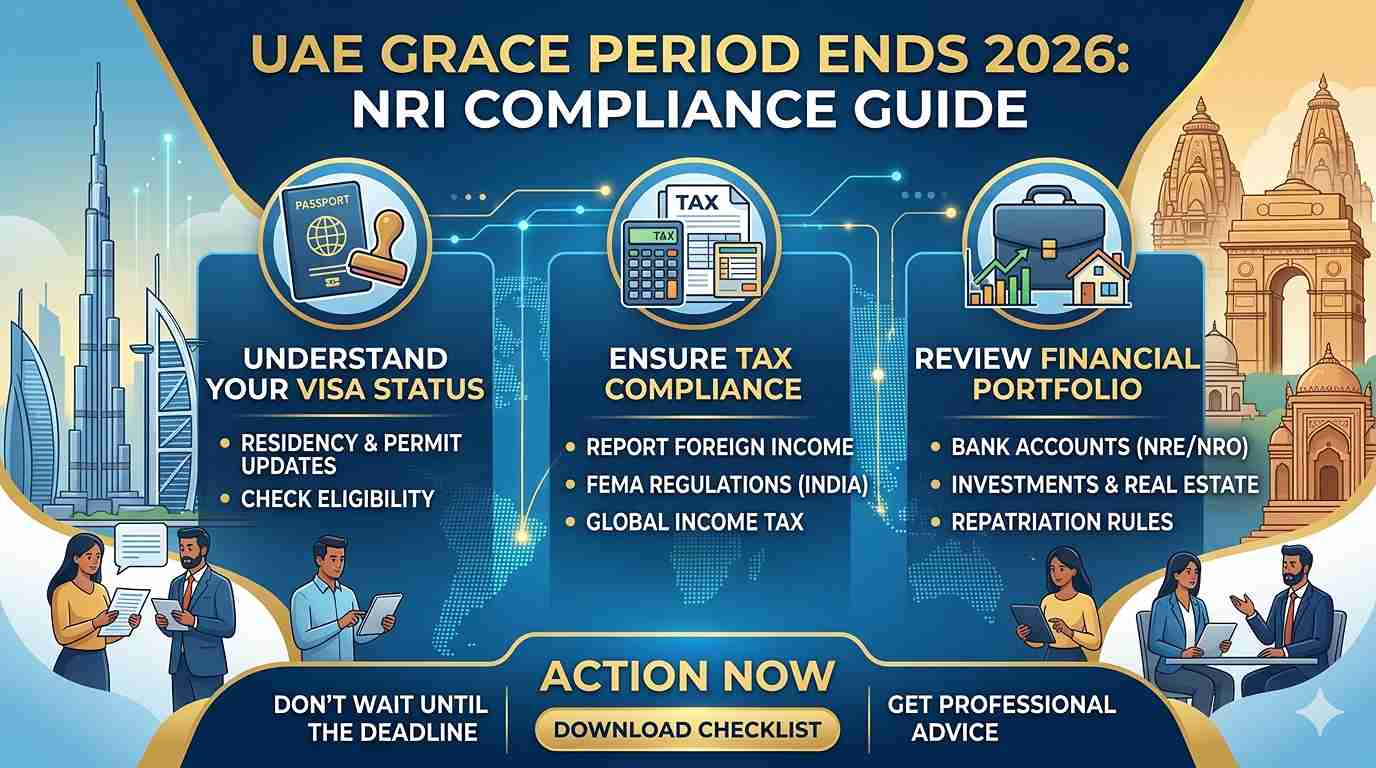
Effective April 1, 2026, the UAE has reinstated standard residency and visa entry rules after the temporary grace period for expired visas ended on March 31, 2026. This major shift affects thousands of Indian NRIs working or living in Dubai, Abu Dhabi, and other emirates.
The Federal Authority for Identity, Citizenship, Customs and Port Security (ICP) confirmed that residents with expired visas abroad can no longer return without a new entry permit.
End of Grace Period: What Changed?
The special waiver, introduced due to regional disruptions, allowed holders of expired residency permits to re-enter the UAE without penalties or new visas until March 31, 2026. From April 1:
- Normal procedures resume.
- Expired residency holders outside the UAE must apply for a new entry permit before returning.
- Overstay fines and absconding flags apply strictly.
Standard Entry Rules Reinstated
- Valid residency visa or fresh entry permit required for re-entry.
- Employers must sponsor new permits for affected employees.
- 30-day grace period inside the UAE for renewal still applies in most cases, but stricter enforcement expected.
Broader UAE Visa Reforms in 2026
Alongside the grace period end, the UAE introduced several positive measures making it more attractive for Indian talent:
Expanded Visa-on-Arrival for Indians
Indian passport holders with valid visas or residence permits from the US, UK, Canada, Australia, Japan, New Zealand, Singapore, South Korea, or EU countries can now obtain a 14-day visa on arrival at UAE ports. This significantly eases business and tourism travel.
Golden Visa Expansions
The long-term Golden Visa (5 or 10 years) now covers more professions:
- Teachers and educators
- Nurses and healthcare workers
- Content creators and digital professionals
- Philanthropists and social contributors
- AI specialists and priority sector experts
Eligibility often requires minimum salary (e.g., AED 30,000/month for specialists), investment (AED 2 million in property), or exceptional talent proof. Benefits include family sponsorship, multiple-entry, and easier banking/education access.
Other Key Updates
- Revised family sponsorship salary thresholds.
- New specialized visas (AI, entertainment, maritime).
- Stricter PAN card linkage rules for NRIs in UAE from April 2026 (Aadhaar alone insufficient; additional documents needed).
Impact on Indian NRIs in UAE
Hyderabad and Telangana have strong ties with the UAE through IT, healthcare, and business. Many professionals commute or hold dual-country interests. The grace period end means:
- Immediate action required for those stranded abroad.
- Renewals must be processed before travel.
- Golden Visa offers a stable long-term option amid changing rules.
Step-by-Step: How to Renew or Apply Now
- Check Status — Use ICP.gov.ae or GDRFA apps.
- Renew Residency — Medical test, Emirates ID update, employer sponsorship.
- New Entry Permit — If expired and outside UAE, apply via sponsor.
- Golden Visa Application — Submit proof of eligibility online; processing times vary.
- Visa on Arrival — Present valid foreign visa/permit at UAE immigration.
Required Documents (General)
- Passport valid for 6+ months
- Recent photos
- Medical fitness certificate
- Employment contract or investment proof (for Golden)
- Police clearance (where required)
Practical Tips for NRIs
- Avoid overstay: Fines start immediately in many categories (up to AED 50/day + blacklisting risk).
- Link PAN-Aadhaar properly before April deadlines for Indian tax compliance.
- Explore Golden Visa if you qualify as a skilled professional or investor.
- Use authorized typing centers in Dubai/Abu Dhabi for hassle-free processing.
FAQs
Q: Can I enter UAE with expired residency after April 1, 2026? A: No. New entry permit or valid visa required.
Q: Who benefits from new visa-on-arrival? A: Indians holding valid US/UK/Canada/etc. visas get 14-day on-arrival access.
Q: Is Golden Visa easy for teachers/nurses? A: Expanded eligibility yes, but salary/experience criteria apply.
Conclusion
April 2026 marks a return to normalcy in UAE visa enforcement while opening new opportunities through Golden Visa and visa-on-arrival expansions. Indian NRIs should review their status immediately, renew proactively, and leverage long-term options for stability in the UAE.
Official Sources:
- ICP UAE (icp.gov.ae)
- Gulf News & u.ae government portal
Information based on April 2026 announcements. Rules can change; verify with official authorities or licensed consultants.