
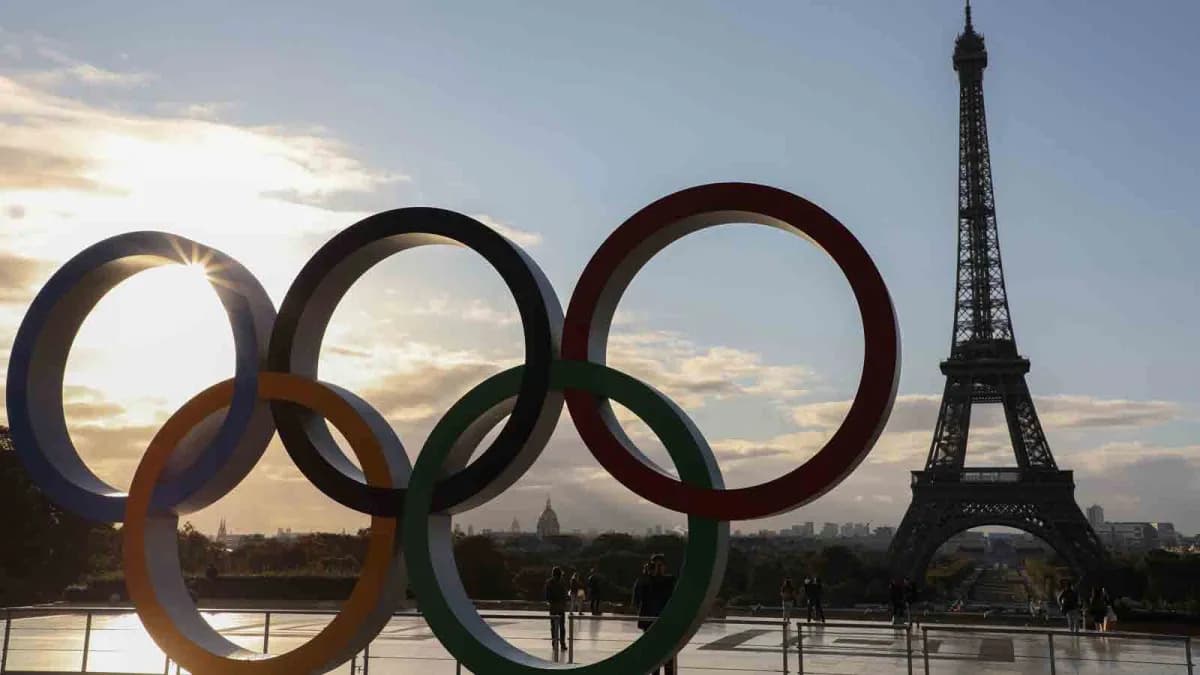
The Paris 2025 Olympics: A Grand Opening and Thrilling Early Events in Swimming, Gymnastics, and Athletics
A Revolutionary Opening Ceremony
The Paris 2024 Olympics set a new standard for Olympic opening ceremonies by hosting the event outside a traditional stadium, with athletes parading along a six-kilometer stretch of the Seine River in a flotilla of 85 boats. The 2025 Games are expected to continue this innovative approach, with organizers promising an even more immersive and inclusive spectacle on August 10, 2025. Directed by artistic visionary Thomas Jolly, who orchestrated the 2024 ceremony, the 2025 opening is anticipated to blend France's rich cultural heritage with modern flair, emphasizing themes of unity, diversity, and shared humanity.
The ceremony will likely begin at Pont d'Austerlitz, with athletes from over 200 National Olympic Committees (NOCs) sailing toward Pont d'Iéna, passing iconic landmarks such as Notre-Dame, the Louvre, and the Eiffel Tower. In 2024, the event featured performances by global stars like Lady Gaga, Aya Nakamura, and Céline Dion, whose rare appearance closed the show with a breathtaking performance atop the Eiffel Tower. For 2025, rumors suggest an even more star-studded lineup, potentially including French artists like Daft Punk or international icons to reflect the global nature of the Games. The ceremony will incorporate advanced technology, such as drone displays and augmented reality elements, to create a visually stunning experience for the estimated 326,000 spectators along the Seine and millions watching worldwide.
A key highlight will be the lighting of the Olympic cauldron, a moment that captivated audiences in 2024 when a 30-meter-tall floating ring, powered by an electric flame, rose above the Tuileries Garden. French President Emmanuel Macron has emphasized preserving the Olympic spirit, and the cauldron's return is expected to be a focal point, symbolizing continuity and renewal. The 2025 ceremony will also pay homage to the Games' gender parity milestone, with equal representation of male and female athletes, a practice that will continue to shape the event's narrative.
Despite the success of the 2024 ceremony, challenges such as heavy rain tested organizers' resilience. For 2025, contingency plans are in place to ensure weather does not dampen the festivities. The parade of nations, a centerpiece of the ceremony, will see NOCs represented by flagbearers—often one male and one female—symbolizing equality. With an estimated 10,500 athletes participating, the opening ceremony will set the tone for a Games that aims to surpass its predecessor in spectacle and impact.
Early Events: Swimming
Swimming, one of the Olympics' marquee sports, will kick off on August 10, 2025, at the Paris La Défense Arena, a state-of-the-art venue that hosted pool events in 2024. The swimming program includes 35 pool events (17 for men, 17 for women, and one mixed relay) and two marathon swimming events in the Seine River between Pont Alexandre III and Pont de l'Alma. Early events will feature high-stakes races such as the men's and women's 100m freestyle, 200m butterfly, and 400m individual medley, setting the stage for intense competition.
In 2024, France's Léon Marchand emerged as a national hero, winning gold in all four individual events he entered: the 200m breaststroke, 200m butterfly, 200m individual medley, and 400m individual medley. His unprecedented double win in the 200m breaststroke and butterfly on the same night captivated audiences. For 2025, Marchand is expected to return, aiming to defend his titles and potentially break more records. The men's 100m freestyle, where China's Pan Zhanle set a world record of 46.40 seconds in 2024, will be a focal point, with American sprinters like Caeleb Dressel and Australia's Kyle Chalmers challenging for the podium.
The women's events will see stars like Katie Ledecky (USA) and Ariarne Titmus (Australia) battling in the 800m and 1500m freestyle. The mixed 4x100m medley relay, a thrilling addition to the Olympic program, will showcase teamwork and strategy, with Team USA's 2024 world record performance setting a high bar. However, concerns about the pool's depth (2.15 meters in 2024, shallower than Tokyo's 3 meters) may resurface, as some attributed slower times to increased wave activity. Organizers have promised improvements to ensure optimal conditions for record-breaking performances.
Marathon swimming, scheduled for August 12-13, 2025, will feature the men's and women's 10km races in the Seine. In 2024, Hungary's Kristof Rasovszky and the Netherlands' Sharon van Rouwendaal claimed gold, and similar battles are expected this year. Water quality in the Seine, a concern in 2024 due to pollution-related cancellations of triathlon training, will be closely monitored to ensure athlete safety.
Gymnastics: Artistic, Rhythmic, and Trampoline
Gymnastics events, spanning artistic, rhythmic, and trampoline disciplines, will begin on August 10 at the Bercy Arena (artistic and trampoline) and Porte de la Chapelle Arena (rhythmic). Artistic gymnastics, featuring men's and women's team qualifications, will draw massive crowds, with stars like Simone Biles (USA) expected to dominate. In 2024, Biles led the U.S. women's team to gold, excelling in vault, beam, floor exercise, and uneven bars. Her return in 2025, potentially her final Olympics before the 2028 Los Angeles Games, will be a major storyline.
The men's team event will see the U.S. aiming to build on their 2024 bronze, driven by athletes like Frederick Richard and Stephen Nedoroscik, whose pommel horse heroics secured a medal. Japan, which claimed gold in 2024, and China, the silver medalists, will remain formidable opponents. Individual all-around and apparatus finals, scheduled for August 11-13, will showcase precision and artistry, with athletes like Brazil's Rebeca Andrade challenging for medals.
Rhythmic gymnastics, a female-only discipline, will run from August 12-14, featuring individual and group competitions. The Porte de la Chapelle Arena will host mesmerizing routines combining dance, apparatus handling (hoop, ball, clubs, ribbon), and music. In 2024, no French medals were recorded in this discipline, but European powerhouses like Bulgaria and Israel dominated. Trampoline events, set for August 11, will include men's and women's finals, with China's consistent excellence making them favorites.
Athletics: The Heart of the Olympics
Athletics, held at the Stade de France, will begin on August 11, with early events including the men's and women's 100m heats, marathon, and field events like the high jump and hammer throw. The 100m, often dubbed the "fastest race on Earth," will feature American sprinters like Noah Lyles and Sha'Carri Richardson, who aim to reclaim U.S. dominance. In 2024, Jamaica's sprinters, including Elaine Thompson-Herah, were strong contenders, and their rivalry with the U.S. will intensify.
The marathon, starting at the Alexandre III bridge, will follow a scenic route through Paris, passing landmarks like the Louvre and Eiffel Tower. The 2024 marathon saw Ethiopia's Tamirat Tola and the Netherlands' Sifan Hassan take gold, and similar long-distance battles are expected. The mixed marathon race walk relay, a new event in 2024, will return, adding excitement with its strategic pacing and teamwork.
Field events, such as the women's high jump featuring Australia's Nicola Olyslagers and the men's hammer throw, will showcase technical skill. The Stade de France, a 80,000-seat venue, will be electric as fans cheer for early medal moments. Sustainability efforts, a hallmark of Paris 2024, will continue, with venues like the Stade de France repurposed to minimize environmental impact.
Legacy and Expectations
The Paris 2025 Olympics aim to build on the successes and lessons of 2024. The gender parity milestone, with 50% male and 50% female athletes, will remain a cornerstone, reflecting the IOC's commitment to equality. Sustainability initiatives, such as reused facilities and eco-friendly medals featuring Eiffel Tower iron, will reinforce Paris's reputation as a forward-thinking host. However, challenges like medal tarnishing, reported in 2024, have prompted organizers to enhance quality control for 2025 awards.
The early days of the Games will set the tone for a two-week celebration of sport and culture. Swimming will deliver high-octane races, gymnastics will dazzle with gravity-defying feats, and athletics will ignite the track and field. As Paris welcomes the world, the 2025 Olympics promise to be a beacon of unity, resilience, and human achievement.
Further reading: See the official Olympic Games website and Wikipedia's Olympic Games reference for comprehensive event schedules and athlete information.