Vishu 2026 is one of the most joyous and spiritually significant festivals celebrated by the Malayali community in Kerala and around the world. Marking the Malayalam New Year and the arrival of a new solar cycle, Vishu is a time of renewal, gratitude, and divine blessings. The word Vishu is derived from the Sanskrit word Viṣuvam, meaning “equal” — a nod to the ancient tradition of marking the spring equinox when day and night are of equal length.
From the sacred pre-dawn ritual of Vishu Kani to the grand vegetarian feast of Vishu Sadhya, every tradition carries deep cultural and spiritual meaning. Whether you are celebrating in Kerala, in the Indian diaspora, or simply seeking to understand this beautiful festival, this comprehensive guide by HinduTone.com has everything you need.
 Vishu 2026 — Key Dates & Timings at a Glance
 Vishu 2026 — Key Dates & Timings at a Glance
| Detail | Information |
|---|---|
 Vishu 2026 Date (Kerala) Vishu 2026 Date (Kerala) | Wednesday, April 15, 2026 |
 Also Referenced (some calendars) Also Referenced (some calendars) | Tuesday, April 14, 2026 |
 Vishu Kani Muhurat Vishu Kani Muhurat | 04:40 AM – 06:10 AM (IST) |
 Mesha Sankranti Mesha Sankranti | Sun enters sidereal Aries |
 Malayalam Month Malayalam Month | 1st day of Medam (Medam 1) |
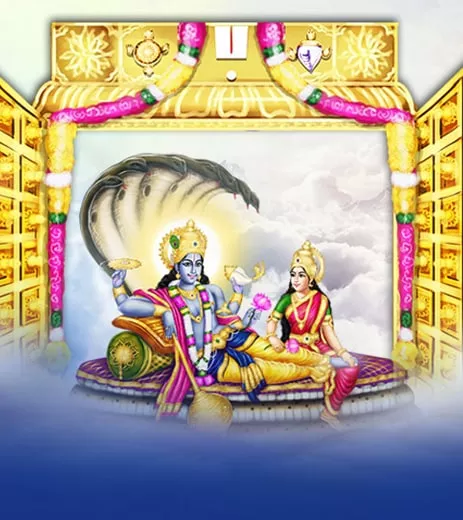
 Presiding Deity Presiding Deity | Lord Vishnu / Lord Krishna |
 Festival Flower Festival Flower | Kani Konna (Cassia fistula / Indian Laburnum) |
 Special Feast Special Feast | Vishu Sadhya & Vishu Kanji |
 Why April 15 in 2026? According to Kerala’s traditional Panchang rules, when Mesha Sankranti (the Sun’s entry into sidereal Aries) occurs after local sunset on April 14, the festival is observed at the next sunrise — making April 15, 2026 the official Vishu day in Kerala.
Table of Contents
- What is Vishu? History & Origin
- Spiritual Importance & Significance
- Vishu Kani — The Sacred Ritual of First Sight
- Vishu Puja Vidhi — Step-by-Step Rituals
- How Vishu is Celebrated
- Vishu Sadhya — The Grand Feast
- Vishu & Other Indian New Year Festivals
- FAQs About Vishu 2026
1. What is Vishu? History & Origin
Vishu is the traditional new year festival of the Malayali people, observed on the first day of the Malayalam solar month of Medam. Astronomically, it marks Mesha Sankranti — the moment the Sun transitions from Pisces (Meena Rashi) into Aries (Mesha Rashi), signalling the start of a new solar year in the Indian sidereal calendar.
The festival has been celebrated for centuries across Kerala, Tulu Nadu, and Mahe. Historically, Vishu aligned with the spring equinox, though due to the precession of the equinoxes, the two dates are now approximately 24 days apart. Nevertheless, Vishu continues to symbolize balance, light, and renewal — echoing the equinox’s timeless message of harmony between darkness and light.
Legends Behind Vishu
Two popular legends give Vishu its divine significance. In one version, Lord Krishna slew the demon Narakasura on this day, freeing the world from evil and ushering in an era of peace and prosperity. In another legend, the demon king Ravana had blocked the sun god Surya Dev from rising in the east. After Ravana’s defeat at the hands of Lord Rama, the sun was finally free to rise — and Vishu commemorates that celestial liberation.
2. Spiritual Importance & Significance of Vishu
Vishu carries profound spiritual significance for Hindus, especially Malayalis. It is much more than a calendar event — it is a day of intention-setting, gratitude, and seeking divine grace for the year ahead.
The Sanskrit root of Vishu — meaning “equal” — reflects the festival’s philosophy: life is a balance of joy and sorrow, abundance and scarcity. By arranging the Vishu Kani with items representing wealth, knowledge, food, and beauty, devotees acknowledge life’s wholeness and invite divine blessings to navigate it with wisdom.
Vishu also marks an important agricultural milestone. It announces the harvest season and is regarded as an auspicious time to begin new ventures, investments, marriages, and education. The circulation of Vishukaineetam (the gifting of money) reflects the belief that wealth shared multiplies — underlining Vishu’s message of generosity and community.
3. Vishu Kani — The Sacred Ritual of First Sight
The most treasured Vishu tradition is the Vishu Kani (also spelled Vishukani). The Malayalam word “kani” literally means “that which is seen first.” On Vishu morning, before opening their eyes to anything else, family members — often guided blindfolded — gaze upon a beautifully arranged display of auspicious objects. Seeing the Kani as the very first sight of the new year is believed to bring prosperity, good health, and happiness throughout the year.
Who Prepares the Vishu Kani?
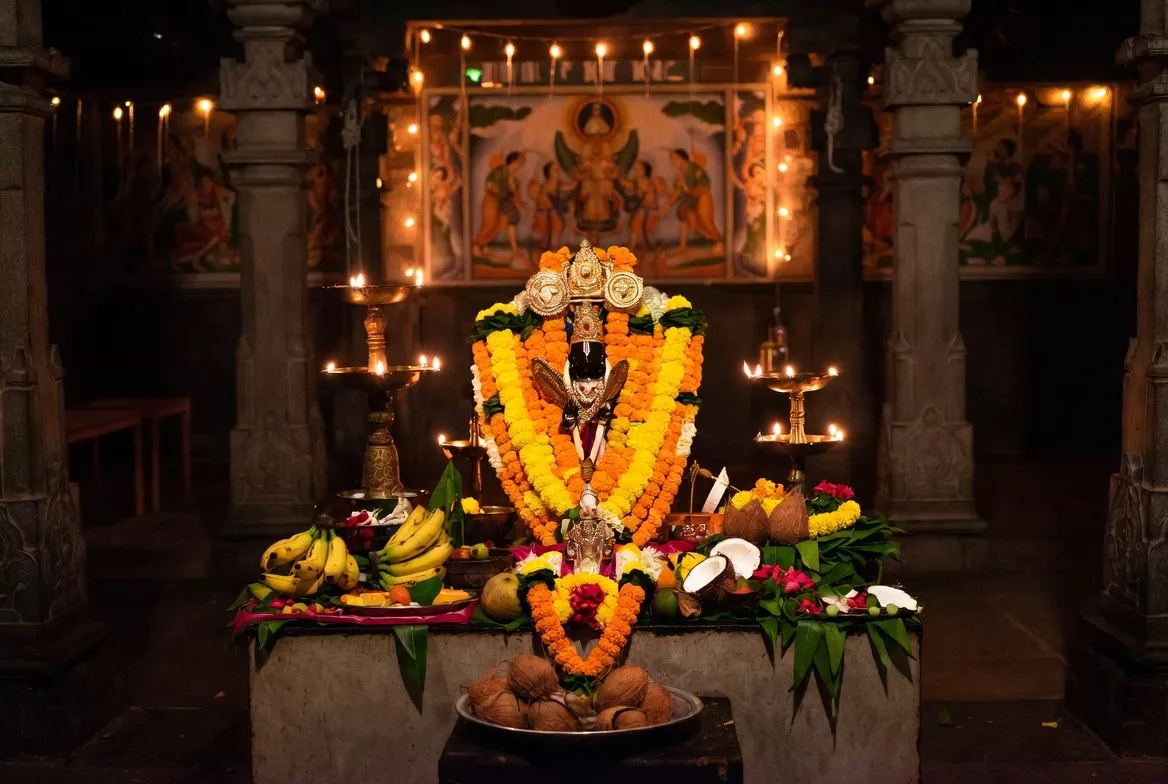
The Vishu Kani is traditionally prepared the night before (April 14, 2026) by the women of the household. It is arranged in a large, polished bell-metal vessel called an Uruli, placed before an idol or image of Lord Vishnu or Lord Krishna.
Items in the Vishu Kani
| Item | Significance |
|---|---|
 Kani Konna Flowers (Cassia fistula) Kani Konna Flowers (Cassia fistula) | Golden blossoms heralding new beginnings |
 Nilavilakku (Oil Lamp) Nilavilakku (Oil Lamp) | Divine light and knowledge |
 Gold Coins or Silver Items Gold Coins or Silver Items | Wealth and material prosperity |
 Aranmula Kannadi (Bronze Mirror) Aranmula Kannadi (Bronze Mirror) | Self-reflection and inner abundance |
 Coconut (cut open) Coconut (cut open) | Purity, fertility, and completeness |
 Raw Rice & Grains Raw Rice & Grains | Nourishment and abundance |
 Golden Lemon / Cucumber Golden Lemon / Cucumber | Health and vitality |
 Jackfruit & Mango Jackfruit & Mango | Tropical abundance and sweetness of life |
 Betel Leaves & Arecanut Betel Leaves & Arecanut | Auspiciousness and sacred offerings |
 Holy Scripture (Ramayana / Bhagavad Gita) Holy Scripture (Ramayana / Bhagavad Gita) | Wisdom and spiritual guidance |
| Lord Krishna’s Idol or Image | Divine blessings and grace |
 New Cloth (Pattu) New Cloth (Pattu) | Renewal, fresh start |
The mirror in the Kani holds special symbolism — seeing yourself within the abundance is a teaching that you too are part of the divine prosperity you seek.
4. Vishu Puja Vidhi — Step-by-Step Rituals
Step 1: Prepare the Vishu Kani (Night of April 14)
 Step 1: Prepare the Vishu Kani (Night of April 14)
On the eve of Vishu, the senior woman of the household cleans the home, takes a ritual bath, and carefully arranges the Kani in the puja room. The Uruli is filled with all sacred items, the Nilavilakku is lit, and the idol of Lord Krishna is placed at the centre. The room is then closed until dawn.
Step 2: Kanikanal — Viewing the Kani at Dawn (April 15, ~4:40 AM)
 Step 2: Kanikanal — Viewing the Kani at Dawn (April 15, ~4:40 AM)
During the auspicious Brahma Muhurat (4:40 AM – 6:10 AM IST), family members are awakened one by one, guided with closed eyes to the puja room, and opened their eyes to the Kani as their very first sight of the new year. Heartfelt prayers are offered to Lord Vishnu and Lord Krishna.
Step 3: Vishu Puja & Scriptural Recitation
 Step 3: Vishu Puja & Scriptural Recitation
After viewing the Kani, families perform a formal puja with incense, flowers, and lamps. Verses from the Ramayana, Bhagavad Gita, or Vishnu Sahasranama are chanted. Devotional songs (Vishu Paattu) dedicated to Lord Krishna fill the home with sacred vibrations.
Step 4: Temple Visit (Morning)
 Step 4: Temple Visit (Morning)
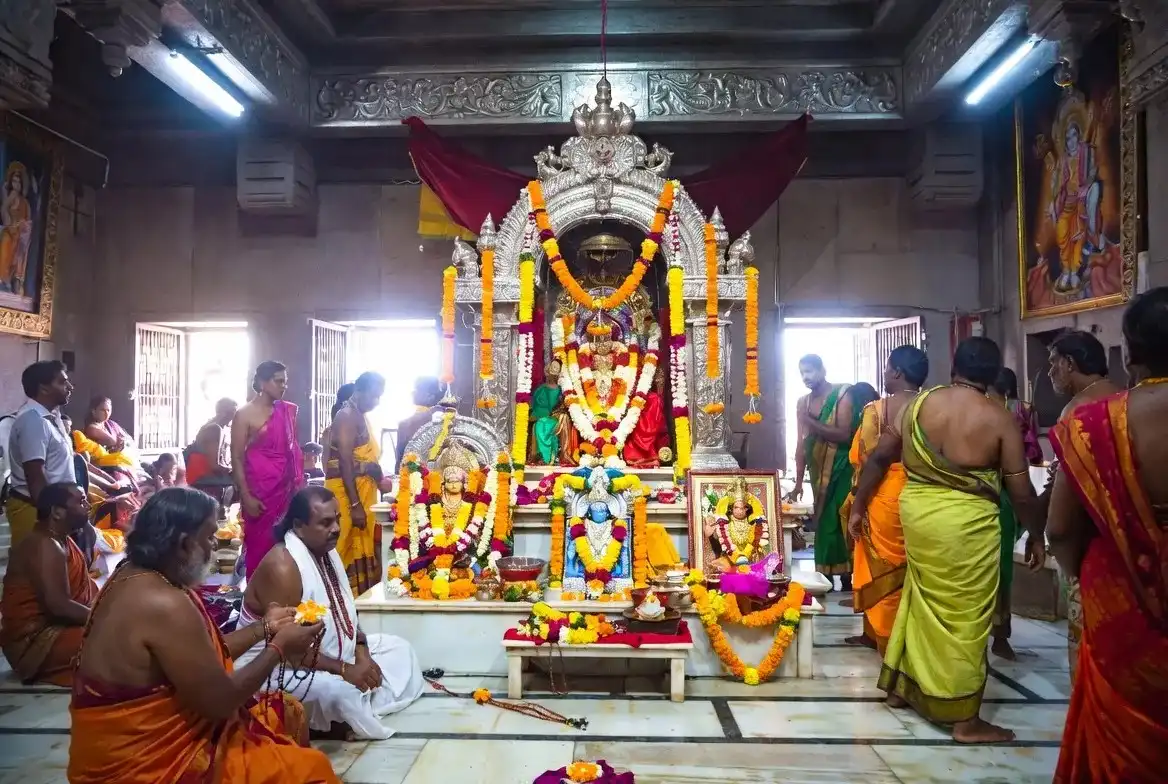
Families visit nearby temples — especially those dedicated to Lord Krishna and Lord Vishnu — for special Vishu puja and blessings. Famous temples that hold grand Vishu celebrations include Guruvayur Temple, Sabarimala, and the Sri Padmanabhaswamy Temple in Thiruvananthapuram.
Step 5: Vishukaineetam — Gifting of Money
 Step 5: Vishukaineetam — Gifting of Money
After puja, elders gift coins, currency, or new clothes to children, younger relatives, and household workers. This beloved tradition, called Vishu Kaineetam, symbolizes the sharing of prosperity and the passing of blessings across generations. Children touch the feet of elders as a mark of respect and gratitude.
Step 6: New Clothes & Festive Celebrations
 Step 6: New Clothes & Festive Celebrations
Everyone dresses in new clothes (Puthukodi) as a symbol of a fresh start. Children burst firecrackers to add colour and joy to the morning. Homes are decorated with floral arrangements, and the sweet fragrance of Kani Konna blossoms fills every room.
5. How Vishu is Celebrated
Vishu beautifully blends the sacred and the social. The day begins with solemnity and prayer, then opens into warmth, family bonding, and festive joy.
At Home: Houses are cleaned, decorated with Kani Konna flowers, and kolam-style floral designs are placed at the entrance. The Nilavilakku burns throughout the day as a symbol of enduring divine light.
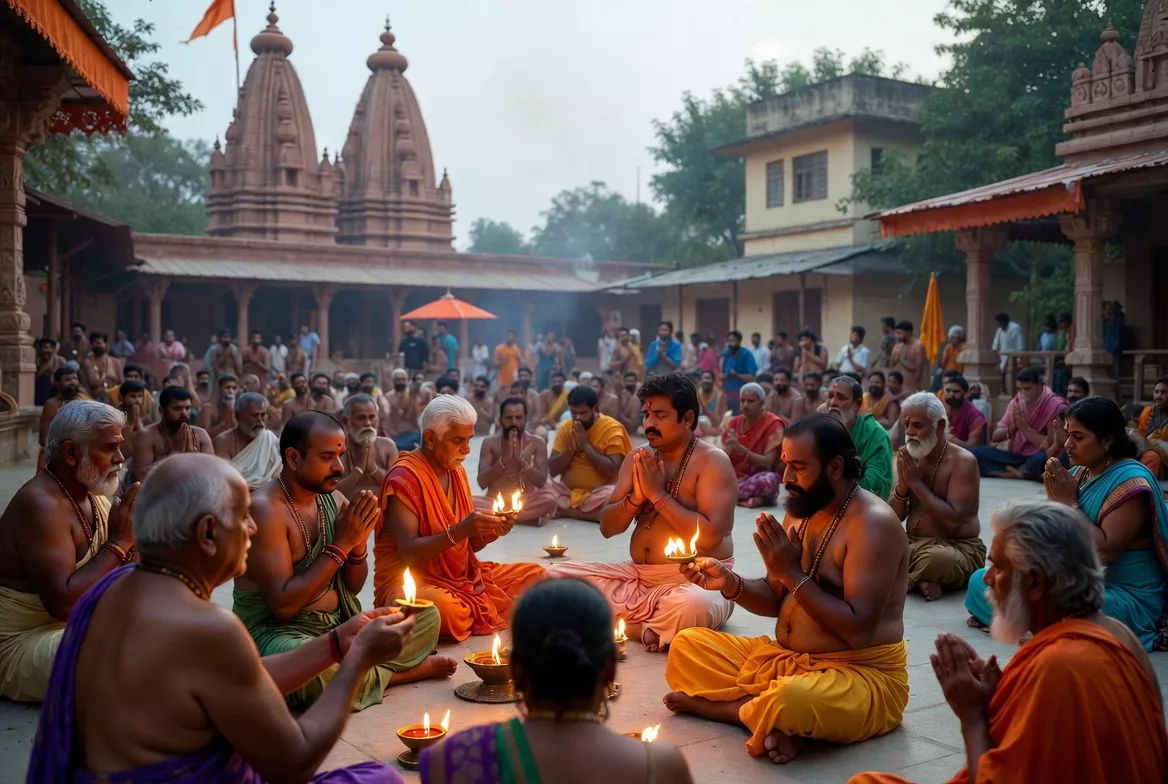
In Temples: Guruvayur, Sabarimala, and Sri Padmanabhaswamy Temple conduct elaborate Vishu puja ceremonies. Thousands of devotees arrive before sunrise for the auspicious Kanikanal at these sacred shrines.
In the Community: Neighbours exchange Vishu greetings (Vishu Ashamsakal), share sweets and payasam, and gather for community celebrations. Cultural programs featuring Kathakali, Mohiniyattam, and traditional Carnatic music are organised across Kerala.
For the Malayali Diaspora: From the Gulf to the United States, Australia, and Europe, Malayali communities organise Vishu events, temple pujas, and cultural programs to keep the festival’s spirit alive far from the shores of Kerala.
6. Vishu Sadhya — The Grand Feast
No Vishu celebration is complete without the Vishu Sadhya — a grand vegetarian feast served on a fresh banana leaf. The Sadhya is a culinary philosophy: its combination of all six tastes (sweet, sour, salty, bitter, pungent, and astringent) symbolises that life offers every kind of experience, and we must embrace them all with equanimity.
Must-Have Vishu Sadhya Dishes
A traditional Vishu Sadhya includes rice, sambar, rasam, aviyal (mixed vegetable curry), thoran (stir-fried vegetables with coconut), olan, pachadi, kichadi, pickles, papadum, banana chips, and the beloved dessert payasam (kheer). A special Vishu preparation called Vishu Kanji — a creamy rice porridge cooked with coconut milk and spices — is also prepared and considered highly auspicious. Vishu Katta (a rice cake) is another traditional dish unique to this festival.
7. Vishu & Other Indian New Year Festivals (April 2026)
Vishu is part of a pan-Indian tapestry of solar new year festivals celebrated in mid-April. April 14–15, 2026 is a remarkable occasion when multiple Indian communities celebrate their new year simultaneously:
| Festival | Region |
|---|---|
| Vishu | Kerala (Malayali community) |
| Puthandu | Tamil Nadu |
| Vaisakhi / Baisakhi | Punjab, Haryana |
| Pohela Boishakh | Bengal |
| Bihu (Rongali) | Assam |
| Pana Sankranti | Odisha |
| Sinhalese New Year | Sri Lanka |
| Songkran | Southeast Asia |
All these festivals share the same astronomical root — the Sun’s entry into sidereal Aries — demonstrating the unifying thread of solar astronomy that runs through South and Southeast Asian cultures.
8. FAQs About Vishu 2026
Q1. What is the exact date of Vishu 2026?
Vishu 2026 is observed on Wednesday, April 15, 2026 in Kerala. Some calendars also reference April 14 — but as per Kerala’s traditional Panchang, since Mesha Sankranti occurs after sunset on April 14, the festival is officially observed at sunrise on April 15, 2026.
Q2. What is the auspicious Vishu Kani time in 2026?
The most auspicious time for Vishu Kani (Kanikanal) in 2026 is 04:40 AM to 06:10 AM IST — the Brahma Muhurat before sunrise on April 15. This is considered the most spiritually potent window to view the Kani.
Q3. Which deity is worshipped on Vishu?
Vishu is primarily dedicated to Lord Vishnu and his avatar Lord Krishna. The Vishu Kani arrangement always includes an image or idol of Lord Krishna, and families visit Krishna temples on this day.
Q4. Is Vishu a public holiday in Kerala?
Yes, Vishu is a public holiday in Kerala. Government offices, schools, banks, and most businesses remain closed on this day.
Q5. What is Vishu Kaineetam?
Vishu Kaineetam is the cherished tradition of elders gifting money (coins or currency) to children, younger family members, and household workers on Vishu morning. It symbolizes the blessing and sharing of prosperity and strengthens inter-generational family bonds.
Q6. What is the significance of Kani Konna flowers in Vishu?
Kani Konna (Cassia fistula, Indian Laburnum) blooms naturally around the time of Vishu, with bright golden-yellow blossoms considered deeply auspicious. Seeing Kani Konna flowers in the Kani is believed to invite good fortune and abundance throughout the year.
Q7. Can Vishu be celebrated outside Kerala?
Absolutely. Malayali communities worldwide celebrate Vishu with great enthusiasm. For diaspora families, locally available yellow flowers can substitute Kani Konna, and the emphasis remains on the intention, devotion, and the sacred arrangement of the Kani — which can be prepared anywhere in the world.
Q8. What are popular Vishu 2026 wishes in Malayalam?
Popular Vishu greetings include “Vishu Ashamsakal” (Vishu Wishes), “Happy Vishu,” and “Vishu Phalam Nallathaakatte” (May the results of Vishu be auspicious for you).
Celebrate Vishu 2026 with Devotion & Joy
Vishu is not merely a date on the calendar — it is an invitation to pause, reflect, and open your heart to abundance. In the golden glow of the Nilavilakku lamp, surrounded by the fragrance of Kani Konna blossoms, with your family by your side and the name of Lord Krishna on your lips, you step into a new year blessed with light and purpose.
From all of us at HinduTone.com, we wish you and your loved ones a joyful, prosperous, and spiritually fulfilling Vishu 2026. May the first sight of your Vishu Kani fill your entire year with health, happiness, and divine grace.
Author: HinduTone Editorial Team
Published: February 2026