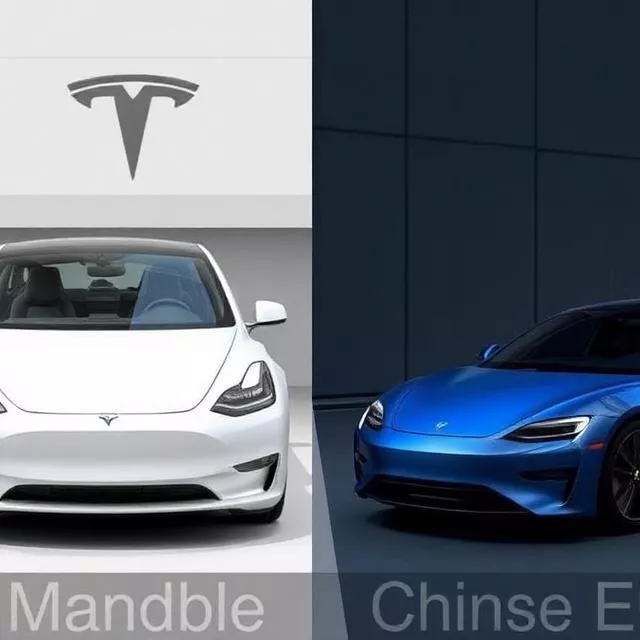
Tesla vs Chinese EVs: 2026 Comparison Guide
Discover how Tesla stacks up against Chinese EV manufacturers like BYD, NIO, and XPeng. Compare prices, technology, range, and global market impact.
The electric vehicle landscape has transformed dramatically over the past few years. While Tesla once dominated the global EV market, Chinese manufacturers have emerged as formidable competitors, offering innovative technology, competitive pricing, and rapidly expanding global reach. This comprehensive guide explores how Tesla compares to leading Chinese EV brands in 2026.
The Rise of Chinese EV Manufacturers
Chinese electric vehicle manufacturers have experienced explosive growth, transforming from regional players to global competitors. Led by companies like BYD, NIO, XPeng, and Li Auto, China now produces more electric vehicles than any other country, accounting for over 60% of global EV sales.
BYD, backed by Warren Buffett, has become the world’s largest EV manufacturer by volume, surpassing Tesla in total electric vehicle sales. The company’s vertical integration strategy, including battery production, has given it significant cost advantages and supply chain resilience.
Price Comparison: Affordability Factor
One of the most significant advantages Chinese EVs hold over Tesla is pricing. Chinese manufacturers benefit from lower production costs, government subsidies, and economies of scale.
| Model Category | Tesla | Chinese EVs |
|---|---|---|
| Entry-Level Sedan | Model 3: $38,990 | BYD Seal: $25,000 |
| Mid-Range SUV | Model Y: $44,990 | BYD Tang: $31,000 |
| Premium Sedan | Model S: $74,990 | NIO ET7: $69,000 |
The price advantage of Chinese EVs is substantial, particularly in entry and mid-range segments, making electric vehicles accessible to a broader consumer base.
Technology and Innovation
Tesla’s Strengths:
Tesla maintains technological advantages in several key areas. The company’s Full Self-Driving (FSD) system remains the most advanced autonomous driving technology commercially available. Tesla’s neural network approach and extensive real-world data collection give it a significant edge in developing true autonomous capabilities.
Tesla’s Supercharger network, with over 50,000 charging stations globally, provides the most reliable and extensive fast-charging infrastructure. The company’s over-the-air software updates continuously improve vehicle performance and add new features without requiring service center visits.
Chinese EV Innovations:
Chinese manufacturers have made remarkable technological strides. BYD’s Blade Battery technology offers enhanced safety, longevity, and energy density. The company’s proprietary lithium iron phosphate (LFP) batteries eliminate cobalt, reducing costs while improving thermal stability.
NIO has pioneered battery swapping technology with over 2,000 swap stations across China and Europe, allowing drivers to exchange depleted batteries for fully charged ones in just three minutes. This addresses range anxiety more effectively than traditional charging.
XPeng has developed competitive autonomous driving systems with LiDAR integration, advanced driver assistance features, and voice-controlled AI assistants that rival Tesla’s offerings at lower price points.
Range and Performance Comparison
| Model | Range (EPA) | 0-60 mph | Top Speed |
|---|---|---|---|
| Tesla Model 3 Long Range | 358 miles | 4.2 sec | 145 mph |
| BYD Seal Performance | 342 miles | 3.8 sec | 112 mph |
| NIO ET7 | 310 miles | 3.9 sec | 124 mph |
| XPeng P7 | 325 miles | 4.3 sec | 106 mph |
Tesla maintains a slight edge in range and performance, though the gap has narrowed considerably. Chinese manufacturers offer competitive specifications while maintaining significant price advantages.
Build Quality and Interior Design
Tesla has historically faced criticism for inconsistent build quality, panel gaps, and interior materials that some consider below luxury standards for the price point. However, recent production improvements, particularly at the Shanghai Gigafactory, have addressed many quality concerns.
Chinese EVs have made significant strides in build quality and interior design. NIO, targeting the premium segment, offers luxurious interiors with high-quality materials, ambient lighting, and executive seating configurations that rival traditional luxury brands. BYD’s newer models feature refined interiors with improved fit and finish. XPeng emphasizes minimalist design with premium materials and advanced infotainment systems.
Global Market Presence and Availability
Tesla operates in nearly every major automotive market worldwide, with strong presence in North America, Europe, China, and expanding operations in Asia and the Middle East. The brand enjoys global recognition and established service networks in most markets.
Chinese EV manufacturers are rapidly expanding internationally. BYD has entered over 50 countries, with significant market share in Southeast Asia, South America, and growing presence in Europe. NIO has established operations in Norway, Germany, Netherlands, Denmark, and Sweden. However, tariffs, regulatory barriers, and geopolitical tensions have limited Chinese EV penetration in the United States market.
Charging Infrastructure
Tesla’s Supercharger network remains its strongest competitive advantage, offering the most reliable and extensive fast-charging infrastructure globally. The recent opening of Superchargers to non-Tesla vehicles in many markets has generated additional revenue while maintaining network superiority.
Chinese manufacturers have invested heavily in charging infrastructure within China, where public charging networks are extensive and well-developed. NIO’s battery swap stations provide unique convenience, though the model requires significant infrastructure investment. In international markets, Chinese EVs rely on third-party charging networks, which can vary significantly in reliability and coverage.
Environmental Impact and Sustainability
Both Tesla and Chinese EV manufacturers contribute significantly to reducing transportation emissions. Tesla has pioneered solar energy integration and energy storage solutions alongside vehicle production. The company’s commitment to sustainability extends to manufacturing processes and supply chain transparency.
Chinese manufacturers are increasingly focusing on sustainability. BYD’s vertical integration includes renewable energy divisions producing solar panels and energy storage systems. The company’s LFP batteries reduce reliance on controversial cobalt mining. However, concerns remain about the environmental impact of rapid production scaling and supply chain transparency in some Chinese operations.
Future Outlook: 2026 and Beyond
The competition between Tesla and Chinese EV manufacturers will intensify in coming years. Tesla’s upcoming lower-cost model could address price sensitivity, while continued FSD development may create a technology moat. The Cybertruck’s success and potential new models will determine Tesla’s ability to maintain premium positioning.
Chinese manufacturers are expanding aggressively with new models, improved technology, and global market penetration. BYD’s production capacity continues growing, potentially allowing further price reductions. NIO’s battery swap technology could become an industry standard if adoption increases. XPeng and Li Auto are refining their offerings to compete directly with Tesla in technology and features.
Which Should You Choose?
Choose Tesla if:
You prioritize advanced autonomous driving technology, want access to the Supercharger network, prefer over-the-air updates and software features, value brand recognition and resale value, or live in markets with limited Chinese EV availability.
Choose Chinese EVs if:
You’re looking for the best price-to-value ratio, want innovative features like battery swapping, appreciate luxurious interiors at lower price points, live in China or markets with strong Chinese EV presence, or prioritize newer model designs and features.
Conclusion
The Tesla versus Chinese EV competition represents a pivotal moment in automotive history. Tesla maintains advantages in autonomous driving technology, charging infrastructure, and global brand recognition. Chinese manufacturers counter with competitive pricing, rapid innovation, impressive build quality, and expanding global presence.
The winner ultimately depends on individual priorities and market availability. Tesla remains the premium choice for technology enthusiasts and those prioritizing autonomous features. Chinese EVs offer exceptional value for budget-conscious buyers seeking modern electric vehicles with competitive features. As both continue innovating and expanding, consumers worldwide benefit from increased competition, better products, and more affordable electric vehicle options.
The electric vehicle revolution is accelerating, and whether you choose Tesla or a Chinese manufacturer, you’re contributing to a more sustainable transportation future.
Latest NRI News & Global Updates:
Health, Wellness & Lifestyle for NRIs
https://nriglobe.com/health-wellness/
Latest NRI News & Global Updates
https://nriglobe.com/news/
Business & Finance News for NRIs
https://nriglobe.com/business/
Investment Guides for NRIs
https://nriglobe.com/investment/
Jobs & Career Opportunities for NRIs
https://nriglobe.com/jobs/