Panchangam: The Vedic Guide to Time Explained
In the timeless wisdom of the Vedas, time flows as a divine symphony guided by the Supreme. We bow in reverence to Lord Ganesha, the eternal remover of obstacles, and Lord Vishnu, the preserver who upholds cosmic harmony, seeking Their blessings to illuminate this sacred knowledge for devotees worldwide.
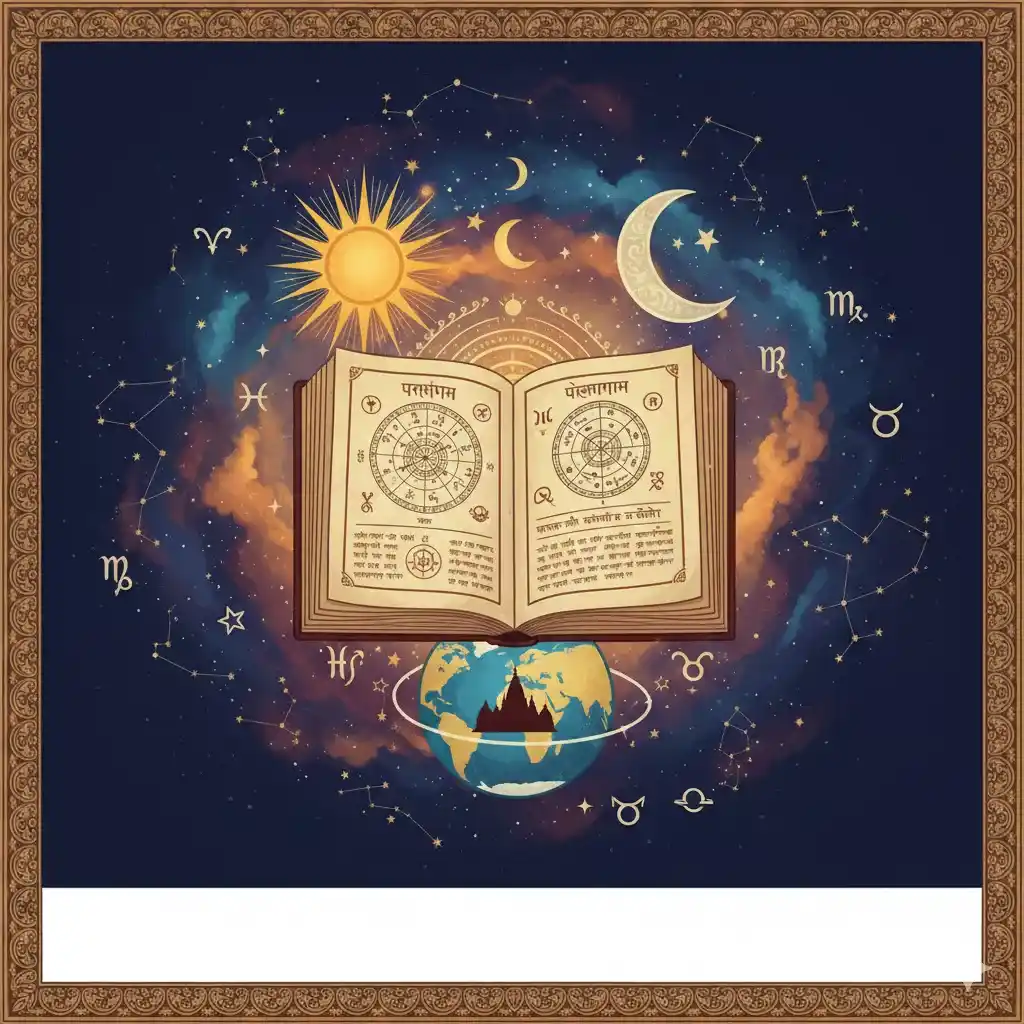
Panchangam meaning is rooted in its role as the ancient Hindu almanac—the Hindu Panchangam—a profound Vedic instrument that synchronizes human endeavors with celestial rhythms. From “Pancha” (five) and “Anga” (limbs), it reveals Muhurat for auspicious actions, ensuring life aligns with divine order. For NRIs across the globe—whether in the USA, UK, Canada, Australia, or the Gulf—embracing the Panchangam importance bridges distant lands to ancestral roots, fostering devotion, protection, and prosperity amid modern challenges.
Five Limbs of Panchangam Explained
The Hindu Panchangam rests on five celestial pillars, calculated with astronomical precision:
- Tithi: Lunar day (from Pratipada to Amavasya/Purnima), key for festivals, fasts like Ekadashi, and daily rituals.
- Vaara: Weekday, ruled by planetary lords—e.g., Thursday (Guruvara) favors Vishnu worship and wisdom-seeking.
- Nakshatra: 27 lunar mansions, influencing energy—auspicious ones like Pushya or Rohini bless beginnings.
- Yoga: Sun-Moon combinations (27 yogas), such as Siddhi for success or Vyaghata for caution.
- Karana: Half-Tithi segments (11 types), refining precise timings.
These elements guide avoidance of malefic periods like Rahu Kalam or Gulika, while highlighting Shubh Muhurat—empowering NRIs to perform rituals with faith, even across time zones.
Why Panchangam is Essential for Devotees
The Panchangam importance shines brightest in daily life and sacred occasions. It fixes festival dates—Ugadi (March 19, 2026), Diwali, Navratri—ensuring global celebrations align with cosmic grace.
For life milestones:
- Weddings, Griha Pravesh, or naming ceremonies thrive on ideal Tithi-Nakshatra-Yoga.
- Daily puja, travel, or business starts gain divine favor through Muhurat.
For NRIs, consulting daily Panchangam 2026 (via location-specific apps like Drik Panchang or MyPanchang) accounts for time zone shifts—tithis are universal, but local sunrise/sunset adjusts Muhurat. This prevents errors from using Indian-only calendars, invites blessings, shields from inauspicious influences, and nurtures bhakti. It cultivates discipline, gratitude, and surrender—turning expatriate life into a path of spiritual resilience and family unity.
Benefits for devotees (especially NRIs): Heightened intuition, karmic protection, stronger cultural bonds via virtual Panchanga Sravanam, and deeper connection to ishta devatas amid worldly demands.
Panchangam in 2026: Key Dates & Insights
Vikram Samvat 2082–2083 unfolds with transformative energies. Always use local Panchangam for your city/time zone—tithi timings shift (e.g., Ugadi’s Pratipada may begin evening prior in Western zones).
Key highlights:
- Ugadi / Gudi Padwa / Chaitra Navratri: Thursday, March 19, 2026 (Chaitra Shukla Pratipada; Muhurat post-sunrise when tithi prevails).
- Holi: Around March 4, 2026 (Phalguna Purnima).
- Maha Shivaratri: Mid-February 2026.
- Diwali / Deepavali: November 2026.
- Makar Sankranti: January 14–15, 2026.
Eclipses in 2026 (observe Sutak; avoid new starts):
- Total Lunar Eclipse: Early March 2026.
- Other solar/lunar events per regional visibility—ideal for introspection and mantra japa.
Major planetary transits:
- Jupiter (Guru) exalted in Cancer mid-year (around June), blessing spiritual growth, family harmony, and abundance—perfect for sadhana, charity, or home rituals.
- Saturn (Shani) steady in Pisces, promoting discipline, karma resolution, and maturity.
- Rahu-Ketu axis (Aquarius-Leo most of year) drives innovation, detachment, and karmic lessons.
2026 emphasizes inner transformation—leverage daily Panchangam 2026 to navigate with devotion.
How to read a basic Panchangam (NRI-friendly): Check your local date’s Tithi, Vaara, Nakshatra via apps/websites. Identify Shubh Muhurat (e.g., Abhijit) and avoid doshas. Join online temple streams for Panchanga Sravanam.
May every NRI household cherish this Vedic compass, harmonizing global life with eternal dharma.
As we conclude, let us pray:
Om Gan Ganapataye Namah | Om Namo Narayanaya O Lord Ganesha and Lord Vishnu, grant wisdom to follow the Panchangam devotedly across oceans. May it bestow health, success, family peace, and unwavering bhakti, guiding us toward moksha. Subhamastu!
Latest NRI News & Global Updates:
Health, Wellness & Lifestyle for NRIs
https://nriglobe.com/health-wellness/
Latest NRI News & Global Updates
https://nriglobe.com/news/
Business & Finance News for NRIs
https://nriglobe.com/business/
Investment Guides for NRIs
https://nriglobe.com/investment/
Jobs & Career Opportunities for NRIs
https://nriglobe.com/jobs/