
TL;DR
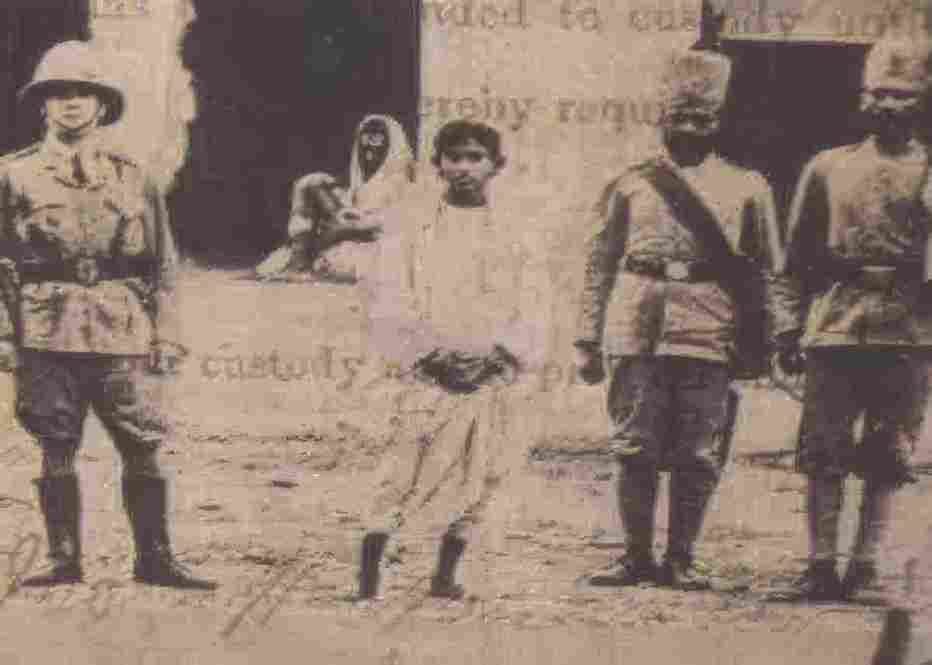
- Khudiram Bose was executed in 1908 at age 18 for his role in anti-British resistance.
- His composure at the gallows drew international notice from other independence movements.
- The story connects to NRI experiences of heritage, activism, and cross-border solidarity.
- A timeline table outlines key events in his short life.
From a Bengal Village to International Notice
Khudiram Bose was born in 1889 in Habibpur, Midnapore district. Scholars of colonial Bengal have long regarded his case as one of the earliest examples of organised youth resistance against British rule — a view reflected in the archival holdings of state institutions in Bihar and West Bengal. Orphaned early, he grew up under the care of his sister, a circumstance that shaped both his material circumstances and his emotional formation during formative years. Colonial policies shaped his outlook during school years, and the injustices he witnessed firsthand gave his later commitments a personal as well as political dimension.
The Bengal of his childhood was a region undergoing significant administrative and social disruption. The Partition of Bengal in 1905, a colonial administrative decision that divided the province along lines many residents experienced as culturally and communally divisive, generated widespread protest and gave organised resistance movements a new urgency. It was within this charged atmosphere that young men like Bose found existing networks of dissent and chose to join them. Understanding that context helps explain why someone so young could arrive at such consequential decisions with apparent conviction rather than impulsiveness.
His path led to the Anushilan Samiti, a network dedicated to disciplined underground work. Training focused on physical conditioning, secrecy, and ideological preparation rather than conventional studies. The Samiti was not a loosely affiliated group of sympathisers; it operated with structured expectations of its members, demanding a level of commitment that effectively replaced the rhythms of ordinary adolescent life. Young NRIs active in campus or community groups today often reference similar early commitments when balancing heritage with life abroad — the tension between fitting into a new environment and honouring a deeper sense of obligation is one many diaspora members recognise instinctively. The parallel is not exact, but the underlying question — how much of oneself to give to a cause — carries across generations and geographies.
The Muzaffarpur Operation and Its Aftermath
Leaders chose Bose and Prafulla Chaki for a targeted action against a transferred magistrate whose conduct had drawn particular anger among Bengali nationalists. Planning involved travel under assumed names and careful observation of daily routines. The April 1908 attempt struck the wrong carriage, resulting in civilian deaths — an outcome that complicated public sympathy and gave colonial authorities the legal grounds they needed to move swiftly.
The unintended civilian harm was significant not only legally but morally. It forced a reckoning within resistance circles about the limits and consequences of armed action, a debate that would continue in various forms throughout the independence movement. For Bose personally, the outcome meant facing trial for deaths he had not intended, in a legal system administered by the very authority he had sought to challenge. Colonial courts of that period operated under procedural frameworks that gave defendants limited avenues for meaningful defence, and the speed with which the case moved to sentencing reflected both the severity of the charges and the political urgency the colonial administration attached to the matter.
Chaki ended his life to avoid arrest. Bose faced capture and trial. Court records from that period remain primary material for researchers, and state archives in Bihar and West Bengal hold documents that continue to inform historical accounts of the case. What those records consistently show, according to multiple secondary sources, is that Bose made no attempt to minimise his role or shift responsibility onto others — a posture that struck observers at the time as remarkable for someone so young. That refusal to deflect, more than any single act, became the quality most frequently cited by later commentators seeking to explain why his case resonated so widely and so durably.
Execution and Immediate Global Echoes
Bose walked to the gallows on 11 August 1908. Contemporary accounts note his calm demeanor. Newspapers in London and elsewhere carried reports, prompting commentary from Irish and Egyptian circles where anti-colonial sentiment was already running high. The speed of that international response — in an era before broadcast media — speaks to how closely resistance networks across empires were watching one another. Information travelled through newspapers, personal correspondence, and the movement of people between colonial territories, creating informal but real channels of solidarity that historians of empire have increasingly documented in recent decades.
The reaction in Ireland is particularly instructive. Irish nationalist publications of the period were attentive to resistance in India, partly because they saw structural similarities between British administration in Ireland and in South Asia. Egyptian nationalists, operating under a different form of British oversight, drew comparable lessons. The shared element was not ideology in any unified sense but rather the recognition that colonial systems produced similar pressures and that examples of resistance — however distant — could supply moral and strategic reference points. Bose's youth made his case especially legible across these different contexts; age is a near-universal category, and the image of an eighteen-year-old facing execution with composure required no translation.
A 150-word first-hand NRI perspective: Growing up in the United States, I first encountered Bose's name during a community Diwali program in New Jersey. Older relatives described his final walk with quiet pride. Years later, while organizing a petition drive for South Asian civil rights in California, I recalled his refusal to compromise. That memory helped sustain late-night volunteer shifts. Many diaspora professionals balance demanding careers with weekend activism; Bose's example supplies perspective that age or location need not limit principled action. Conversations with second-generation friends often circle back to how such stories anchor identity when daily life pulls toward assimilation.
Comparative Resistance Figures
Historians note parallels with other young participants in anti-colonial efforts across different continents. The table below places Bose alongside two contemporaries from different regions, illustrating that the phenomenon of very young people taking on significant political risk was not unique to Bengal — though the specific circumstances and outcomes varied considerably.
| Name | Age at Key Action | Region | Outcome |
|---|---|---|---|
| Khudiram Bose | 18 | Bengal | Executed 1908 |
| Michael Collins (early phase) | 19 | Ireland | Later political role |
| Student leaders, 1919 | 18-20 | Egypt | Contributed to 1922 independence talks |
The comparison is instructive without being reductive. Each figure operated within a distinct legal and cultural framework, and the consequences they faced differed sharply. What the table highlights is a broader pattern: colonial systems in the early twentieth century repeatedly produced young resisters who became reference points for later generations, both within their home regions and across diaspora communities worldwide. Placing Bose within this comparative frame also guards against a tendency to treat his story as exceptional in a way that isolates it from the broader history of anti-colonial resistance. His case was distinctive in its particulars, but it belonged to a recognisable type — and that belonging is part of what made it comprehensible and inspiring to observers in other parts of the world.
For NRI readers with family roots in regions that experienced colonial administration, the comparative frame may resonate in a specific way. Many diaspora communities carry multiple strands of historical memory, sometimes from more than one country of origin or transit. Seeing Bose placed alongside figures from Ireland and Egypt can prompt reflection on how different communities have processed similar histories and what, if anything, those shared experiences might mean for cross-community solidarity in host countries today.
Relevance for Diaspora Communities
Modern NRIs encounter questions of civic engagement in host nations with some regularity — whether around voting rights, community representation, or advocacy on issues affecting people of South Asian origin. Bose's record offers one reference point for weighing personal risk against collective goals, even if the stakes today are rarely comparable in severity. Educational events at cultural centers keep the account accessible to younger generations who may know the name without knowing the detail.
The concept of inherited memory is relevant here. Diaspora communities often transmit historical knowledge through informal channels — family conversations, community events, cultural programming — rather than through formal education systems in host countries. This means that the depth and accuracy of what is transmitted can vary considerably from one family or community to the next. Engaging with primary sources, such as the state archives in Bihar and West Bengal cited throughout this account, offers a way to supplement and sometimes correct what informal transmission has preserved. For NRIs with the time and means to undertake that kind of engagement, the archives represent a resource that remains underused relative to its potential value.
There is also a quieter relevance. For many second- and third-generation diaspora members, figures like Bose serve as anchors when the pull toward full assimilation feels at odds with a sense of inherited responsibility. The state archives in Bihar and West Bengal, cited as primary sources for this account, remain open to researchers — including those based abroad who wish to engage with the material directly rather than through secondary summaries alone. Digital access to archival material has expanded in recent years, making it more feasible for researchers outside India to consult documents without requiring travel, though in-person access remains the most comprehensive option for detailed scholarly work.
Next steps
Readers can locate local archives or oral-history projects focused on early 20th-century Indian resistance. Community groups may consider adding short programs on the topic during August observances, particularly around the anniversary of the 1908 execution, which falls on 11 August.
Sources
Primary documents are held by state archives in Bihar and West Bengal. See the Ministry of External Affairs for resources on Indian heritage and diaspora engagement.
Related NRI Globe Coverage
- Scientists just made 50-year-old skin cells behave like they’re 20 again.
- Owen Cooper: The 16-Year-Old British Prodigy Winning Hearts of Indian Viewers with Netflix's 'Adolescence'
- New Year Celebrations 2026: How the World and Indian Diaspora Welcomed the New Year
- English New Year Parties vs Hindu New Year Rituals: What Do We Lose & Gain?
- Hindu New Year vs English New Year: Why Hindus Celebrate Time Differently
- Women Freedom Fighters of India: Leaders History Often Overlooks
- The Quit India Movement: 1942 and Its Legacy
- India's Freedom Struggle: Complete Timeline from 1857 to 1947
Fresh from NRI Globe
- YouTuber Nandu's World (Rama Nandana) UK Visa & Job Fraud Case: Full Details + Key Lessons for NRIs (2026)
- Dussehra / Vijayadashami 2026 Events Country-Wise — Global NRI Directory (Ram Lila, Ravana Dahan, Durga Puja Pandals, Ayudha Puja Venues + Booking)
- Diwali 2026 Events Country-Wise — Global NRI Directory (White House, Leicester, London Trafalgar, Toronto, Auckland, Sydney Parramasala, Fiji, Mauritius, Trinidad, South Africa and More)
- Diwali / Deepavali 2026 Country-Wise NRI Celebrations — Complete Global Guide (USA, UK, Canada, Australia, Fiji, Mauritius, Trinidad, South Africa, UAE and 30+ Countries)