
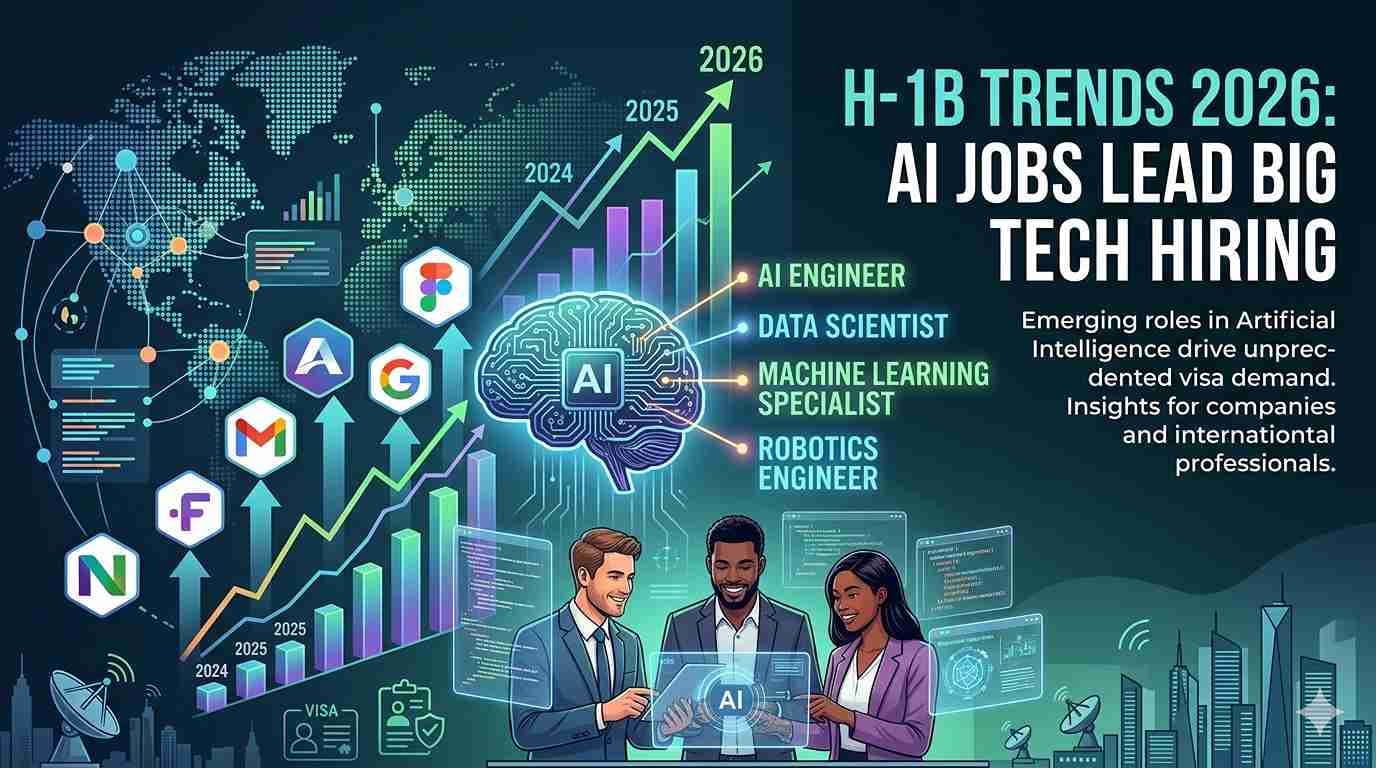
Artificial intelligence is reshaping the IT job market more than any technology shift in recent decades. The effect is dual: significant displacement in certain roles alongside strong demand and higher pay in others. Companies are cutting thousands of jobs while pouring billions into AI infrastructure, creating a two-track labour market that rewards AI fluency, judgment and specialised skills.
Scale of Displacement
Tech layoffs in 2026 have reportedly already surpassed full-year 2025 totals, with trackers reporting over 128,000 cuts by mid-September across hundreds of companies. AI is frequently cited as a primary or contributing factor.
- Oracle reduced its workforce by about 21,000 (13%) in fiscal 2026 and began another round in September 2026, explicitly linking reductions to “the adoption and deployment of AI technologies across our operations.” The company is simultaneously forecasting up to $90-95 billion in capital expenditure for AI infrastructure. See our coverage: Oracle Layoffs September 2026 and the India-side panic report.
- Broader data reportedly shows AI as the leading stated reason for many US job cuts in 2026, overtaking traditional restructuring or economic reasons in several monthly reports.
- Entry-level and routine roles have been hit hardest. Postings for junior software roles, basic coding, testing, support and administrative tech functions have declined sharply in multiple datasets. One analysis reportedly found employment of young workers (ages 22-25) in highly AI-exposed occupations running about 19% below the trajectory of less-exposed peers.
Routine coding, documentation, basic data analysis, customer-support scripting and certain maintenance tasks are increasingly handled by generative AI tools and agents. This has reduced the need for large volumes of mid- and junior-level headcount in traditional IT-services models.
Where Jobs Are Growing
AI is also creating demand and boosting productivity:
- Roles requiring specific AI skills are growing far faster than the overall market (reports show growth rates several times higher). AI/ML engineers, data scientists, AI infrastructure specialists, cybersecurity analysts, and roles involving agentic systems or responsible AI are in particularly high demand.
- PwC's 2026 AI Jobs Barometer reportedly found that companies most exposed to AI achieve significantly higher productivity growth (around 40% higher than the least exposed). These firms also tend to grow headcount and wages faster.
- Wage premiums for AI skills remain substantial (reports cite averages around 50-60%+ in some analyses).
- Job postings mentioning AI skills have reportedly risen dramatically year-over-year. Many traditional roles (software engineering, product, operations) now require AI fluency even if the title itself is not “AI Engineer.”
- Demand is spreading beyond pure tech companies into finance, manufacturing, healthcare and professional services.
BLS projections for 2024-2034 still show strong growth for data scientists (+33.5%), information-security analysts, software developers and computer research scientists, even as some administrative and clerical roles face pressure.
The Two-Track Labour Market
A clear split has emerged:
| Category | Characteristics | Outlook |
|---|---|---|
| Professionalised roles | AI acts as a force multiplier for experts; higher judgment, leadership, creativity required | Growing faster, higher wage growth |
| Democratised roles | AI lowers the skill barrier so less-experienced people can perform complex tasks | Under pressure, slower growth or decline |
| Entry-level pure junior roles | Routine coding, basic analysis, support | Sharpest declines |
| AI-augmented junior roles | Require senior-like skills earlier (judgment, strategy) | Growing in some datasets |
Entry-level hiring at major tech firms has reportedly fallen significantly since 2019-2022 in many analyses, while experienced professionals who can deploy, govern and integrate AI systems remain in demand.
Impact on Indian IT and NRIs
India's ~$300 billion IT-services sector faces structural pressure. Revenue growth is increasingly decoupled from pure headcount growth as clients demand AI-driven productivity.
- Large Indian IT firms (TCS, Infosys, HCL, Wipro, Tech Mahindra) are posting many “AI” roles, but analyses show a large share are traditional software, data or digital roles rebranded with AI language rather than pure new AI creation.
- Hiring has moderated, especially at the entry level. Demand remains strong for specialised AI, GenAI, data, cloud, cybersecurity and product-engineering talent, but competition is intense.
- Global Capability Centres (GCCs) in India continue expanding and absorbing some talent.
- For H-1B workers and NRIs in the US, the combination of AI-driven layoffs, tighter sponsorship selectivity and immigration uncertainty has made the market more competitive. Companies increasingly prefer candidates who already possess AI skills and can demonstrate impact with tools like coding assistants, agents and ML pipelines.
Practical Implications for IT Professionals
Vulnerable Areas
- Pure volume-based coding and testing without AI tooling experience
- Routine support and maintenance roles
- Junior positions that lack specialisation or business context
More Resilient / Growing Areas
- AI/ML engineering, MLOps, agent orchestration, LLM-application development
- Cybersecurity, data engineering, cloud architecture with AI integration
- Roles requiring domain expertise + AI application (e.g., AI in finance, healthcare, enterprise systems)
- Positions emphasising judgment, system design, responsible AI and cross-functional leadership
What Works in 2026
- Combine traditional strong fundamentals (systems, data, architecture) with practical AI skills (prompting at scale, agents, evaluation, integration).
- Demonstrate measurable productivity gains from AI tools rather than just listing them.
- Build experience with production deployment, governance and cost optimisation of AI systems.
- For mid-career professionals, lean into domain knowledge and the ability to redesign workflows around AI.
2026 Skills Priority Checklist for NRI IT Professionals
- Foundational LLM literacy — hands-on with at least two frontier chat models and one open-source model; prompt design + evaluation.
- Agentic systems — build one small production agent (retrieval, tool use, guardrails) end-to-end.
- Data pipelines — SQL fluency + one modern data-orchestration tool (Airflow / Dagster / Prefect).
- Cloud AI stack — deployment knowledge across AWS Bedrock / Azure OpenAI / GCP Vertex AI.
- Cybersecurity + AI safety — basic AI red-teaming, prompt-injection defence, model-evaluation basics.
- Portfolio evidence — a public GitHub repo, blog post or measurable at-work case study showing AI-enabled productivity.
- Domain depth — one industry vertical (fintech, healthcare, retail, energy) where you can talk credibly about workflows.
Frequently Asked Questions
Is AI eliminating IT jobs completely?
No. AI is reshaping the mix rather than eliminating IT employment overall. Total demand for skilled technical roles remains strong, but the shape of the demand is shifting rapidly toward AI-augmented specialisations.
Are entry-level roles still worth pursuing?
Yes — but the bar is higher. Entry-level candidates who already show working knowledge of AI tools, agent frameworks and evaluation practices tend to outperform peers with only traditional coding skills.
How large is the AI wage premium?
Reports cite averages around 50-60%+ for AI-skilled roles versus comparable non-AI roles. Actual premiums vary widely by location, industry and specific skill mix.
What should NRIs on H-1B focus on?
Skill up in AI-adjacent areas, build a demonstrable AI portfolio, maintain a 6-12 month emergency fund, keep documentation and immigration counsel current, and diversify skills into judgment / architecture / domain-heavy work.
Is this reshaping temporary or structural?
The shift toward higher capital, lower labour intensity in AI-heavy work looks structural over the medium term. Continuous upskilling is the clearest path through it.
Outlook
AI is not eliminating IT employment overall, but it is accelerating a shift from labour-intensive delivery models to capital- and skill-intensive ones. Companies are spending heavily on infrastructure while running leaner teams. Productivity is rising at AI-exposed firms, creating both higher output per worker and selective headcount pressure.
For individuals, the decisive factor is adaptability. Those who treat AI as a core competency rather than an optional tool are capturing the wage premiums and new opportunities. Those who remain in pure traditional, non-augmented roles face greater risk of displacement or slower career progression.
The transition remains uneven by company, geography and skill level. Continuous upskilling, portfolio evidence of AI-enabled work and a focus on higher-judgment tasks offer the clearest path through the current restructuring.
Related NRI Globe AI + Careers Coverage
- Oracle Layoffs September 2026 — News Report
- Oracle Layoffs Panic in India — What NRIs Must Know
- Oracle's 6 AM Layoff Emails — Lessons for NRI Professionals
- Trump Rejects AI Slowdown Calls
- Anthropic CEO Warns on AI Control
- Russia & Ukraine Autonomous AI Weapons
- Impact of AI on NRI Mental Health 2026
- Fed Rate Hike September 2026 — NRI Impact
Disclaimer: This article summarises publicly reported research, industry analyses and market data as of mid-September 2026. Specific figures cited are drawn from third-party trackers, BLS projections, PwC's AI Jobs Barometer and other named sources and may be updated as new data is released. NRI Globe provides journalism and general information only, not personalised career, financial or immigration advice.