
TL;DR:
- Happy Gilmore 2 reunites Adam Sandler with his iconic 1996 character, now streaming on Netflix as of July 25, 2025.
- The sequel balances nostalgic callbacks and heartfelt family moments with an overstuffed plot that dilutes its emotional core.
- Sandler's comedic timing and Christopher McDonald's return shine, but excessive cameos and a bloated runtime undermine the original's tighter charm.
- Critics and audiences remain divided: fans of the original enjoy the service, while others view it as a cash grab lacking focus.
- Worth watching for Sandler enthusiasts and nostalgic viewers, but expect a flawed, uneven experience rather than a worthy successor.
Nearly Three Decades Later: Happy Returns, But Changed
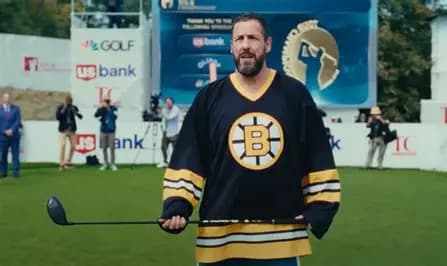
Nearly three decades after the cult classic Happy Gilmore (1996) captured audiences with its anarchic blend of slapstick humor and underdog heart, Adam Sandler steps back into the role that defined his comedic legacy. Happy Gilmore 2, now streaming on Netflix, reunites Sandler with director Kyle Newacheck and co-writer Tim Herlihy to explore what happens when a once-triumphant golfer faces the realities of aging, fatherhood, and financial ruin.
The film opens with a jarring tonal shift. Happy, no longer the scrappy underdog, has become a washed-up supermarket stockboy raising five children—four sons and a daughter, Vienna (Sunny Sandler)—after a tragedy that kills his wife, Virginia (Julie Bowen), in a freak golfing accident. This darker setup immediately signals that the sequel intends to explore more mature themes than the original's straightforward "save grandma's house" narrative. The plot then pivots to Happy's need to fund Vienna's tuition at the Paris Opera Ballet School while simultaneously defending traditional golf against the flashy, rule-bending Maxi Golf League, led by eccentric entrepreneur Frank Manatee (Benny Safdie).
The runtime stretches to 114 minutes—22 minutes longer than the original's lean 92 minutes. This expansion accommodates a parade of cameos: professional golfers Rory McIlroy and Brooks Koepka, celebrities Bad Bunny and Margaret Qualley, and returning cast members Christopher McDonald (Shooter McGavin) and Ben Stiller (Hal L.). While these appearances delight longtime fans, they often function as distractions rather than narrative anchors.
What Works: Sandler's Maturity and Genuine Heart
Sandler's performance demonstrates a marked evolution from his 1996 incarnation. He balances Happy's signature rage—still triggered by incompetence and injustice—with a protective, almost vulnerable father figure. The early scenes establishing Happy's chaotic household, where his sons inherit his volatile temperament, generate authentic laughs. One standout sequence involves Happy's eldest son losing his composure during a youth hockey game, mirroring his father's famous outbursts. These moments ground the film in recognizable family dynamics rather than pure absurdist comedy.
Christopher McDonald's return as Shooter McGavin proves essential. Their rivalry, refined by decades of accumulated resentment and begrudging respect, carries more weight than the original's simple antagonism. McDonald infuses Shooter with a complexity that suggests genuine character development—he's no longer a one-dimensional villain but a man whose competitive instincts have calcified into something sadder. The chemistry between Sandler and McDonald remains the film's strongest asset.
The family subplot, particularly Happy's relationship with Vienna, echoes the original's emotional architecture. Just as the first film centered on saving his grandmother's house, the sequel builds toward saving his daughter's dreams. A training montage set to "Juke Box Hero" lands with surprising effectiveness, combining physical comedy with genuine sentiment. Will Zalatoris's cameo as Happy's former caddie-turned-pro golfer works because it serves the narrative rather than merely winking at the audience.
Where the Sequel Stumbles: Bloat and Narrative Confusion
The Maxi Golf League subplot represents the film's central creative miscalculation. Described as a mini-golf spectacle with over-the-top rules and flashy aesthetics, it attempts social commentary on tradition versus innovation—a timely theme given LIV Golf's real-world disruption of professional golf. However, the execution feels chaotic and unfocused. The league's visual design and competitive format remain unclear, making it difficult to understand what Happy actually opposes beyond vague appeals to "the game's integrity."
The cameo density creates a secondary problem. While individual appearances—such as Bad Bunny's brief role or Margaret Qualley's involvement—might work in isolation, their cumulative effect fragments the narrative. Viewers constantly pause to identify celebrities rather than remaining invested in Happy's journey. For audiences unfamiliar with the original film, the relentless flashbacks to 1996 scenes feel exclusionary and interrupt pacing.
The tonal inconsistency proves most damaging. The film opens with genuine tragedy—Happy's accidental killing of his wife—a moment that should carry emotional weight. Yet the script struggles to honor this darkness while maintaining the lighthearted absurdity audiences expect from a Sandler comedy. The result feels tonally schizophrenic: some scenes play as sincere family drama, others as pure slapstick, with insufficient connective tissue between registers.
At nearly two hours, the film overstays its welcome. Several jokes extend past their comedic peaks, and the script lacks the disciplined editing that made the original snappy and quotable. The second and third acts particularly suffer from narrative bloat, introducing subplots that feel abandoned or resolved without satisfying payoffs.
Critical and Audience Reception: Divided Verdict
Professional critics have offered mixed assessments. Variety praised the film as "a present-tense edge" on Sandler's fan service, while SlashFilm called it "an overindulgent cash grab that forgets what made the original great." Screen Rant noted the film's inability to balance its multiple narrative threads, particularly the tension between family drama and sports comedy spectacle.
Audience reactions on Rotten Tomatoes reveal a clear bifurcation. Nostalgic viewers who cherish the original rate the sequel highly, praising its humor and willingness to age its protagonist. Conversely, critics and viewers seeking a cohesive, tightly plotted comedy express disappointment, citing the film's reliance on nostalgia as a substitute for genuine storytelling innovation. IMDb reviews range from enthusiastic 8/10 scores to frustrated 5/10 assessments, with common complaints centering on the overstuffed narrative and diminishing returns from endless cameos.
The Nostalgia Question: Comfort Versus Creativity
Happy Gilmore 2 exemplifies a broader challenge facing legacy sequels: whether to prioritize fan service or narrative innovation. The film chooses service, banking on viewers' affection for the original to sustain interest despite structural weaknesses. For audiences seeking a reunion with beloved characters and a return to 1990s Sandler comedy sensibilities, this approach succeeds. The film functions as a comfortable, familiar experience—akin to revisiting a favorite restaurant and finding the menu unchanged.
However, this strategy carries creative costs. By leaning so heavily on callbacks, flashbacks, and cameos, the film sacrifices the opportunity to develop its own identity. The original Happy Gilmore worked partly because it felt fresh and unencumbered by predecessors. The sequel, by contrast, constantly reminds viewers of what came before, inviting unfavorable comparisons. A more confident approach might have trusted the core story—a middle-aged man fighting to provide for his daughter while defending his values—without constant reassurance that fans will recognize every reference.
Performance and Technical Execution
Beyond Sandler and McDonald, the supporting cast delivers competent work. Benny Safdie brings manic energy to Frank Manatee, though the character remains underwritten and his motivations unclear. Julie Bowen's limited screen time (due to her character's early death) prevents her from establishing a meaningful presence. Sunny Sandler, Adam's daughter, shows promise as Vienna, though the script doesn't provide her sufficient depth to become a compelling character rather than a plot device.
Director Kyle Newacheck's visual style remains functional but uninspired. The golf sequences lack the kinetic energy that might elevate them beyond standard sports-comedy beats. The Maxi Golf League's aesthetic—presumably colorful and chaotic—never quite crystallizes into something visually distinctive. Cinematography and production design serve the story adequately without enhancing it.
Is Happy Gilmore 2 Worth Your Time?
Happy Gilmore 2 succeeds as a fan service project and a vehicle for Sandler to revisit a character he clearly enjoys playing. For viewers who loved the original and crave more of that sensibility, the film delivers sufficient laughs and nostalgic satisfaction to justify a Netflix viewing. Sandler's comedic timing remains sharp, and moments of genuine heart puncture the absurdity.
However, the film cannot escape its fundamental structural problems. The overstuffed plot, excessive cameos, and tonal inconsistencies prevent it from achieving the coherence and impact of the 1996 original. It's a sequel that works best when viewed not as a standalone story but as an extended epilogue—a chance to spend more time with characters audiences already love, even if the new narrative surrounding them feels contrived.
Rating: 6.5/10
Happy Gilmore 2 is available to stream on Netflix beginning July 25, 2025. The original Happy Gilmore remains available on digital platforms and stands as the superior film. For those seeking a lighthearted, nostalgic comedy experience with modest expectations, the sequel offers adequate entertainment. For those hoping for a worthy successor that recaptures the original's magic, the film ultimately disappoints.
Next Steps
If you're considering whether to watch Happy Gilmore 2, first revisit the original 1996 film to refresh your memory and establish a baseline for comparison. Check Netflix's preview clips to gauge whether the humor aligns with your preferences. Consider watching with other fans of the original—the shared nostalgia often enhances the experience. Finally, manage expectations: approach the film as a fun reunion rather than a groundbreaking sequel, and you'll likely enjoy it more than viewers anticipating a creative equal to the 1996 classic.