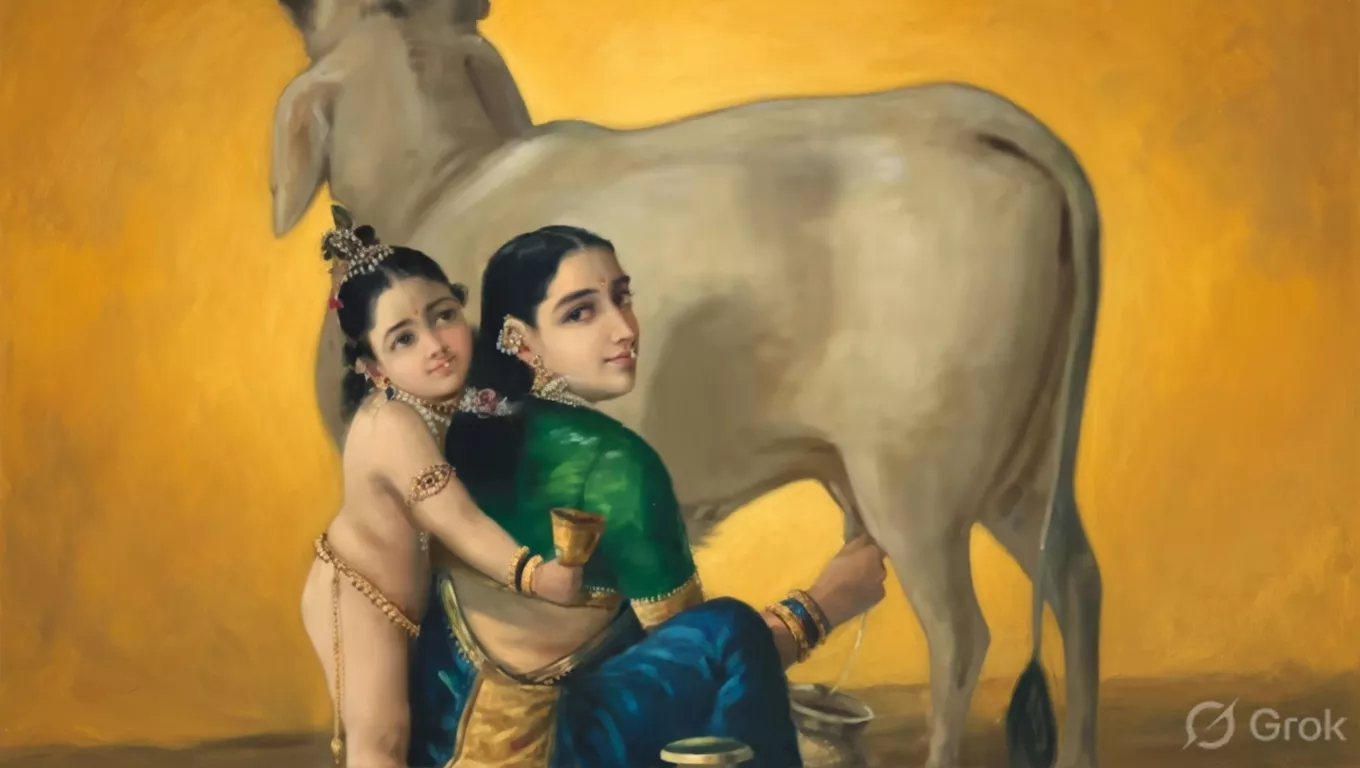
Mumbai / Global, April 6, 2026 – In a landmark moment for Indian art, billionaire Cyrus S. Poonawalla, founder and chairman of the Serum Institute of India (the world’s largest vaccine manufacturer and maker of Covishield), has purchased Raja Ravi Varma’s iconic 1890s oil painting ‘Yashoda and Krishna’ for a staggering Rs 167.2 crore at Saffronart’s Spring Live Auction in Mumbai.
This sale sets a new all-time record for any modern Indian artwork sold at auction, comfortably surpassing the previous record held by M.F. Husain’s painting.
The masterpiece, painted at the peak of Raja Ravi Varma’s career, depicts a tender maternal scene: Yashoda (Krishna’s foster mother) milking a cow while young Krishna playfully tries to draw her attention with a goblet in hand. The painting beautifully blends European realism with Indian mythological themes — a signature style that made Ravi Varma one of India’s most celebrated artists.
Poonawalla’s Statement: A ‘National Treasure’
After winning the intense seven-minute bidding war (the painting had a pre-sale estimate of Rs 80–120 crore), Dr. Poonawalla described the acquisition as both a privilege and a responsibility. He called the artwork a “national treasure” and announced plans to make it available for periodic public viewings.
“I am privileged to have the opportunity to acquire, preserve, and care for the iconic Raja Ravi Varma painting ‘Yashoda and Krishna’,” he said. The painting will reportedly adorn either his Mumbai or Pune residence.
Poonawalla, whose net worth is estimated at around $25.6 billion, built his fortune through life-saving vaccines that reached millions globally — including during the COVID-19 pandemic when Covishield played a crucial role for Indians and the diaspora alike.
Why This Sale Matters to NRIs Worldwide
For millions of Non-Resident Indians (NRIs) in the USA, UK, Canada, Australia, UAE, and beyond, this record-breaking purchase evokes strong cultural pride. Raja Ravi Varma’s works — reproductions of which adorn many NRI homes — represent the golden era of Indian art that connected mythology with modern aesthetics.
- Cultural Preservation: Many NRIs worry about India’s priceless artworks leaving the country. Poonawalla’s decision to keep this “non-exportable national treasure” in India and allow public viewings is being widely appreciated as a responsible act of heritage stewardship.
- Growing Value of Indian Art: The sale highlights the rising global appreciation for Indian masters. NRIs who collect or invest in Indian art see this as validation of cultural assets as valuable investments.
- Wealth & Philanthropy Debate: The news has sparked discussions among the diaspora about billionaire wealth, philanthropy, and occasional online speculation (including unproven claims of tax-related motives). However, no evidence supports such allegations, and many NRIs view it as a legitimate celebration of success and culture.
The auction has also reignited conversations on wealth taxes and the role of India’s ultra-rich in preserving national heritage.
Raja Ravi Varma’s Enduring Legacy
Raja Ravi Varma (1848–1906), a royal descendant from Kerala, revolutionized Indian art by bringing mythological figures like Krishna, Radha, and Durga to life with realistic oil techniques. His affordable oleograph prints made gods and goddesses accessible to ordinary households across India — a tradition that continues in many NRI homes today through calendars, posters, and framed prints.
‘Yashoda and Krishna’ captures universal themes of maternal love, devotion, and playful divinity — themes that resonate deeply with Hindu families worldwide.
What’s Next?
Dr. Poonawalla’s acquisition is expected to boost interest in Indian art among both domestic and international collectors. Saffronart, one of India’s leading auction houses, has seen growing participation from NRI buyers in recent years.
For the global Indian community, this moment serves as a reminder of India’s rich cultural soft power — from vaccines that saved lives to art that nourishes the soul.
Stay tuned to NRIGlobe.com for more stories on Indian business leaders, cultural heritage, art investments, and developments that matter to the diaspora.
Last updated: April 6, 2026. Based on reports from Saffronart, NDTV, The Indian Express, Economic Times, and other sources.