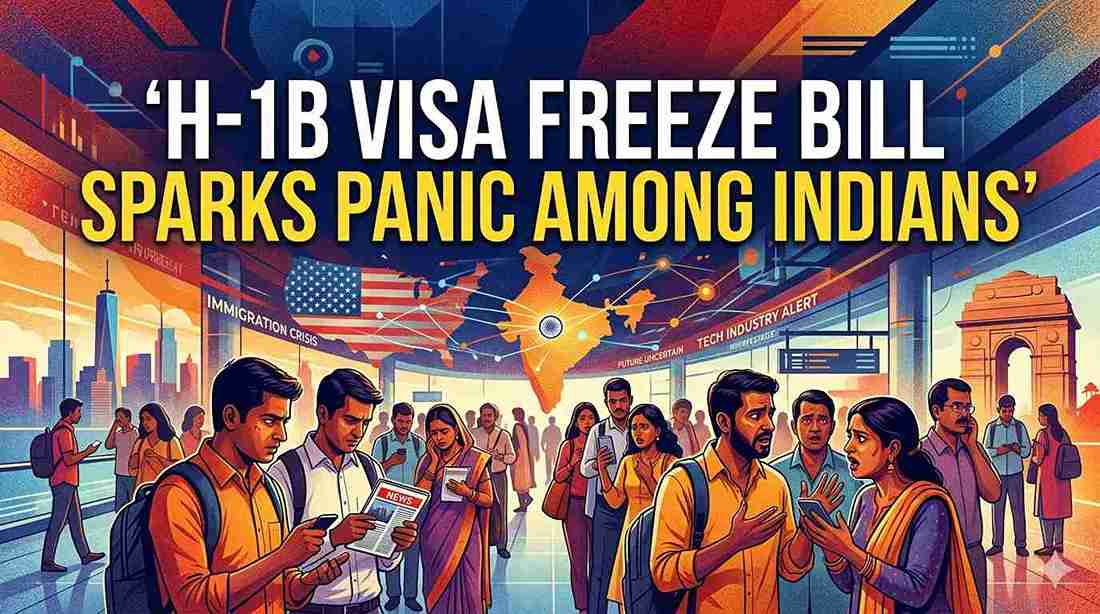
New Delhi/Hyderabad, April 24, 2026 — A controversial new bill introduced in the US Congress has sparked alarm among the Indian diaspora, particularly H-1B visa holders. The legislation proposes a three-year freeze on the H-1B visa program, during which current holders could be required to gradually leave the United States.
Republican Congressman Eli Crane from Arizona introduced the “End H-1B Visa Abuse Act of 2026”. The bill aims to overhaul the H-1B program, which has long served as a key pathway for skilled Indian professionals in technology, engineering, healthcare, and other sectors.
Key Provisions of the Proposed Bill
According to reports and video explanations of the bill:
- 3-Year Pause on New Visas: No new H-1B visas would be issued for three years.
- Gradual Exit for Current Holders: Existing H-1B visa holders would be expected to leave the US progressively during this period.
- Reduced Stay Duration: The maximum stay would be limited to a single 3-year term, eliminating the current possibility of extensions up to 6 years (or more in certain cases with pending green card applications).
- Other Reforms: Stricter requirements including proof of intent to return home after the visa period, higher salary thresholds, removal of cap exemptions, and limits on OPT extensions and H-4 work authorization.
The bill seeks amendments to the Immigration and Nationality Act of 1952 and has garnered support from some Republicans advocating for stronger protections for American workers.
Current H-1B Rules (As of April 2026)
It is important to note that this is a proposed bill and has not yet become law. Under existing rules:
- H-1B visas are granted for an initial period of up to 3 years and can typically be extended for another 3 years (total 6 years).
- Extensions beyond 6 years are possible if an immigrant petition (I-140) is approved and visa numbers are unavailable.
- After reaching the 6-year limit, holders must generally leave the US for at least one full year to reset the clock.
Recent Trump administration actions, including a $100,000 fee for certain new petitions and a wage-weighted selection process, have already tightened the program significantly.
Impact on Indian Professionals
Indians receive the largest share of H-1B visas annually, with many working in Silicon Valley and other tech hubs. The Indian community in the US includes hundreds of thousands of H-1B holders and their families.
Potential consequences if the bill passes:
- Disruption of careers and family lives for those currently in the US.
- Setback for green card aspirants stuck in backlog.
- Reduced opportunities for new graduates and professionals from India.
- Broader economic effects on US tech companies reliant on global talent.
Many NRIs and Indian students on OPT are closely monitoring developments, with calls for diplomatic engagement from the Indian government.
Reactions and Next Steps
Supporters of the bill argue it protects US wages and jobs. Critics, including industry groups, warn of talent shortages and damage to innovation.
As of now, the bill is in early stages. H-1B holders are advised to:
- Consult immigration attorneys for personalized options (extensions, transfers, green card pathways).
- Avoid actions that could affect status.
- Stay updated through official USCIS sources.