
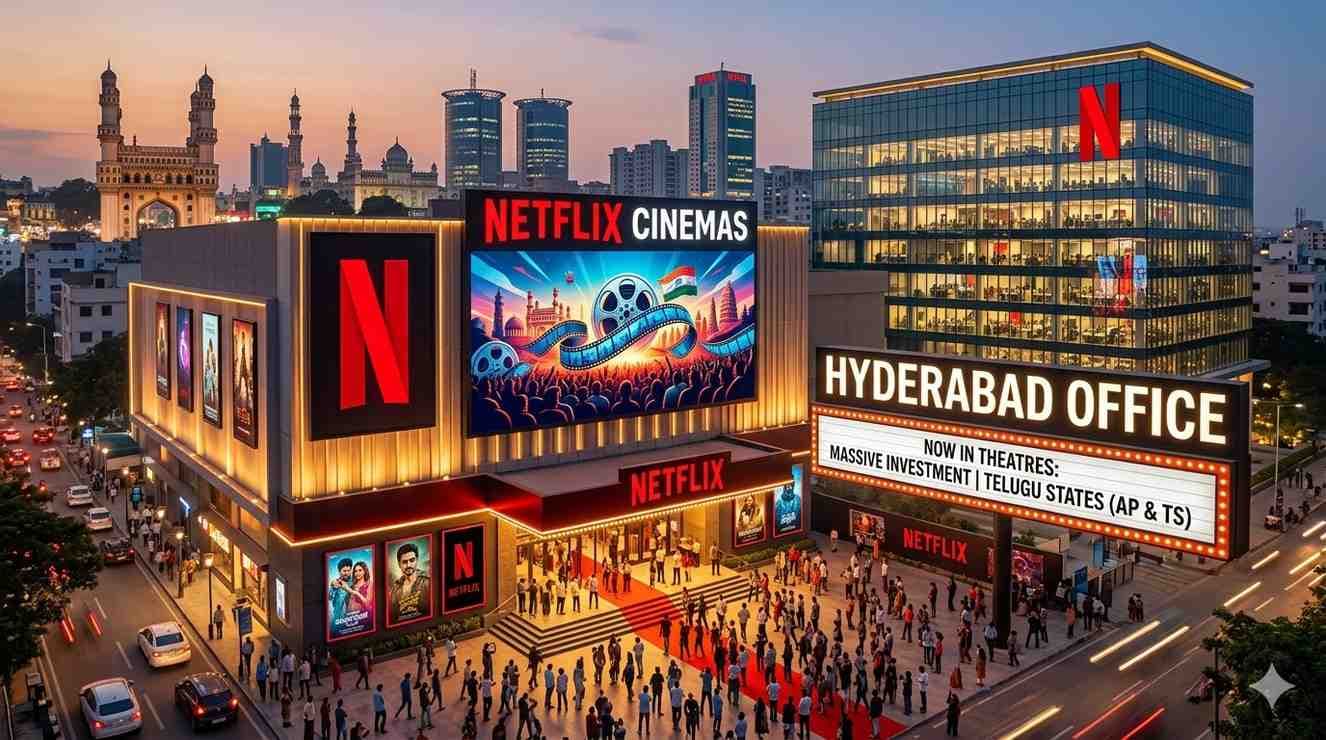
Netflix has signaled interest in expanding beyond streaming in India. Reports point to a growing presence in Hyderabad and possible moves into physical theatres, particularly in Telugu-speaking regions. Understanding what this could mean requires some background on how global streaming platforms have historically approached markets where cinema-going culture remains deeply embedded alongside rapid digital adoption.
TL;DR
- Netflix has established a significant office presence in Hyderabad to support regional operations.
- Reports suggest the company is exploring new theatres and film distribution in Telugu states.
- A hybrid model could blend OTT originals with big-screen releases.
- NRIs from Telangana and Andhra Pradesh may see indirect benefits through content growth.
- Traditional theatre chains could face new competition in smaller towns.
Office Expansion in Hyderabad
Netflix has established a substantial facility in Hyderabad to anchor its South India operations. Reports suggest the space is among the larger regional offices the company maintains in India, though the precise square footage and opening date have not been officially confirmed in public filings. This location serves as a base for regional operations and content development.
Staff at the site focus on South Indian productions. Telugu content receives particular attention due to strong and growing audience demand, both domestically and among diaspora communities abroad. Hyderabad itself occupies a strategically useful position: it is the shared capital of Telangana and Andhra Pradesh, making it a natural administrative and creative hub for productions targeting audiences across both states. The city also hosts a well-established film production ecosystem — commonly referred to as Tollywood — which gives any platform operating there access to experienced crews, post-production facilities, and established talent relationships.
For a global platform, maintaining a regional office of this scale signals more than administrative convenience. It typically reflects a longer-term commitment to local content pipelines, which in turn requires proximity to the creative community, government stakeholders, and distribution partners who shape how films and series reach audiences. The presence of such an office also facilitates faster decision-making on content acquisitions and original productions, allowing executives based in Hyderabad to respond more quickly to emerging trends in regional storytelling and audience preferences. This proximity to the creative ecosystem can reduce production timelines and improve the cultural authenticity of projects developed for Telugu audiences.
Reported Theatre Plans
Industry observers note reported interest in building theatres across Telugu-speaking states. Several sources suggest emphasis falls on smaller towns in Telangana and Andhra Pradesh, where modern multiplex infrastructure remains limited. Distribution of theatrical films also appears under consideration, though no formal announcements have been confirmed as of the time of writing.
Some originals developed for streaming might receive limited big-screen runs if such distribution plans move forward. This approach would seek viewers who prefer cinema halls over home viewing — a meaningful segment in smaller Indian cities where communal film-going remains a cultural cornerstone. The economics of such a strategy differ considerably from pure streaming: physical venues require capital expenditure, ongoing maintenance, and local regulatory compliance, but they also generate ticket revenue and can serve as marketing vehicles that raise platform awareness in communities where subscription conversion through digital channels alone is slower.
The theatrical exhibition model has historically operated on different economic principles than streaming. While streaming platforms generate recurring subscription revenue from a broad geographic footprint, theatrical operations depend on per-ticket sales concentrated in specific locations. For a platform considering both models simultaneously, the challenge lies in optimizing content strategy across both channels. A film that performs well theatrically in a Tier-2 town might drive subsequent streaming subscriptions in that region, creating a virtuous cycle where theatrical presence builds brand loyalty that translates into digital adoption. Conversely, streaming content that has already accumulated millions of views may not justify the costs of theatrical exhibition, requiring careful curation of which titles receive big-screen treatment.
Target Audience in Tier-2 and Tier-3 Locations
Many smaller towns across Telangana and Andhra Pradesh lack modern multiplexes. A platform like Netflix entering physical exhibition could fill gaps that traditional chains have not prioritised. The strategy, if realised, would address both access and a genuine preference for communal viewing that streaming alone cannot replicate.
Regional language audiences in these markets have demonstrated strong loyalty to Telugu cinema. Box-office results for major Telugu releases in recent years reflect that loyalty. A well-resourced entrant with existing content libraries and production pipelines could accelerate the development of local theatrical infrastructure. It is also worth considering that Tier-2 and Tier-3 towns often have younger demographic profiles and rising disposable incomes, making them attractive targets for platforms seeking to grow their subscriber base beyond already-saturated metropolitan markets. In this context, a physical theatre presence could serve a dual purpose: generating direct revenue while simultaneously building brand familiarity that nudges audiences toward digital subscriptions over time.
Single-screen theatres have historically served these smaller towns, but many operate ageing infrastructure and face challenges attracting premium content. A new entrant with both content and capital could reshape audience expectations in these locations, potentially prompting existing operators to invest in upgrades or adjust programming strategies. The competitive dynamics in Tier-2 and Tier-3 markets differ substantially from metropolitan areas, where multiple multiplex chains already compete aggressively. In smaller towns, a single new venue can meaningfully alter the theatrical landscape, potentially drawing audiences away from existing single-screen operations or encouraging consolidation among smaller operators.
The demographic profile of these towns also matters significantly. Younger audiences in Tier-2 and Tier-3 locations may be more receptive to a platform that combines theatrical and digital offerings, whereas older audiences may continue to prefer traditional single-screen theatres. Understanding these nuances would be essential for any platform planning a physical expansion. Additionally, the availability of reliable internet connectivity in these towns affects the viability of a hybrid model — areas with poor broadband infrastructure may rely more heavily on theatrical exhibition, while regions with strong digital infrastructure can support a more balanced mix of both channels.
Comparative Analysis of Distribution Models
| Model | Reach in Small Towns | Content Control | Revenue Streams |
|---|---|---|---|
| Traditional Theatres | Moderate | Shared with producers | Ticket sales only |
| OTT Platforms | High via mobile | Full | Subscriptions |
| Hybrid Theatre + OTT | High | Full | Tickets plus subscriptions |
The hybrid path combines physical presence with digital access. It differs from pure streaming by adding venue operations, which carry higher fixed costs but also open new revenue lines and brand visibility in markets where internet penetration alone may not convert casual viewers into paying subscribers. Each model carries distinct advantages and constraints that shape strategic decision-making for platforms operating in regional Indian markets.
For a platform competing with entrenched local and national players, owning or operating theatres could also serve as a content-testing ground — gauging audience response before committing to wider streaming releases. This kind of staged release strategy is not entirely new; international studios have experimented with limited theatrical windows to build word-of-mouth before a broader digital rollout. Applying that logic to regional Indian markets, where social proof and community recommendation carry significant weight in driving viewership, could make the hybrid model particularly well-suited to the Telugu-speaking audience. The value of word-of-mouth marketing in smaller towns should not be underestimated — in communities where social networks are tighter and recommendations from trusted sources carry more weight, a successful theatrical run can generate organic awareness that digital marketing alone might struggle to achieve.
From a competitive standpoint, the table above simplifies a more nuanced picture. Traditional theatre chains benefit from established relationships with distributors and exhibitors, as well as deep familiarity with local audience preferences. OTT platforms counter with data-driven content decisions and the ability to reach audiences regardless of geography. A hybrid operator would need to manage both sets of capabilities simultaneously — a demanding but potentially rewarding proposition if executed well. The operational complexity of managing both theatrical and streaming operations should not be minimized; it requires different expertise, different supply chains, and different customer engagement strategies. However, the potential rewards — access to multiple revenue streams and the ability to reach audiences through their preferred medium — could justify the added complexity.
Implications for NRIs
Telugu NRIs in the United States, United Kingdom, Canada, Australia, UAE and Singapore often follow regional cinema closely. Stronger investment in local production and exhibition infrastructure — if reports of Netflix's expansion plans prove accurate — may improve production values and storytelling ambition over time, benefiting diaspora audiences who consume this content on streaming platforms abroad.
Stronger local infrastructure could support more projects that resonate with diaspora tastes. Some NRIs also participate in film financing, and any expansion of the theatrical ecosystem in Telugu states might open additional channels for such involvement. Those considering any financial participation in related ventures should seek advice from qualified professionals familiar with cross-border investment regulations. India's regulatory framework governing foreign investment in the media and entertainment sector involves multiple authorities, and the rules applicable to NRIs can differ from those governing foreign institutional investors or resident Indians. Professional guidance is therefore essential before drawing conclusions from media reports alone.
Beyond direct investment considerations, NRIs may also find that a more robust local production ecosystem shortens the gap between domestic theatrical releases and international streaming availability — a recurring frustration for diaspora audiences who wish to watch major Telugu releases close to their original release dates. The timing of content availability across different geographic markets has long been a source of friction for diaspora communities, and any expansion that improves the speed and coordination of theatrical and streaming releases could meaningfully enhance the viewing experience for NRIs. Additionally, increased investment in Telugu content production could lead to more projects that explicitly acknowledge or address diaspora perspectives, creating content that resonates more deeply with audiences living abroad.
Market Context for Regional Content
Telugu films have posted consistent box-office results over recent years, with several productions crossing significant revenue milestones both domestically and in overseas markets. Netflix already produces several Telugu originals. Adding theatres would extend that footprint into physical exhibition — a move that, according to Reuters business coverage, reflects a broader global conversation about how streaming platforms can coexist with, or even participate in, traditional cinema.
Job creation in distribution and venue management forms one expected outcome of any meaningful physical expansion. Existing single-screen operators may need to adapt their programming and pricing strategies in response to a well-capitalised new entrant. For smaller operators in Tier-2 and Tier-3 towns, the competitive pressure could be significant, though it may also raise overall audience expectations and attendance habits. The employment implications extend beyond theatre operations themselves — a larger theatrical footprint would require additional staff in marketing, customer service, technical support, and content curation roles, potentially creating meaningful employment opportunities in regions where such positions may be scarce.
State-level policy in Telangana and Andhra Pradesh also shapes the environment for any such expansion. Both states have historically offered incentives to support film production and exhibition, and the regulatory landscape governing theatre licensing, entertainment tax, and foreign investment in exhibition can vary. Any platform planning physical venues would need to engage with these frameworks carefully, and timelines for expansion could depend as much on policy clarity as on commercial readiness. The entertainment tax structure in particular can significantly affect the economics of theatrical operations — variations in tax rates between states or even between municipalities within a state can influence where a platform chooses to locate its venues.
The Netflix Corporate Site remains the authoritative source for confirmed announcements. Until formal disclosures appear there, the theatre and distribution plans described in this article should be treated as reported possibilities rather than confirmed strategy.
Next steps
Monitor official announcements from Netflix India via the Netflix Corporate Site. Track state-level entertainment policies in Telangana and Andhra Pradesh, as regulatory frameworks governing theatre licensing and foreign investment in exhibition can affect timelines significantly. NRIs interested in related opportunities should consult local advisors on any investment considerations before acting on media reports alone.
Sources
Continue reading — NRI Globe pillar guide: NRI Taxation India — NRE/NRO/DTAA/FBAR
Related NRI Globe Coverage
- Oracle Layoffs Create Panic Among NRIs: 6 AM Emails, AI Push, India Impact — What Indian Tech Professionals Must Know
- India-EU Free Trade Agreement 2026: Negotiations Concluded, Ratification in Progress — NRI & Diaspora Impact
- India DPDP Act 2026 — NRI Business Cross-Border Data Compliance Guide
- Strong US Jobs Report May 2026: Rate-Hike Outlook and What It Means for NRI Investments and Mortgages
- US-India Trade Deal: Tariff Cuts and What They Mean for NRIs and the Indian Economy in 2026
- Building a Cross-Border Business as an NRI: What Actually Holds You Back in 2026
- Budget 2026 GST Rate Updates for NRIs
- Bed Bath & Beyond Skips California in Expansion Over Steep Economic Barriers
Fresh from NRI Globe
- YouTuber Nandu's World (Rama Nandana) UK Visa & Job Fraud Case: Full Details + Key Lessons for NRIs (2026)
- Dussehra / Vijayadashami 2026 Events Country-Wise — Global NRI Directory (Ram Lila, Ravana Dahan, Durga Puja Pandals, Ayudha Puja Venues + Booking)
- Diwali 2026 Events Country-Wise — Global NRI Directory (White House, Leicester, London Trafalgar, Toronto, Auckland, Sydney Parramasala, Fiji, Mauritius, Trinidad, South Africa and More)
- Diwali / Deepavali 2026 Country-Wise NRI Celebrations — Complete Global Guide (USA, UK, Canada, Australia, Fiji, Mauritius, Trinidad, South Africa, UAE and 30+ Countries)