
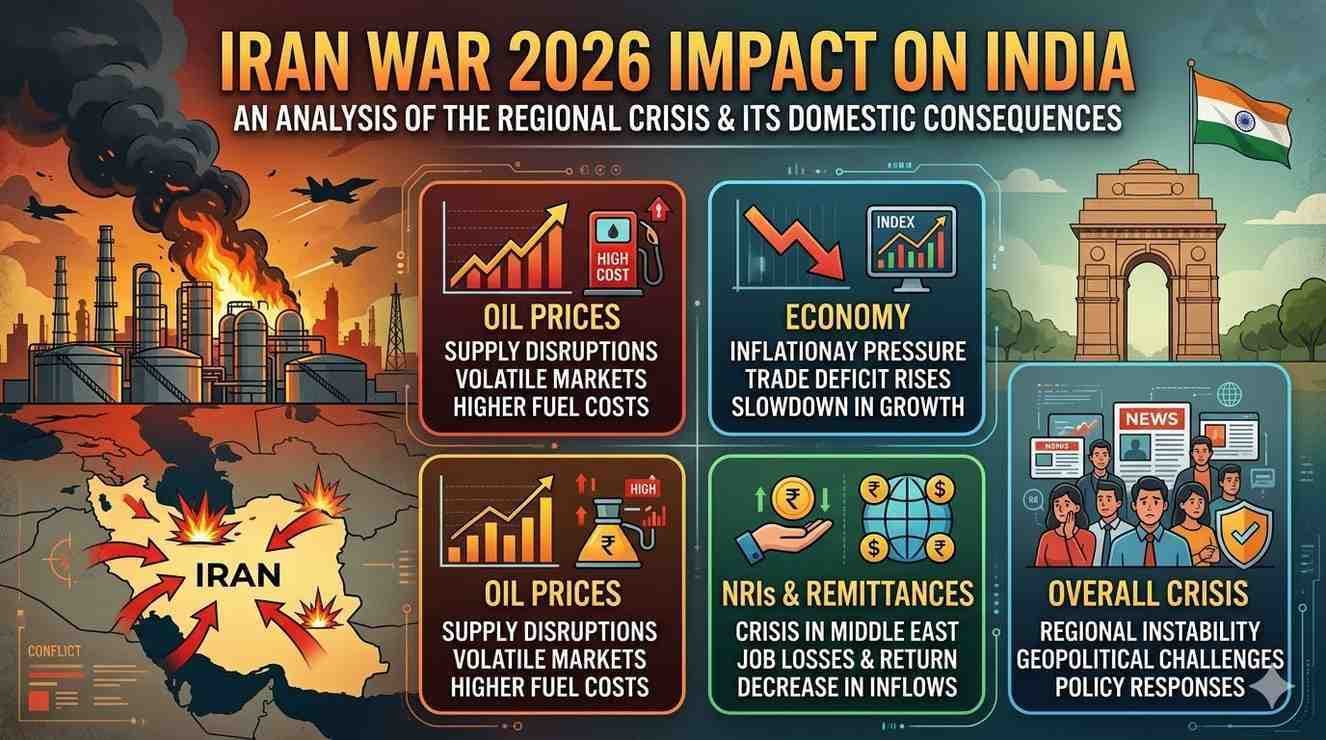
The 2026 Iran war — which began with major US and Israeli strikes on Iran on 28 February and has seen a fragile ceasefire since April with periodic flare-ups — is sending ripples far beyond the Middle East. For the millions of Non-Resident Indians working and living in the Gulf, and for their families back in India, the consequences are already being felt in jobs, money sent home, fuel costs and daily life. With over 9-10 million Indians employed across the UAE, Saudi Arabia, Qatar, Kuwait, Oman and Bahrain, and these workers sending home tens of billions of dollars every year, any prolonged instability in the region hits Indian households directly. Here is a clear, practical breakdown of how the conflict is affecting NRIs as of early June 2026 and what to watch out for.
Quick background: where the conflict stands
US and Israeli forces launched large-scale strikes on Iranian military sites and leadership in late February 2026. Iran responded with missile and drone attacks across the region. A ceasefire was reached in early April, but low-level exchanges, attacks on some Gulf targets, and tensions over the Strait of Hormuz have continued. The conflict has now passed its 100th day with recent flare-ups threatening the fragile truce.
The biggest immediate risks for the global economy — and especially for energy-importing nations like India — come from potential disruptions in the Strait of Hormuz (through which a huge share of the world's oil passes) and broader economic uncertainty in the Gulf.
1. Jobs and livelihoods of NRIs in the Gulf
This is the most direct and painful impact for many families.
- Construction, oil and gas services, hospitality and retail — sectors that employ large numbers of Indians — are highly sensitive to regional instability.
- Project delays, reduced investments and economic slowdown in GCC countries are already creating uncertainty. Some reports indicate job losses or salary cuts in affected sectors.
- A prolonged conflict could lead to a sharper economic contraction in parts of the Gulf, putting more pressure on expatriate workers.
Reality check for NRIs: Many Indian workers — especially in blue-collar and mid-level roles — are staying put because returning home without a secure job in India is not viable for most families. However, those in project-based or construction roles are facing the highest risk.
The Indian government has activated 24/7 control rooms and is monitoring the situation closely through embassies in the region.
2. Remittances to India under pressure
This is the biggest long-term concern for the Indian economy and millions of families.
- Gulf countries account for a very large share of India's remittances (estimated USD 50 billion-plus annually out of total remittances that crossed USD 135 billion in recent years).
- If Gulf economies slow down significantly, construction and service sectors contract, and projects get delayed or cancelled, remittance inflows can drop sharply.
- Experts warn that even a 10-20 percent decline in Gulf remittances could mean a loss of USD 5-10 billion annually for India. In a worst-case prolonged scenario, the hit could be much higher.
States most affected: Kerala, Uttar Pradesh, Bihar, Tamil Nadu, Andhra Pradesh and Rajasthan — regions that rely heavily on Gulf earnings for household income, education, healthcare and real estate purchases.
For NRIs sending money home regularly, this means tighter budgets for families in India and potential delays in big expenses like house construction, weddings or education fees.
3. Oil prices, inflation and cost of living in India
Even if you live in the Gulf, your family in India feels this immediately.
- India imports a large portion of its crude oil. Any sustained disruption or risk premium in the Strait of Hormuz pushes global oil prices higher.
- Higher oil prices translate directly into costlier petrol and diesel in India, increased prices of goods (transport costs rise), higher overall inflation, and pressure on the Indian rupee and current account deficit.
Airlines operating India-Gulf and international routes are also facing higher fuel bills and, in some cases, longer flight paths due to airspace restrictions or avoidance zones. This eventually shows up in ticket prices.
For middle-class families in India dependent on Gulf remittances, this creates a double squeeze: possible lower inflows plus higher living costs.
4. Travel, safety and evacuation concerns
- Flights: Many routes over or near conflict zones have seen disruptions, rerouting or higher costs. Check with your airline regularly.
- Indians in Iran: There is a relatively small Indian community in Iran (around 10,000-plus). The Indian government has facilitated evacuations where needed, routing through neighbouring countries.
- Gulf NRIs: While large-scale evacuation from GCC countries has not been required so far, the situation is being monitored. Some families have chosen to send children or elderly members back to India temporarily as a precaution.
- Indian embassies and consulates in the Gulf are on high alert and providing regular updates.
Advice: Keep your passport, visa and important documents updated. Register on the MADAD portal (MEA) and share your location and contact details with your embassy. Stay in touch with your company's HR for any contingency plans.
5. Impact on NRI investments and real estate in India
- Stock markets and mutual funds: Global uncertainty often leads to FII outflows and short-term volatility in Indian markets. NRIs investing in Indian equities or mutual funds may see short-term paper losses.
- Real estate: A sustained drop in remittances can slow demand in certain segments — especially in Tier-2 and Tier-3 cities and states with high NRI populations. However, long-term demand for housing in India remains structurally strong.
- Rupee depreciation: If it happens, it actually increases the rupee value of dollars, euros or pounds sent home — a small silver lining for remitters, though it makes imports more expensive for everyone.
Many NRIs are adopting a wait-and-watch approach on new large investments until the situation stabilises.
Practical steps NRIs should take right now
- Financial buffer. Build or maintain 6-9 months of emergency savings (in accessible form) for your family in India.
- Diversify income. If possible, explore skills or side options that are less dependent on the Gulf economy.
- Stay informed. Follow official Indian embassy updates rather than unverified social media forwards. Use the MADAD app or portal.
- Travel plans. Avoid non-essential travel through high-risk zones. Keep flexible tickets where possible.
- Family communication. Have a clear plan with your family in India about what to do in case of sudden job loss or evacuation signals.
- Insurance and documents. Review health and travel insurance and ensure all documents are in order.
Long-term outlook
India has managed to maintain a careful diplomatic balance between the US, Israel and Iran or Gulf states. This helps protect core interests like the Chabahar port project and energy security to some extent. However, prolonged regional instability is never good for an economy that depends so heavily on Gulf energy and labour markets.
The coming weeks and months will be critical. If the ceasefire holds and tensions de-escalate, the impact on NRIs and remittances should remain manageable. Any major new escalation could significantly worsen the situation for Gulf Indians and their families back home.
FAQs
Is there a risk of mass evacuation of Indians from the Gulf? Not at present. The Indian government is closely monitoring the situation and has activated support mechanisms, but large-scale evacuation from GCC countries has not been announced.
How much can remittances drop? Estimates vary. A short conflict may cause a 5-10 percent dip. A prolonged and more damaging war could lead to much steeper declines (20-30 percent in worst-case modelling by some analysts).
Should NRIs return to India immediately? Most experts and community voices advise against panic returns. Returning without a clear job or financial plan in India can create bigger problems for families. Stay updated through official channels and your employer.
Will oil prices keep rising? It depends on developments in the Strait of Hormuz and overall conflict intensity. Even temporary disruptions add a risk premium to global oil prices.
The 2026 Iran war has once again shown how interconnected the lives of NRIs in the Gulf are with both regional stability and the Indian economy. While the situation remains fluid, staying informed, financially prepared and connected with official Indian support systems is the best approach right now. If you are an NRI in the Gulf or have family there, what specific concerns are you facing? Share your thoughts in the comments — we are reading and will try to address common questions in follow-up updates.
Stay safe. For the latest official advisories, regularly check the Ministry of External Affairs website or your local Indian embassy and consulate channels.
This article is based on reports from BBC, Al Jazeera, government statements and economic analyses as of 9 June 2026. The situation is evolving rapidly. Always verify with official sources for the most current information.
Continue reading — NRI Globe pillar guide: UAE Golden Visa Complete Guide
Related NRI Globe Coverage
- Iran War 2026: Gold, Oil, Crypto Impact
- Iran War Hits India: Rupee, Oil & NRI Risks Rise
- Trump’s Iran Warning Sends Oil Past $110
- Iran War 2026 Impact on India: Oil Prices, Economy, NRIs & Remittances Crisis
- H-1B $100,000 Fee Rule 2026 — Complete Guide for Indian Tech Workers and Employers (What NRIs Need to Know)
- AI Impact on IT Jobs: A 2026 Reality Check — Displacement, Wage Premiums and the Two-Track Labour Market
- India-EU Free Trade Agreement 2026: Negotiations Concluded, Ratification in Progress — NRI & Diaspora Impact
- India-US Trade Relations 2026 Analysis: $240B Bilateral, Section 301 Tariffs, Interim Trade Agreement & NRI Impact
Fresh from NRI Globe
- YouTuber Nandu's World (Rama Nandana) UK Visa & Job Fraud Case: Full Details + Key Lessons for NRIs (2026)
- Dussehra / Vijayadashami 2026 Events Country-Wise — Global NRI Directory (Ram Lila, Ravana Dahan, Durga Puja Pandals, Ayudha Puja Venues + Booking)
- Diwali 2026 Events Country-Wise — Global NRI Directory (White House, Leicester, London Trafalgar, Toronto, Auckland, Sydney Parramasala, Fiji, Mauritius, Trinidad, South Africa and More)
- Diwali / Deepavali 2026 Country-Wise NRI Celebrations — Complete Global Guide (USA, UK, Canada, Australia, Fiji, Mauritius, Trinidad, South Africa, UAE and 30+ Countries)