
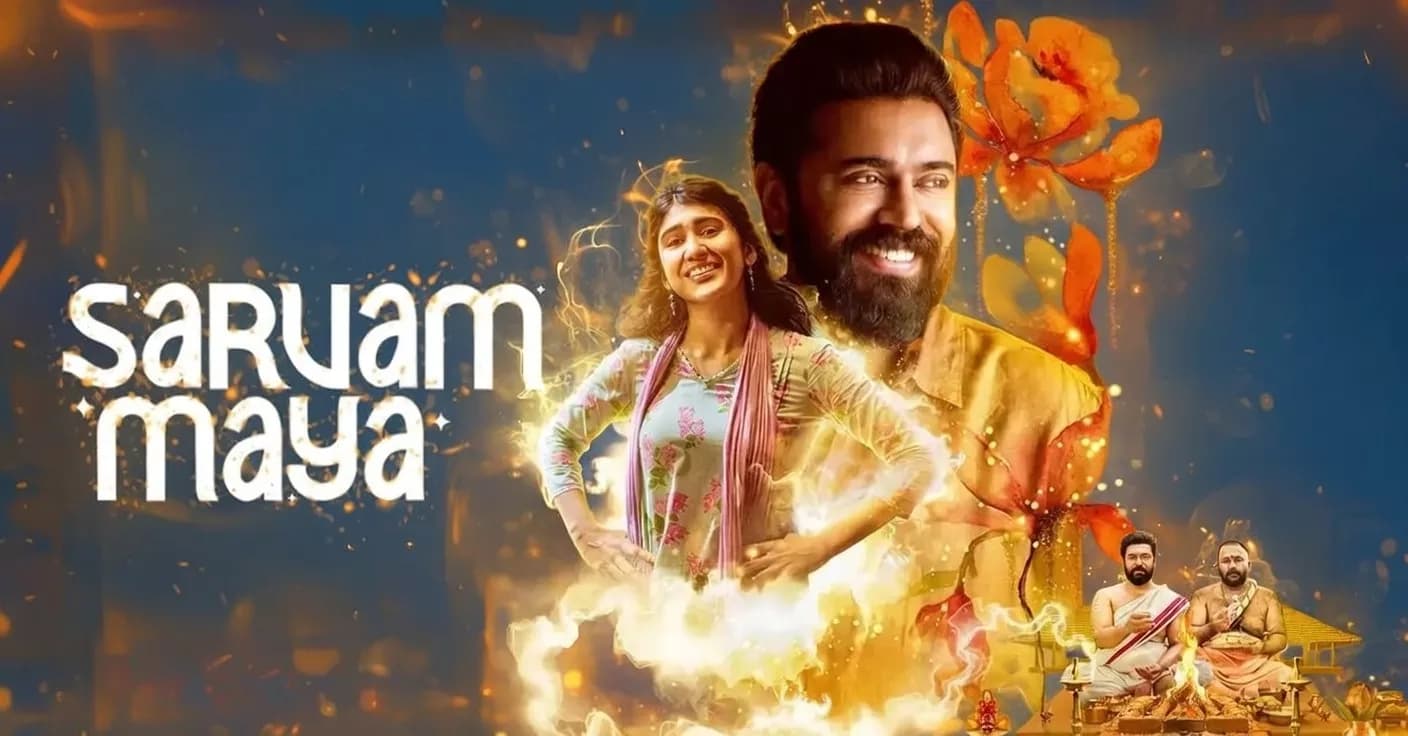
Sarvam Maya: The Illusion Theory Behind the Ending
The 2025 Malayalam hit Sarvam Maya (translating to "Everything is Maya" or "All is Illusion"), directed by Akhil Sathyan and starring Nivin Pauly as Prabhendhu, blends horror-comedy with profound emotional depth. At its core lies the ancient Indian philosophical concept of Maya — the veil of illusion that obscures ultimate reality, as described in Advaita Vedanta by Adi Shankaracharya. The film's title isn't coincidental; the climax unravels layers of perception, attachment, love, death, and liberation, leaving viewers pondering: What is real, and what is mere projection?
The climax delivers an emotional, open-ended resolution where the ghost "Delulu" reveals her true identity as Maya Mathew, a young woman who died in a tragic accident with unresolved desires. Through a heartfelt hug, Prabhendhu absorbs her memories, she finds peace and fades away, and he later provides closure to her grieving mother by affirming a connection that may or may not have existed in the physical world. Prabhendhu then pursues his musical dreams, forever transformed.
But the true brilliance emerges in its philosophical interpretations. Here are multiple deep explanations of the climax, drawing from Vedantic wisdom, existentialism, psychology, and more — each offering a fresh lens on why Sarvam Maya resonates so powerfully.
1. Advaita Vedanta: The Dissolution of Maya and Attainment of Moksha
In Shankaracharya's philosophy, the world is Maya — an illusory appearance superimposed on Brahman (ultimate reality). The individual soul (jiva) mistakes the unreal for real due to ignorance (avidya). Liberation (moksha) comes when this illusion drops through self-realization.
In the film, Delulu/Maya embodies trapped attachment — her unfulfilled love and accident keep her bound to samsara (cycle of birth and death). Prabhendhu, an atheist from a priestly family, represents the jiva navigating illusion. The climax hug symbolizes the moment of recognition: when Prabhendhu "sees" her true story and accepts it, the veil lifts. Maya fades not in tragedy but in peaceful dissolution — her atman merges back into the whole, free from ego-driven longing. Prabhendhu's "yes" to Maya's mother isn't literal truth but compassionate affirmation, dissolving dualities (real vs. ghost, love vs. projection). The gentle breeze at the end hints at Brahman’s subtle presence: everything was always one, masked by Maya.
This reading makes the title literal — sarvam maya, yet beyond it lies unchanging truth.
2. The Hallucination Theory: Maya as Psychological Projection (Mind-Only Reality)
Some interpretations view Delulu as Prabhendhu's delusion — a coping mechanism for his own grief, family pressures, and unfulfilled dreams. The film plants subtle clues (e.g., only he interacts with her, physical impossibilities explained away).
Philosophically, this echoes Yogacara Buddhism's "mind-only" (cittamatra) doctrine or modern phenomenology: reality is constructed by consciousness. The climax becomes Prabhendhu's integration of his shadow self. By "releasing" Delulu, he confronts suppressed emotions, accepts loss, and achieves wholeness. His musical awakening symbolizes creative rebirth after illusion shatters.
The mother's scene adds irony: Prabhendhu's "yes" fabricates closure for her, mirroring how we construct narratives to ease suffering. Is love ever "real," or always a beautiful delusion?
3. Existentialism and Absurd Love: Authentic Being Amid Illusion
Drawing from Sartre or Camus, existence precedes essence — we create meaning in an absurd world. Prabhendhu's journey is existential: rejecting priesthood for music, bonding with a "ghost," facing love's complications.
The climax's confession and fade highlight radical freedom. Maya’s love, born in limbo, is authentic despite its impossibility. Prabhendhu's hesitation and eventual affirmation choose compassion over truth — an existential act of bad faith turned heroic. He doesn't "win" her but honors shared meaning. The open ending (did he love her back?) forces viewers to confront: In a world of illusions, authentic connection defies logic, yet transforms us.
4. Karmic Closure and Interconnected Souls (Bhakti and Rebirth Lens)
From a devotional angle, unresolved karma binds souls across lives. Maya's accident leaves her spirit restless; Prabhendhu becomes the instrument for her release.
The hug transfers karma — he feels her pain, she finds peace. His visit to the mother completes the circle, freeing both families. The name coincidence (or not) suggests soul recognition beyond time. Prabhendhu carries her essence forward, turning grief into art — a bhakti-like surrender where love transcends death.
5. Modern Grief and Healing: The Ghost as Inner Voice
Psychologically, Delulu represents Prabhendhu's anima (Jungian inner feminine) — guiding him toward emotional maturity. Her fade marks integration: he no longer needs external projection to feel whole.
The climax heals dual grief — Maya's literal death and Prabhendhu's metaphorical one (lost dreams). His music pursuit symbolizes rebirth through acceptance.
Sarvam Maya's climax isn't just emotional — it's a philosophical meditation on illusion, love, and liberation. Whether supernatural truth, mental construct, or compassionate fiction, it reminds us: In the grand play of Maya, the deepest connections dissolve boundaries, leading to freedom.
What’s your take on the ending? Drop your thoughts below — and watch Sarvam Maya on JioHotstar for the full experience.
Latest NRI News & Global Updates:
Health, Wellness & Lifestyle for NRIs
https://nriglobe.com/lifestyle/
Latest NRI News & Global Updates
https://nriglobe.com/news/
Business & Finance News for NRIs
https://nriglobe.com/business/
Investment Guides for NRIs
https://nriglobe.com/investment/
Jobs & Career Opportunities for NRIs
https://nriglobe.com/jobs/
Related NRI Globe Coverage
- Hollywood Scandal Explained: Riley Keough
- Worldwide OTT Releases This Week — September 17-21, 2026 (Netflix, Prime Video, Max, Disney+, Apple TV+, JioHotstar) NRI Family Guide
- Fall 2026 Hollywood Movie Preview for NRI Families — October, November, December Big Releases (Oscar Contenders, Marvel, Family Films)
- Hollywood This Week — September 17-21, 2026 New Movie Releases, Box Office Update and Where to Watch (NRI Family Guide)
- OTT Releases October 2026 for NRI Families — What's New on Netflix, Prime Video, JioHotstar (USA, UK, Canada, Australia)
- Paradise Censor Review: Nani's Most Awaited Film Gets Positive Buzz with Minimal Cuts
- The Paradise Clears Censor with 'A' Certificate; Runtime 2h 49m — Strong Early Buzz Ahead of September 24, 2026 Release
- Major Movie Releases This Week in the USA (Week of September 13, 2026) — NRI Diaspora Guide
Fresh from NRI Globe
- YouTuber Nandu's World (Rama Nandana) UK Visa & Job Fraud Case: Full Details + Key Lessons for NRIs (2026)
- Dussehra / Vijayadashami 2026 Events Country-Wise — Global NRI Directory (Ram Lila, Ravana Dahan, Durga Puja Pandals, Ayudha Puja Venues + Booking)
- Diwali 2026 Events Country-Wise — Global NRI Directory (White House, Leicester, London Trafalgar, Toronto, Auckland, Sydney Parramasala, Fiji, Mauritius, Trinidad, South Africa and More)
- Diwali / Deepavali 2026 Country-Wise NRI Celebrations — Complete Global Guide (USA, UK, Canada, Australia, Fiji, Mauritius, Trinidad, South Africa, UAE and 30+ Countries)