
Reported from Washington, August 31, 2026.
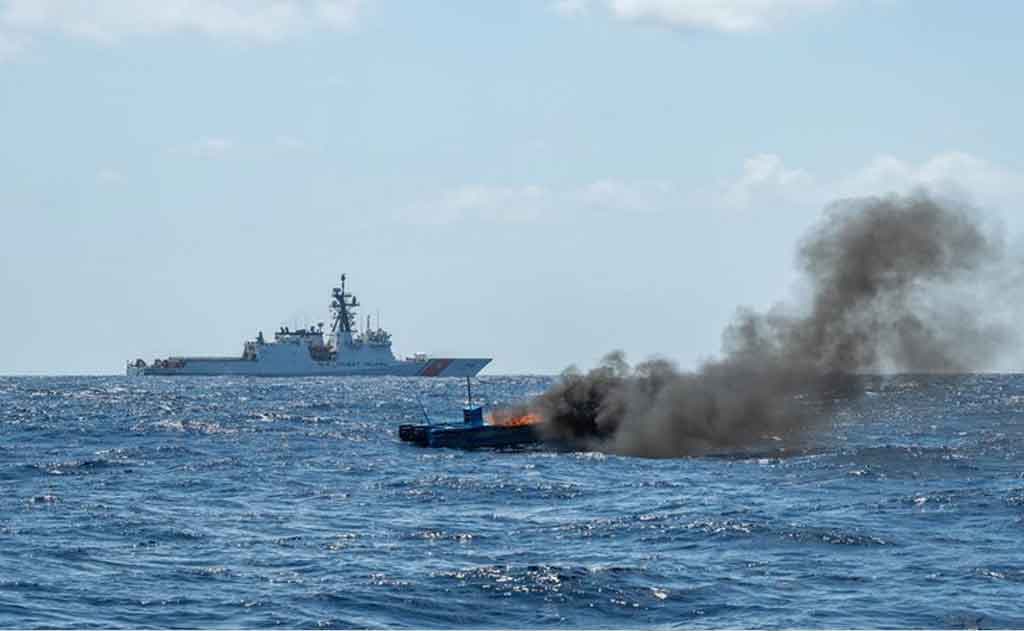
The United States military has resumed lethal kinetic strikes against vessels it identifies as involved in narco-trafficking, marking the end of a more than two-month pause in the controversial campaign known as Operation Southern Spear. On August 23–25, 2026, Joint Task Force Western Hemisphere, operating under US Southern Command (SOUTHCOM), conducted strikes in the Eastern Pacific and Caribbean that killed multiple individuals the Pentagon describes as "narco-terrorists."
According to official statements from SOUTHCOM, a low-profile vessel operating along established narco-trafficking routes in the Eastern Pacific was struck, resulting in two deaths. A subsequent strike in the Caribbean killed four. These actions represent the first publicly acknowledged lethal boat strikes since June 21, 2026.
Background of Operation Southern Spear
Operation Southern Spear was publicly framed in late 2025 as a military effort to disrupt the flow of narcotics into the United States from designated terrorist organizations and drug cartels operating in the Western Hemisphere. The campaign involves airstrikes and interdictions against small vessels in the Caribbean Sea and Eastern Pacific Ocean.
Prior to the recent pause, US forces had conducted dozens of strikes. Cumulative figures reported by the Pentagon and independent tracking show more than 60 vessels struck and over 200 individuals killed or presumed dead since the operation began. The majority of strikes have occurred in the Eastern Pacific, with a smaller number in the Caribbean.
SOUTHCOM Commander Gen. Francis L. Donovan has repeatedly emphasized the mission's focus on "imposing total systemic friction on narco-terrorists," disrupting operations, and protecting the US homeland.
The Latest Strikes and Official Justification
In the most recent announcements, SOUTHCOM stated that intelligence confirmed the targeted vessels' active involvement in narco-trafficking. The command described the operations as precise and lethal, underscoring resolve against cartels. No US military personnel were reported harmed.
The resumption follows a period in which strikes had largely stopped. The reasons for the pause have not been fully detailed in public statements, though scrutiny over civilian casualties, legal authority, and long-term effectiveness has grown among lawmakers, legal experts, and some international observers.
Legal and Policy Debate
The Trump administration has characterized the campaign as part of an armed conflict against drug cartels designated as terrorist organizations. This framing has allowed the use of military force with reduced judicial oversight compared with traditional law-enforcement interdictions. Critics, including some former officials and human-rights groups, have questioned the legal basis for lethal strikes on vessels in international waters and the classification of those killed as unlawful combatants.
Supporters argue that traditional interdiction methods have failed to stem the flow of fentanyl and other dangerous drugs into American communities and that military pressure is necessary to degrade cartel logistics.
Relevance for NRI Communities in the USA
For Indian-American and broader South Asian diaspora families living in the United States, the campaign intersects with daily concerns about public safety, the opioid crisis, and border security. Many NRI households have been affected, directly or indirectly, by the fentanyl epidemic that has claimed tens of thousands of American lives in recent years. At the same time, diaspora communities often value rule-of-law principles and closely follow debates about the proper limits of executive and military power.
The story also highlights the global nature of supply chains — both legitimate and illicit — that connect Latin America, the United States, and, in some cases, precursor chemicals originating in Asia.
What to Watch Next
Further strikes are possible as the campaign continues. Key questions remain around transparency of targeting criteria, independent verification of the status of those killed, coordination with partner nations in Latin America, and whether the operations produce measurable reductions in drug flows into the United States.
NRI Globe will continue monitoring official SOUTHCOM statements, congressional responses, and the broader impact of Operation Southern Spear on US security policy.
Continue reading — NRI Globe pillar guide: Returning to India — Complete Checklist
Related NRI Globe Coverage
- UAE News August 2026: Complete Roundup for NRIs — Heat, Security, Economy, India Ties & Daily Life
- August 2026 in American Sports: US Open, MLB, College Football & WNBA — What NRIs Are Watching
- Tensions Escalate in Gulf: Iran Launches Missiles Toward Qatar Targeting Al Udeid Air Base in Operation Basharat
- How NRIs Are Celebrating Labor Day 2026 Differently This Year — Community, Gas Prices & the Shift to Local
- Top Indian Community Labor Day Melas Across USA 2026 — City-by-City Guide (NJ, Chicago, Houston, Bay Area, NYC, Texas)
- David Warner's Janmashtami 2026 Wishes Touch NRIs Worldwide — 'Jai Shri Krishna' Post Sparks Global Diaspora Celebration
- Labor Day 2026 Events in USA: Complete Guide for Indian Families & NRIs — Indo American Fair, Bollywood Nights, Temple Events
- Uber, PayPal & Trade Desk Layoffs Sep 2026 — What It Means for NRIs and H-1B Visa Holders
Fresh from NRI Globe
- YouTuber Nandu's World (Rama Nandana) UK Visa & Job Fraud Case: Full Details + Key Lessons for NRIs (2026)
- Dussehra / Vijayadashami 2026 Events Country-Wise — Global NRI Directory (Ram Lila, Ravana Dahan, Durga Puja Pandals, Ayudha Puja Venues + Booking)
- Diwali 2026 Events Country-Wise — Global NRI Directory (White House, Leicester, London Trafalgar, Toronto, Auckland, Sydney Parramasala, Fiji, Mauritius, Trinidad, South Africa and More)
- Diwali / Deepavali 2026 Country-Wise NRI Celebrations — Complete Global Guide (USA, UK, Canada, Australia, Fiji, Mauritius, Trinidad, South Africa, UAE and 30+ Countries)