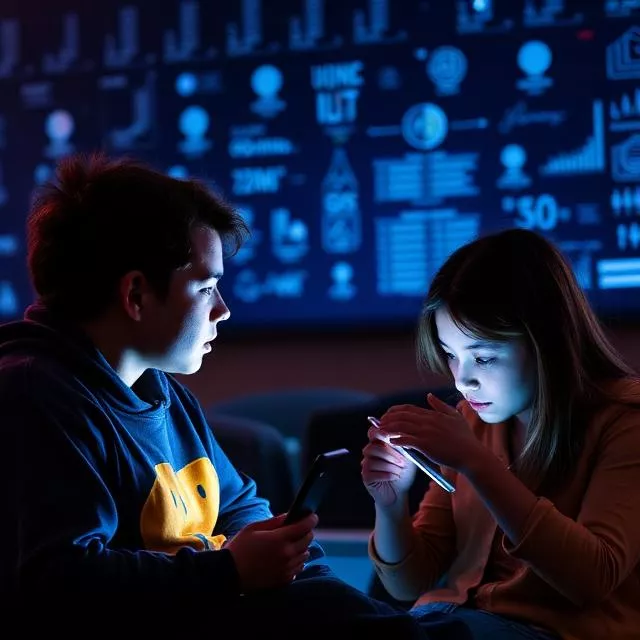
As Non-Resident Indian (NRI) parents, we often find ourselves navigating the delicate balance of raising our children in a world that feels both familiar and foreign. We strive to instill values, keep them grounded in their roots, and shield them from the pressures of a rapidly changing digital age. But the news of 14-year-old Gangadhar’s tragic death in Bengaluru, after being influenced by the Japanese anime series Death Note, hit us like a gut punch. It’s a story that shakes you, makes you question your parenting choices, and forces you to confront the unseen dangers lurking in the screens our kids are glued to. Here’s Gangadhar’s story, told through the lens of an NRI parent, with a heavy heart and a hope that it sparks conversations in our homes, no matter where in the world we are.
A Boy Like Ours
Gangadhar was the kind of kid we all hope to raise—bright, kind, and full of potential. The son of a musician, Ganesh, and a singer, Savita, he lived in Bengaluru’s Chennammakere Achchukattu area. At 14, he was a 7th-grader who loved strumming his guitar, playing with his pet dog Rocky, and excelling in his studies. He was the boy next door, the one who’d wave at neighbors with a shy smile, the one whose teachers spoke highly of. As NRI parents, we can picture him so clearly—our own kids, perhaps, with their passions for music or art, navigating adolescence in a world that’s both exciting and overwhelming.
But Gangadhar had a secret obsession: Death Note, a Japanese anime series that’s wildly popular among teens. For those of us unfamiliar, it’s a dark, gripping tale about a supernatural notebook that kills anyone whose name is written in it. The story dives deep into themes of power, morality, and death—heady stuff for a 14-year-old mind still figuring out the world. Gangadhar wasn’t just watching it; he was consumed by it. He even drew a character from the series on his bedroom wall, a sign of how deeply he’d been pulled into its world.
The Night Everything Changed
It was August 3, 2025, a night that started like any other. Gangadhar had dinner with his family, laughed and played with Rocky, and then retreated to his room. As parents, we know those moments—when our kids disappear into their own spaces, earphones in, screens glowing. For Gangadhar, that night was spent watching Death Note. Hours later, his parents found him. He had used a guitar string—his beloved instrument—to take his own life. On his desk lay a note, written in a steady hand, that broke hearts across Bengaluru and beyond:
“You raised me wonderfully for 14 years. I was very happy with you. The time has come for me to leave. By the time you read this letter, I will be in heaven.”
Reading those words, I felt a chill. How could a boy so full of life, so loved, feel that his “time had come”? As NRI parents, we’re often thousands of miles away, relying on video calls and quick texts to check in. Gangadhar’s note is a haunting reminder that even the kids who seem “fine” might be wrestling with thoughts we can’t see.
The Investigation and a Disturbing Truth
The Bengaluru police dove into the case, piecing together the puzzle of Gangadhar’s final hours. They found the Death Note character sketched on his wall, a stark clue to his state of mind. His phone, sent for forensic analysis, revealed hours spent immersed in the series. Friends, teachers, and family all said the same thing: Gangadhar showed no signs of distress. No fights at home, no bullying at school, no red flags. The only thread they could pull was his fixation on Death Note and its dark exploration of life and death.
As parents, we’ve all had those moments of unease—wondering if the shows or games our kids are into are “too much.” Death Note isn’t just a cartoon; it’s a psychological thriller that wrestles with big questions. For a teenager, those ideas can hit hard, especially without someone to help unpack them. Living abroad, we often worry about our kids feeling isolated, caught between cultures, or seeking solace in virtual worlds. Gangadhar’s story makes you wonder: could this happen to our child?
A Wake-Up Call for NRI Parents
Back in Bengaluru, this tragedy has sparked a firestorm of debate. People are talking about the impact of dark content on OTT platforms, mobile games, and social media. Psychologists are sounding alarms about how shows like Death Note can plant seeds in young minds, especially when kids watch alone, late at night, with no one to talk to. For us as NRI parents, it’s a stark reminder of the challenges of raising kids in a digital age, especially when we’re juggling time zones and long-distance parenting.
We teach our kids to stay safe—look both ways, don’t talk to strangers—but how do we protect them from the ideas they encounter online? Gangadhar’s parents didn’t see this coming, and that’s what makes it so terrifying. We’re not in Bengaluru, but we’re not immune. Our kids, growing up in the U.S., Canada, or the U.K., are just as likely to stumble across Death Note or something like it on streaming platforms. The distance makes it harder to notice the subtle shifts—the late nights, the closed doors, the obsession with a show or game.
What Can We Do?
This isn’t just Gangadhar’s story—it’s a call to action. As NRI parents, we can take steps to keep our kids safe, even from afar:
- Talk, Don’t Just Text: Make time for real conversations, not just “How’s school?” Ask what they’re watching, what they’re feeling. Share stories like Gangadhar’s to open up discussions about mental health.
- Set Screen Boundaries: Use parental controls on streaming platforms to limit access to mature content. Check in on what they’re watching, even if it’s “just anime.”
- Build a Support Network: Encourage your kids to connect with trusted adults—teachers, cousins, or family friends—especially if you’re far away. They need someone to turn to in real life.
- Know the Signs: Learn about mental health warning signs. Withdrawal, obsession with dark themes, or sudden mood changes could be clues something’s wrong.
- Reach Out for Help: If your child seems struggling, don’t wait. Connect them with counselors or helplines like Sumaitri (011-23389090, Delhi) or Sneha Foundation (044-24640050, Chennai) if you’re in India, or local resources wherever you are.
A Story That Stays With You
Gangadhar’s life ended too soon, but his story doesn’t have to. It’s a reminder to hold our kids a little closer, even if it’s through a screen across oceans. As NRI parents, we’re used to bridging distances—between countries, cultures, and generations. Now, we need to bridge the gap between our kids and the content they consume. Let’s talk to them, listen to them, and make sure they know they’re never alone, no matter what a show or a screen might tell them.
Gangadhar’s note said he’d be in heaven. I hope he’s at peace. And I hope his story inspires us to act before another family faces this kind of loss. Let’s make sure our kids’ stories have happier endings.