
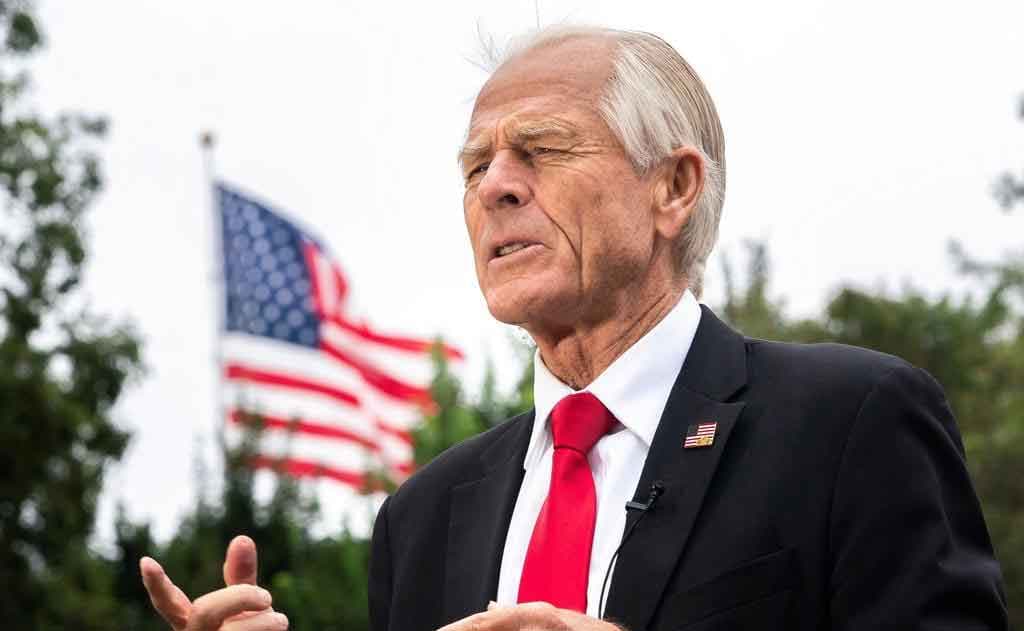
September 1, 2025 — White House trade adviser Peter Navarro ignited a major diplomatic controversy by accusing India's Brahmin elite of profiting from discounted Russian oil purchases that allegedly fund Russia's war in Ukraine. During a Fox News interview, Navarro justified President Donald Trump's proposed 25% tariffs on Indian goods, calling India the "Maharaja of tariffs" and a "laundromat for the Kremlin." His caste-based remarks drew swift condemnation from Indian officials, diaspora communities, and international observers who labeled them racist and rooted in colonial stereotypes. The escalating U.S.-India trade dispute now threatens their strategic partnership at a critical moment when both nations face shared challenges in the Indo-Pacific region.
TL;DR:
- Peter Navarro accused India's Brahmin elite of profiting from Russian oil arbitrage while funding Moscow's war effort.
- His caste-invoking language triggered backlash from Indian officials, diaspora groups, and international security experts as inflammatory and divisive.
- The controversy coincides with Trump's 50% tariffs on Indian goods and India's deepening energy ties with Russia.
- The dispute threatens the U.S.-India strategic partnership and India's role in regional security initiatives like the Quad.
- India's External Affairs Minister rejected U.S. criticism as hypocritical, citing America's own imports of Russian goods.
Navarro's Controversial Claims and the Caste-Based Framing
Peter Navarro, a key architect of Trump's trade policies, alleged that Indian refiners purchase crude oil from Russia at steep discounts, process it, and export the refined product at premium prices to markets across Europe, Africa, and Asia. He contended this arbitrage not only sustains Russia's military expenditures but also concentrates wealth among India's Brahmin elite while ordinary Indians bear the economic costs. "You've got Brahmins profiteering at the expense of the Indian people. We need that to stop," Navarro stated, doubling down on his criticism during subsequent media appearances.
The invocation of caste—a system formally abolished in India's constitution but still a source of social stratification—marked a significant departure from typical trade policy discourse. By framing the issue through caste divisions rather than corporate or sectoral analysis, Navarro's rhetoric appeared designed to inflame internal Indian social tensions. This approach drew sharp rebuke from observers who noted it echoed colonial-era stereotyping of Indian society.
Navarro's framing conflates three distinct issues: India's energy procurement strategy, refinery profit margins, and wealth distribution within Indian society. Times of India reported that Indian refineries operate as commercial entities responding to global market prices, not as vehicles for elite enrichment. The profit margins on refined petroleum are determined by international commodity markets, not by the religious or caste background of company shareholders.
Social Media Backlash and International Condemnation
Navarro's caste-based comments triggered immediate and sustained backlash across social media platforms, particularly X (formerly Twitter), where Indian users, academics, and policy experts condemned his remarks as inflammatory and designed to sow division. Business Today documented that journalist Vikram Chandra called for Navarro to be distanced from public platforms, while security analyst Navroop Singh accused Navarro of resorting to casteism after failing to sway Indian public opinion through conventional trade arguments.
International observers and security analysts raised concerns that Navarro's invocation of caste divisions could exacerbate social tensions within India and undermine efforts to address caste-based discrimination. Such rhetoric, critics argued, weaponizes internal social issues for external policy leverage—a practice that risks deepening communal divisions at a time when India's civil society organizations are working to reduce caste-based inequality and violence.
Indian officials responded with pointed criticism of U.S. hypocrisy. External Affairs Minister S. Jaishankar noted that the United States and European Union continue importing Russian goods, including uranium for America's civil nuclear industry. "If you don't like it, don't buy it. Nobody forces you to buy from us," Jaishankar stated, defending India's energy procurement as a matter of national interest and market-driven economics rather than elite profiteering. Business Standard reported that Indian officials emphasized the selective nature of U.S. criticism, which targets India's Russian oil purchases while ignoring similar transactions by other nations.
The Indian diaspora in the United States expressed particular concern. Community leaders viewed Navarro's remarks as a step backward in fostering mutual respect between the two democracies and worried about potential backlash against Indian-Americans in the U.S. workforce and business sectors. Multiple diaspora organizations issued statements condemning the rhetoric and calling for more respectful engagement between Washington and New Delhi.
The Energy Trade Reality: Context Behind the Controversy
India's increased reliance on Russian crude oil—rising from less than 1% of total imports before 2022 to over 35% in 2024-25—reflects both geopolitical shifts and economic pragmatism. Following Western sanctions on Russia after the 2022 invasion of Ukraine, Russian oil became available at significant discounts to buyers willing to accept logistical and reputational risks. The Hindu explained that Indian refineries, which process crude into petroleum products for domestic consumption and export, operate within a competitive global market where cheaper feedstock translates to lower production costs.
Navarro claims this surge is driven by profiteering rather than legitimate energy needs, but Indian officials argue that their energy deals stabilize global markets—a role the U.S. previously encouraged. India's position as a major refiner and exporter of petroleum products means its purchasing decisions affect global energy prices. By purchasing discounted Russian crude, Indian refineries help moderate global oil prices, which benefits consumers worldwide, including American drivers. This economic logic underpins India's defense of its energy strategy as serving broader global interests rather than narrow elite interests.
The refinery sector in India includes companies of various ownership structures—state-owned enterprises like Indian Oil Corporation, private firms, and joint ventures. Attributing refinery profits to a single caste group misrepresents the industry's composition and ignores the role of market forces in determining margins. Refinery operations involve thousands of workers, engineers, and managers across multiple communities and backgrounds, making caste-based characterizations factually inaccurate and analytically misleading.
U.S.-India Trade Tensions and Strategic Implications
The controversy unfolds against the backdrop of Trump's aggressive trade policies, which include a 50% tariff on Indian goods effective August 27, 2025. Indian Express reported that a U.S. Appeals Court had previously ruled these tariffs as "illegal," yet the Trump administration proceeded with implementation, signaling a willingness to challenge judicial oversight of trade policy.
Navarro has repeatedly criticized India across multiple dimensions. He previously characterized the Russia-Ukraine conflict as "Modi's war" and accused New Delhi of "strategic freeloading" by purchasing Russian weapons while simultaneously seeking U.S. technology transfers and defense partnerships. These criticisms, while framed in policy terms, often carry undertones suggesting India should align its foreign policy more closely with U.S. preferences. The pattern of escalating rhetoric suggests a broader effort to pressure India into reorienting its strategic posture.
The timing of Navarro's remarks is strategically significant. Prime Minister Narendra Modi was attending the Shanghai Cooperation Organization (SCO) summit in China, where he met with Russian President Vladimir Putin and Chinese President Xi Jinping. NDTV noted that the U.S. views such trilateral engagement with concern, fearing India's growing ties with Moscow and Beijing could undermine its role as a democratic counterweight to authoritarian powers in Asia. The public nature of Navarro's attack during Modi's diplomatic engagement with these leaders appears designed to signal U.S. disapproval and potentially complicate India's regional diplomacy.
Impact on U.S.-India Strategic Partnership and Regional Security
The escalating trade dispute threatens the U.S.-India strategic partnership, a cornerstone of efforts to counter China's influence in the Indo-Pacific. The Quad—a security dialogue involving the United States, India, Japan, and Australia—depends on India's commitment to regional security cooperation. Navarro's inflammatory rhetoric risks alienating New Delhi at a moment when coordinated Indo-Pacific strategy is increasingly vital.
India has positioned itself as a non-aligned nation navigating great-power competition, maintaining relationships with the United States, Russia, and China simultaneously. This approach reflects India's historical foreign policy doctrine and its assessment that its national interests are best served by strategic autonomy rather than exclusive alignment with any single power. The U.S. pressure on India's Russia ties, combined with inflammatory rhetoric, may push India further toward Russia and China rather than closer to Washington. This dynamic threatens the very partnerships that U.S. policymakers claim to value.
The controversy also affects bilateral trade negotiations and defense cooperation initiatives. India has indicated it will not yield to U.S. pressure on energy policy, viewing such decisions as sovereign matters. If the U.S.-India relationship deteriorates, it could undermine joint military exercises, intelligence sharing, and technology partnerships that both nations have developed over the past two decades. The costs of such deterioration extend beyond trade to include reduced cooperation on counterterrorism, maritime security, and space exploration.
Caste, Diplomacy, and the Limits of Trade Policy Rhetoric
Navarro's invocation of caste represents a troubling intersection of domestic Indian social issues and international trade discourse. Caste discrimination, while officially illegal in India, remains a source of social inequality and violence. By weaponizing caste terminology in a trade dispute, Navarro's rhetoric risks legitimizing caste-based divisions as a lens through which to understand India's economy and society.
This approach departs from conventional trade policy arguments, which typically focus on tariff rates, market access, and sectoral competitiveness. Instead, Navarro's framing suggests that India's trade practices reflect the malign intentions of a specific social group rather than the rational responses of commercial entities to market conditions. Such rhetoric can inflame communal tensions within India and undermine efforts by Indian civil society organizations working to reduce caste-based discrimination. It also sets a dangerous precedent for using internal social divisions as tools in international negotiations.
The diplomatic cost of such rhetoric extends beyond immediate trade negotiations. It signals to India's political leadership and public that the U.S. views India through a lens of internal social divisions rather than as a unified nation-state with legitimate strategic interests. This perception can harden Indian resistance to U.S. policy demands and strengthen arguments within India for greater strategic autonomy from Western influence. When major powers invoke domestic social hierarchies to justify external pressure, they risk undermining the very diplomatic relationships they seek to maintain.
Next Steps
Both the U.S. and India face critical decisions about how to proceed. The Trump administration must decide whether to pursue trade policy through inflammatory rhetoric or through conventional negotiation channels. India must determine how to defend its energy sovereignty while maintaining strategic relationships with the United States. Dialogue at the diplomatic level—between the State Department and India's External Affairs Ministry—may help de-escalate tensions, though Navarro's public statements have already damaged the relationship.
For Indian-Americans and diaspora communities, this dispute underscores the importance of engaging with U.S. policymakers to ensure that trade policy discourse remains grounded in economic analysis rather than social stereotyping. Professional organizations, business groups, and community leaders can advocate for respectful bilateral engagement that acknowledges India's legitimate national interests. Such engagement becomes increasingly important as trade disputes threaten to spill over into broader social and political dimensions.
Sources
- Times of India — Brahmins Profiteering: Trump Trade Adviser's Latest Jibe at India Over Russian Oil
- Business Today — Navarro Called Out for Bizarre Casteist 'Brahmins Profiteering' Take on India-Russia Oil Ties
- The Hindu — Brahmins Profiteering Off Indian People: White House Trade Adviser Peter Navarro
- Business Standard — Brahmins Profiteering Off Indians: Trump Adviser Navarro Justifies Tariffs
- The Hindu — 'Maharaj' in Tariffs: Trump's Trade Adviser Navarro Criticises India Over Russian Oil
- Indian Express — Peter Navarro on India-Russia Oil Trade and Tariffs
- NDTV — Donald Trump's Trade Advisor Attacks India Over Russian Oil
Continue reading — NRI Globe pillar guide: H-1B Complete Guide for Indians 2026
Related NRI Globe Coverage
- Trump Extends Iran Ceasefire: Impact on NRIs & Oil
- India Gets Iran Oil After 7 Years Under US Waiver
- Career Shifts in an AI World 2026: Trade Schools vs College Degrees – Why NRIs Are Rethinking
- US-India Trade Tensions Escalate as Navarro Criticizes Modi’s Geopolitical Moves
- FBI Leadership Tensions: Patel and Bongino vs. AG Bondi Over Epstein Files
- Yemen Houthis Threaten Attacks on US Ships in Red Sea: Escalating Tensions
- Software & Tech Layoffs in the USA (Week of September 13, 2026) — Uber, Apple, PayPal, Amazon Cuts & NRI Impact
- Uber Layoffs 3,300 Jobs Sept 2026 — NRI Tech Impact + H-1B Playbook
Fresh from NRI Globe
- YouTuber Nandu's World (Rama Nandana) UK Visa & Job Fraud Case: Full Details + Key Lessons for NRIs (2026)
- Dussehra / Vijayadashami 2026 Events Country-Wise — Global NRI Directory (Ram Lila, Ravana Dahan, Durga Puja Pandals, Ayudha Puja Venues + Booking)
- Diwali 2026 Events Country-Wise — Global NRI Directory (White House, Leicester, London Trafalgar, Toronto, Auckland, Sydney Parramasala, Fiji, Mauritius, Trinidad, South Africa and More)
- Diwali / Deepavali 2026 Country-Wise NRI Celebrations — Complete Global Guide (USA, UK, Canada, Australia, Fiji, Mauritius, Trinidad, South Africa, UAE and 30+ Countries)