
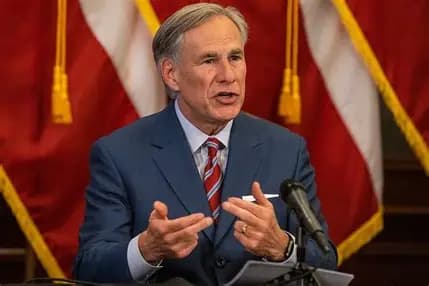
Abbott’s Redistricting Plan Ignites Fierce Political Battle in Texas
August 6, 2025 | By NRI Globe Staff
AUSTIN, Texas — A contentious political showdown has erupted in Texas as Governor Greg Abbott pushes a controversial mid-decade redistricting plan aimed at securing up to five additional Republican congressional seats for the 2026 midterm elections. The proposal, backed by President Donald Trump, has sparked a dramatic response from Texas House Democrats, who fled the state to prevent a vote, prompting Abbott to issue arrest warrants and file a lawsuit to remove a key Democratic lawmaker from office. The escalating conflict has raised questions about electoral fairness, legal boundaries, and the future of democratic representation in Texas and beyond.
The Redistricting Push: A Republican Power Play
Texas Republicans, led by Governor Abbott, introduced a plan on July 30, 2025, to redraw the state’s 38 congressional districts, a move that breaks with the tradition of redistricting once every decade following the U.S. Census. The proposed maps, crafted with input from Trump’s political team, aim to flip five Democratic-held seats to Republican-leaning districts, bolstering the GOP’s slim majority in the U.S. House of Representatives. Currently, Republicans hold 25 of Texas’s congressional seats, and the new maps could increase that number to 30, particularly in districts won decisively by Trump in the 2024 election.
The plan gained momentum after a July 7, 2025, letter from the U.S. Department of Justice (DOJ), which argued that four majority-Black and Hispanic districts in Houston and Fort Worth were “unconstitutionally racially gerrymandered,” providing legal justification for the redraw. Critics, including the Mexican American Legal Defense and Educational Fund, have called this a political ploy, noting that Texas officials previously claimed their maps were race-blind.
Abbott, initially reluctant, agreed to include redistricting in a special legislative session after discussions with Trump, underscoring the former president’s influence over Texas Republicans. The special session, which began on July 21, 2025, also addresses flood relief following deadly storms in the Texas Hill Country, but Democrats argue that prioritizing redistricting over disaster response is misguided.
Democrats’ Quorum Break: A Bold Protest
In a dramatic move to block the redistricting vote, at least 51 of the 62 Texas House Democrats fled the state on August 3, 2025, denying the legislature the two-thirds quorum (100 of 150 members) required to conduct business. Many lawmakers traveled to Illinois, New York, and Massachusetts, where Democratic governors like JB Pritzker and Kathy Hochul have offered support. This tactic, known as “breaking quorum,” mirrors previous Democratic efforts in 2003 and 2021 to stall Republican legislation, though those attempts ultimately failed.
“We’re not here to play political games. We’re here to demand an end to this corrupt process,” said State Representative Gene Wu, chair of the Texas House Democratic Caucus, at a press conference in suburban Chicago alongside Pritzker. Democrats argue that the redistricting plan dilutes minority and working-class votes, reduces competitive districts, and undermines democratic principles by allowing politicians to choose their voters.
Abbott’s Response: Arrest Warrants and Lawsuits
Governor Abbott responded swiftly, escalating the conflict. On August 4, 2025, he ordered the Texas Department of Public Safety to “locate, arrest, and return” absent Democrats to the Capitol, though these civil arrest warrants are unenforceable outside Texas. The Texas House, led by Republican Speaker Dustin Burrows, voted to issue warrants on August 4, a largely symbolic move to pressure Democrats.
In a further escalation, Abbott filed a lawsuit with the Texas Supreme Court on August 5, 2025, seeking to declare the seat of Rep. Gene Wu vacant, arguing that Wu and other Democrats had “abandoned” their duties. Abbott cited a 2021 non-binding legal opinion from Republican Attorney General Ken Paxton, which suggested that courts could deem lawmakers’ seats forfeited for breaking quorum. He also raised the possibility of bribery charges if Democrats raised funds to cover the $500 daily fines they face for their absence, though legal scholars question the validity of these claims.
“They have absconded from their responsibility,” Abbott said on Fox News, calling the Democrats’ actions “un-Texan” and asserting that they may have forfeited their seats. Democrats, including Wu, dismissed these threats as “smoke and mirrors,” noting that Texas authorities lack jurisdiction in other states.
Legal and National Implications
The redistricting plan has drawn sharp criticism and legal challenges. Common Cause Texas, a nonpartisan watchdog, is mobilizing lawsuits to challenge the maps, arguing that they threaten democracy by prioritizing partisan gain over fair representation. Critics also point to the DOJ’s involvement as a pretext, given that the White House began pushing for redistricting months before the DOJ’s letter.
The conflict has reverberated nationally, with Democratic governors in states like California, Illinois, and New York threatening to retaliate by redrawing their own congressional maps to favor Democrats. California Governor Gavin Newsom has proposed a November 4, 2025, special election to allow mid-decade redistricting if Texas proceeds, though California’s independent redistricting commission complicates such efforts. Illinois Governor JB Pritzker, who hosted Texas Democrats, called the Texas plan “cheating” and suggested his state might respond, though Illinois’s maps are already heavily Democratic-leaning.
Legal experts, such as Samuel Issacharoff of New York University, argue that Abbott’s attempt to remove lawmakers via a writ of quo warranto is “wholly antagonistic” to democratic principles, as Democrats continue to serve their constituents remotely. The U.S. Supreme Court is already reviewing redistricting disputes in other states, and Texas’s actions could lead to further federal litigation.
Risks and Stakes for 2026
The Texas redistricting battle carries significant risks for both parties. Republicans aim to secure their House majority, which is critical for advancing Trump’s agenda in his final two years in office. However, some Texas Republicans, including Senator John Cornyn, warn of a potential “dummymander,” where overly aggressive gerrymandering could backfire and benefit Democrats if voting patterns shift.
For Democrats, breaking quorum delays the vote but may not stop it, as Abbott can call additional special sessions until the December 2025 deadline for finalizing maps. Past quorum breaks have delayed but not prevented Republican legislation, and the accumulating fines—potentially $7,000 per lawmaker over two weeks—add financial pressure.
The outcome of this battle could shape control of the U.S. House in 2026, influence redistricting strategies nationwide, and test the boundaries of state and federal power. As both sides dig in, Texas remains at the epicenter of a high-stakes struggle over electoral fairness and political power.
Community and National Reactions
Texans are divided on the issue. In Houston, conservative retiree John Menzies supported the GOP’s efforts, while activist Lesley-Burkins, 54, testified against the plan, calling it a “crisis for our democratic norms.” National Democratic groups, including the Democratic National Committee, have pledged support for the Texas lawmakers, with Chair Ken Martin calling Abbott’s actions “morally repugnant.”
As the special session continues until August 19, 2025, and with the possibility of further sessions, the nation watches closely. The Texas redistricting fight is not just a state issue—it’s a battle with far-reaching implications for American democracy.
For updates on this developing story, visit www.nriglobe.com.
Related NRI Globe Coverage
- Texas Republicans Advance Redistricting Plan Targeting Democratic Districts: A Battle Over Congressional Maps
- Texas Rep. Nicole Collier Locked in House Chamber Amid Redistricting Standoff
- Texas Senate Approves GOP-Favored Redistricting Map: Implications for NRIs and Indian-American Representation
- FEMA Budget Cuts Leave Texas Reeling: The Devastating Impact on Central Texas Flood
- Tropical Storm Edouard Landfall Sep 1, 2026 — Texas + Louisiana
- Canada News This Week: April 2026 – Pride in Space, Political Pressure at Home, and Global Ripples from the Iran Conflict
- Emirates Suspends Dubai Flights After Drone Strike Ignites Fuel Tank Fire
- Winter Storm Fern Alert: What NRIs in Dallas & North Texas Need to Know – Safety Tips for Indian Families This Weekend
Fresh from NRI Globe
- YouTuber Nandu's World (Rama Nandana) UK Visa & Job Fraud Case: Full Details + Key Lessons for NRIs (2026)
- Dussehra / Vijayadashami 2026 Events Country-Wise — Global NRI Directory (Ram Lila, Ravana Dahan, Durga Puja Pandals, Ayudha Puja Venues + Booking)
- Diwali 2026 Events Country-Wise — Global NRI Directory (White House, Leicester, London Trafalgar, Toronto, Auckland, Sydney Parramasala, Fiji, Mauritius, Trinidad, South Africa and More)
- Diwali / Deepavali 2026 Country-Wise NRI Celebrations — Complete Global Guide (USA, UK, Canada, Australia, Fiji, Mauritius, Trinidad, South Africa, UAE and 30+ Countries)