
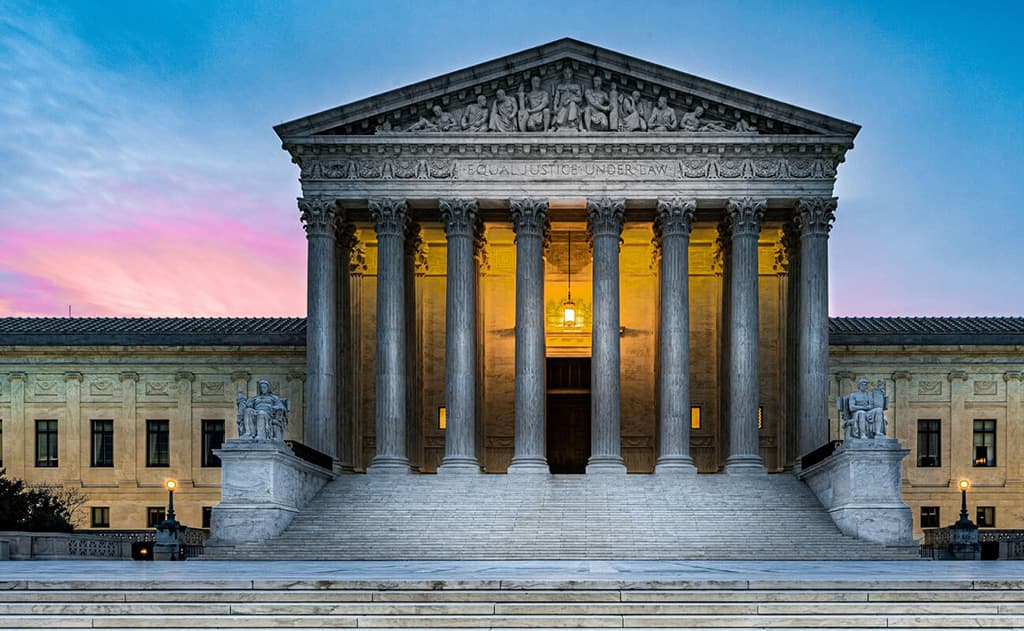
In a landmark 6-3 decision, the U.S. Supreme Court has lifted a lower court injunction, allowing President Donald Trump’s administration to resume mass layoffs at the Department of Education, affecting nearly 1,400 employees—roughly 40% of its workforce. The ruling, issued on July 14, 2025, clears the way for Trump’s campaign promise to dismantle the department, marking a significant step in his broader effort to downsize the federal government. This decision has sparked intense debate over executive power, public education, and the role of Congress, as reported by NRIGlobe.com.
Supreme Court Overturns Lower Court Block
The Supreme Court’s unsigned order, issued on its emergency “shadow docket,” overturned a preliminary injunction by U.S. District Judge Myong Joun in Boston, who in May 2025 blocked the layoffs, arguing that the Trump administration’s plan to “effectively dismantle” the Department of Education without congressional approval was unconstitutional. Joun’s ruling, upheld by the 1st U.S. Circuit Court of Appeals, stated that the layoffs would “likely cripple” the department’s ability to fulfill congressionally mandated duties, such as supporting special education, distributing financial aid, and enforcing civil rights laws.
The Supreme Court’s majority, in a brief statement, concluded that the administration’s actions were “likely lawful,” allowing the layoffs to proceed while litigation continues. The decision did not address the legality of specific restructuring plans but lifted the block on the administration’s broader efforts. Justices Sonia Sotomayor, Elena Kagan, and Ketanji Brown Jackson dissented, with Sotomayor delivering a scathing critique, calling the ruling “indefensible” and a “grave” threat to the Constitution’s separation of powers. She argued that the majority was “either willfully blind or naive” to the implications of enabling Trump’s executive overreach.
Trump’s Plan to Dismantle the Department of Education
President Trump, who campaigned on abolishing the Department of Education, signed an executive order in March 2025 directing Education Secretary Linda McMahon to “facilitate” its closure. The department, established in 1979 under President Jimmy Carter, manages federal aid for schools, student loans, and civil rights enforcement in education. Trump’s plan involves slashing nearly half of its 4,100-strong workforce and transferring functions like K-12 funding and special education to states or other agencies.
The layoffs, initially announced in March, targeted 1,400 employees, with notices sent in April before Joun’s injunction reinstated them on paid leave. Following the Supreme Court’s ruling, the Department of Education promptly notified affected employees that their terminations would take effect on August 1, 2025. An email from Jacqueline Clay, the agency’s chief human capital officer, obtained by CNN, stated, “This RIF action is not a reflection upon your performance or conduct and is solely due to agency restructuring.”
The administration argues that the layoffs streamline “discretionary functions” better handled by states, aligning with Trump’s “America First” agenda to reduce federal overreach. Secretary McMahon emphasized that essential programs, such as support for K-12 students and those with special needs, would continue despite the cuts. However, critics, including unions and Democratic-led states, warn that the reductions threaten critical services, with seven of the department’s 12 regional civil rights offices already eliminated and civil rights case dismissals accelerating.
Legal and Political Firestorm
The Supreme Court’s decision follows a pattern of rulings favoring Trump’s expansive view of executive power. Last week, the court lifted a separate injunction blocking mass layoffs across 21 federal agencies, led by the White House’s Department of Government Efficiency (DOGE). That 8-1 ruling, with only Justice Ketanji Brown Jackson dissenting, allowed reductions at agencies like the Departments of State, Health and Human Services, and Veterans Affairs. The Education Department case, however, was distinct, as it was not part of the broader lawsuit against DOGE-led cuts.
Labor unions, school districts, and advocacy groups, represented by Democracy Forward, argued that Trump’s executive order violates the separation of powers, as only Congress can authorize the dissolution of a federal agency. Skye Perryman, Democracy Forward’s president, condemned the ruling, stating, “The Trump-Vance administration’s actions to decimate a department established by Congress are still unconstitutional. No court has found what the administration is doing is lawful.” She vowed to continue legal challenges, noting that other lawsuits, including one blocking 10,000 layoffs at the Department of Health and Human Services, remain active.
Public sentiment on X reflects deep polarization. Supporters like @pr0ud_americans praised the ruling as a “victory for parents and students,” aligning with Trump’s push to return education to state control. Others, like @Totinhiiio, called it a “wrecking ball to public education,” accusing the administration of bypassing Congress to gut special education and civil rights oversight. Trump himself celebrated the decision on his social media platform, stating it enables the “very important process” of shifting education functions “BACK TO THE STATES.”
Broader Implications for Federal Workforce and Education
The Supreme Court’s ruling is part of a broader legal battle over Trump’s authority to reorganize the federal government without congressional approval. A Reuters/Ipsos poll in April 2025 showed 56% of Americans supported downsizing the federal workforce, though support split sharply along party lines (89% of Republicans vs. 26% of Democrats). The Education Department layoffs, however, have drawn particular scrutiny due to their potential to disrupt federal student aid, special education funding, and civil rights enforcement.
Critics warn that the cuts could cripple the department’s core functions. The Free Application for Federal Student Aid (FAFSA) briefly went offline after the initial layoff announcement, and advocates report a surge in dismissed civil rights cases. More than 20 states have also sued the administration over frozen education funding for after-school and summer programs, signaling further legal battles.
The administration counters that its actions are lawful “internal management decisions,” with Solicitor General D. John Sauer arguing that agencies have statutory authority to conduct reductions-in-force (RIFs) to align with executive priorities. However, the court’s liberal justices, led by Sotomayor, warned that enabling such actions without congressional oversight risks undermining the constitutional balance of power.
What’s Next?
While the Supreme Court’s ruling allows the layoffs to proceed, it does not resolve the underlying legal challenges. Lower courts will continue to evaluate whether Trump’s broader plan to dismantle the Department of Education violates federal law. Additional lawsuits, including those targeting other agencies, may further delay or alter the administration’s restructuring efforts. For now, the August 1 termination date looms for nearly 1,400 Education Department employees, with ripple effects likely to impact schools, students, and families nationwide.
The ruling also raises questions about the future of federal education policy. Trump’s push to devolve responsibilities to states aligns with conservative priorities but faces resistance from Democrats and education advocates who argue that federal oversight ensures equity and accountability. As litigation continues, the debate over the Department of Education’s role—and the extent of presidential power—remains far from settled.
Conclusion: A Victory for Trump, a Challenge for Education
The Supreme Court’s 6-3 decision marks a significant win for President Trump’s agenda to shrink the federal government, but it has ignited fierce criticism over its implications for public education and constitutional checks. As the Department of Education braces for unprecedented layoffs, the nation watches closely to see how far Trump’s restructuring plans will go—and whether Congress or the courts will intervene. For the latest updates on this evolving story, visit NRIGlobe.com.
Tags: Supreme Court, Trump administration, Department of Education, mass layoffs, federal workforce, executive power, education policy, separation of powers, public education, restructuring
Related NRI Globe Coverage
- Major US News This Week (September 14-15, 2026): Supreme Court Blocks Trump Mail Voting Rules, AI Debate Explodes, Space Weapons Confirmed
- Trump Attacks Supreme Court After Tariff Loss
- Federal Appeals Court Strikes Down Trump’s Tariffs as Illegal Overreach: A Blow to Trade Policy
- The Controversy Surrounding Trump's AI Action Plan and Homelessness Executive Order
- Mojtaba Khamenei Named New Supreme Leader of Iran After Father's Death in US-Israel Strikes
- Why Top Celebrities Prefer Delhi High Court for Legal Battles
- Why Top Stars Prefer Delhi High Court Over Bombay & Madras HC
- How Trump's 2026 Tariffs & Greenland Row Affect India
Fresh from NRI Globe
- YouTuber Nandu's World (Rama Nandana) UK Visa & Job Fraud Case: Full Details + Key Lessons for NRIs (2026)
- Dussehra / Vijayadashami 2026 Events Country-Wise — Global NRI Directory (Ram Lila, Ravana Dahan, Durga Puja Pandals, Ayudha Puja Venues + Booking)
- Diwali 2026 Events Country-Wise — Global NRI Directory (White House, Leicester, London Trafalgar, Toronto, Auckland, Sydney Parramasala, Fiji, Mauritius, Trinidad, South Africa and More)
- Diwali / Deepavali 2026 Country-Wise NRI Celebrations — Complete Global Guide (USA, UK, Canada, Australia, Fiji, Mauritius, Trinidad, South Africa, UAE and 30+ Countries)