
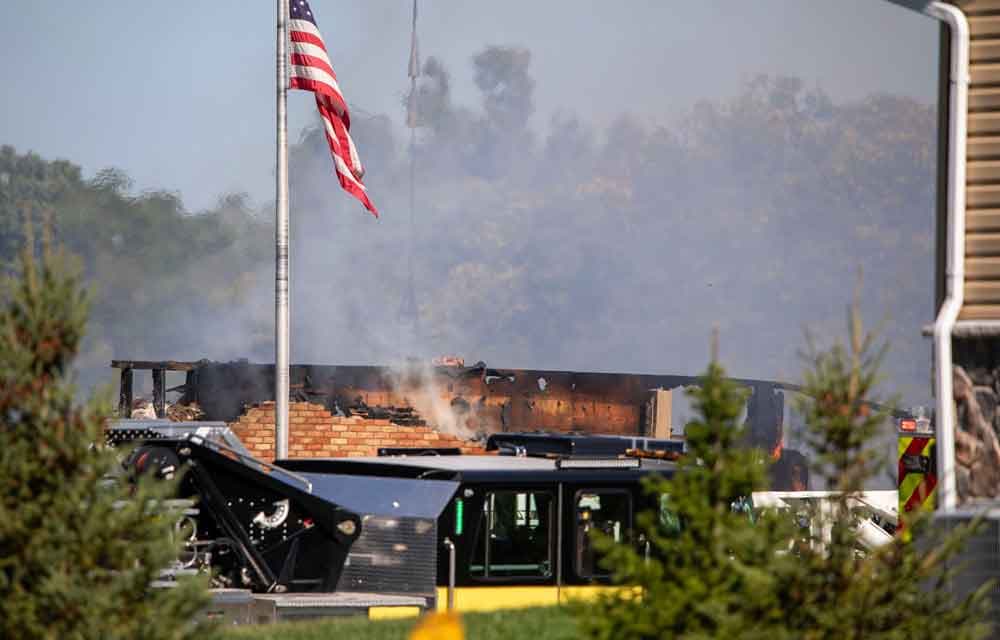
Two firefighters died and one was wounded in an ambush near Coeur d'Alene. The attack occurred on June 29, 2025. A brush fire drew responders into the area. Gunfire followed the arrival of responders to the scene. This tragedy represents one of the most serious threats facing emergency personnel in rural regions—the convergence of environmental hazards with armed violence. The incident underscores vulnerabilities in how fire departments coordinate with law enforcement across jurisdictional boundaries, particularly in counties where volunteer staffing and limited resources create operational constraints.
Sequence of Events
Fire crews arrived after a reported blaze. Shots rang out roughly forty minutes later.
Standard protocols for wildland fires call for initial size-up by the first arriving unit. Crews establish water sources and begin line construction while monitoring wind shifts. In this case the sequence deviated sharply once the initial radio traffic changed from fire status updates to requests for armed assistance. Nearby engine companies staged at safe distances while awaiting sheriff deputies. Dispatch logs from similar rural responses show that arrival of law enforcement can take twelve to twenty minutes depending on terrain and road access. The wounded firefighter was extracted under cover provided by arriving patrol units. Paramedics then initiated treatment at the scene before transport to a regional trauma center. Training materials from the National Wildfire Coordinating Group emphasize that firefighters receive basic situational awareness instruction yet lack the equipment or authority to engage armed threats directly.
Comparative incidents in other western states illustrate the same vulnerability. In 2018 a California vegetation fire drew engines into a canyon where gunfire erupted from a nearby residence. Two personnel sustained non-life-threatening injuries. After-action reviews recommended improved integration between fire and law enforcement dispatch centers. Idaho agencies have conducted joint exercises since that time yet resource gaps remain in sparsely populated counties. NRI families who have settled in the northern Idaho panhandle for technology and healthcare employment often note the absence of extended family networks during emergencies. Local fire districts rely heavily on volunteers whose response times vary with work schedules and travel distances. Volunteers from districts near Post Falls reported average turnout delays of eight minutes when shifts overlap with weekday commutes to Coeur d'Alene employers.
National Wildfire Coordinating Group guidelines require every crew to identify escape routes and safety zones before engagement. Those zones proved insufficient once the threat shifted from flames to gunfire. Radio transcripts from the incident show the transition happened without prior indication of human involvement at the fire origin. Engine operators then reversed course along narrow access roads while maintaining contact with dispatch. Such reversals add stress to already extended volunteer shifts common in northern Idaho districts. The psychological impact of rapid tactical shifts—from firefighting mode to survival mode—creates lasting effects on personnel who experience such transitions. Studies of first responder trauma indicate that ambush scenarios produce different neurological responses than standard emergency calls, requiring specialized debriefing protocols that many rural fire departments lack capacity to provide.
The terrain surrounding Coeur d'Alene presents additional complications for emergency response. Forested areas with limited road access mean that crews often work at distances from immediate backup. Satellite imagery and topographic maps show that the fire location sat approximately three miles from the nearest paved county road. During fire season, multiple calls can stretch available units across wide geographic areas. Mutual aid agreements between districts help address this challenge, yet coordination delays remain inevitable when personnel must travel from neighboring counties. NRI professionals working in emergency management roles across the region have noted that staffing shortages during summer months—when many volunteers take vacation time—coincide with peak wildfire season.
Official Response
Nearly three hundred officers searched the terrain for hours. A suspect was later found deceased.
The multi-agency command post coordinated ground teams, aviation assets, and canine units through the night. Kootenai County Sheriff personnel established a perimeter that restricted civilian access for thirty-six hours. Federal Bureau of Investigation agents arrived within four hours to support evidence collection and witness interviews. Standard procedure for targeted attacks on first responders includes immediate notification of the FBI's domestic terrorism unit. Evidence technicians processed the fire origin area and multiple shell casings. Ballistics comparisons were forwarded to the ATF laboratory in California. Public information officers released only confirmed facts at scheduled briefings to avoid compromising the active search.
ATF laboratory protocols call for comparison of recovered casings against the national database within seventy-two hours when first-responder shootings occur. Coordination between the Boise field office and Kootenai County extended that timeline slightly because terrain access remained limited until daylight. Aviation support included a Bureau of Land Management helicopter equipped with forward-looking infrared that scanned drainages east of the initial fire site. Results from those scans fed directly into ground team assignments each hour. The integration of federal, state, and local resources demonstrates how serious incidents activate established mutual aid frameworks, yet these frameworks depend on pre-existing relationships and communication protocols that require ongoing maintenance and training.
For additional context on this incident, readers may consult detailed reporting from Click USA News, which provides comprehensive coverage of the event and its aftermath. The incident also reflects broader patterns of violence affecting emergency responders across North America, comparable to other tragic events such as major fire incidents in other regions that demonstrate how rapidly emergency situations can escalate beyond initial expectations.
Community Impact
Residents lined overpasses during a procession. Local leaders expressed shock at the events.
Funeral services for the fallen personnel drew several thousand attendees from across the inland northwest. Neighboring fire districts sent honor guards and apparatus for the motorcade. Local businesses closed early on the day of the procession. Schools released students early so families could participate. Mental health counselors were stationed at fire stations for peer support sessions. Research published by the International Association of Fire Fighters indicates that line-of-duty deaths involving ambush tactics produce elevated rates of post-traumatic stress among surviving crew members. In rural counties the loss of two career firefighters also reduces daily staffing until replacements complete certification. NRI community organizations in nearby Spokane have organized blood drives and meal deliveries for affected households. These actions mirror support networks formed after other first-responder fatalities in the region.
Spokane-area NRI professional groups coordinated transportation for families traveling from Boise technology campuses to attend memorial events. Such cross-state travel adds logistical layers when visa or work-permit documentation must remain current. Local school districts adjusted counseling schedules to accommodate children whose parents work rotating shifts at regional hospitals. Peer support sessions continued for three weeks after the procession concluded. The extended nature of grief processing in small communities means that recovery timelines extend well beyond initial memorial events. Fire departments in rural areas often function as social anchors within their communities, making the loss of personnel particularly acute for residents who interact with these professionals regularly through community events, school visits, and local engagement activities.
The economic impact on affected families extends beyond immediate financial hardship. Surviving spouses and children may face decisions about relocation, school changes, and career adjustments. Many fire departments maintain survivor benefit funds, yet these resources vary significantly by jurisdiction and funding levels. NRI families in the region have established scholarship funds in memory of the fallen firefighters, recognizing that educational opportunities for children represent a meaningful form of ongoing support. Local employers have also offered flexible work arrangements for family members managing grief while maintaining employment.
Investigation Status
Authorities continue to examine motive and any connections. No additional suspects have been publicly named at this time.
Detectives are reviewing cellular records, social media accounts, and property ownership documents linked to the deceased suspect. The FBI Boise field office maintains a tip line that has received more than two hundred contacts. Investigators have requested dash-camera footage from any motorists who passed the area between noon and 3 p.m. on the day of the incident. Public records requests submitted to the sheriff's office remain pending. The Idaho State Fire Marshal's office has assigned an investigator to determine whether the initial fire violated state arson statutes. Updates appear on the Kootenai County website under the newsroom section.
Idaho State Fire Marshal review includes examination of satellite imagery captured on the morning of the incident to establish vegetation conditions before ignition. That imagery comes from National Oceanic and Atmospheric Administration archives available through public portals. Cellular tower data requests require judicial approval and typically process within ten business days for active cases involving officer safety. The investigation process itself becomes a form of institutional response that helps agencies understand how to prevent similar incidents. Lessons learned from this case will likely inform training updates across Idaho fire districts and potentially influence how other states approach coordination between wildfire response and armed threat assessment.
Forensic analysis of the fire origin—whether it was deliberately set or accidental—remains a critical investigative component. If the fire was intentionally ignited to draw responders, this represents a premeditated attack pattern that carries different legal and tactical implications than a spontaneous confrontation. Investigators examine weather conditions, fuel moisture content, and ignition characteristics to establish whether the fire's timing and location suggest deliberate placement. Such determinations can take weeks or months as laboratory analysis of soil samples and vegetation residue progresses. The psychological profile of someone willing to set a fire to ambush responders differs significantly from other violent offenders, and law enforcement agencies maintain specialized units focused on understanding such threat patterns.
| Timeline | Action |
|---|---|
| 1:21 p.m. | Brush fire reported |
| 2:00 p.m. | Gunfire begins |
| 7:40 p.m. | Suspect located |
Next steps
Monitor official county and federal releases for confirmed details. Families of the victims have requested privacy during this period. Community members seeking to support affected families should contact the Kootenai County Fire District or local victim assistance organizations for appropriate channels. Those experiencing trauma related to this incident may access counseling services through employee assistance programs or community mental health centers.
Sources
Official updates will be posted on kootenai.gov and fbi.gov when available. Additional reporting is available through Click USA News and other regional news outlets covering emergency services.
Related NRI Globe Coverage
- Devastating Landslide in Sudan’s Marra Mountains Claims Over 1,000 Lives
- Tragic Fire at Massachusetts Assisted Living Facility Claims 9 Lives, Injures Dozens
- US Jobless Claims Hit 2026 High — What It Means for Indian H-1B Workers
- President Trump Claims He Averted Nuclear War Between India and Pakistan
- Deadly Winter Storm Fern January : Over 50 Deaths Reported Across
- BREAKING: Chinese Dissident Lei Claims China's Real Population Is Under 500 Million – Sparking Massive Online Debate Over Official 1.4 Billion Figure
- Heartbreak in the Swiss Alps: Over 40 Lives Lost in Crans-Montana New Year’s
- Russia Claims Ukraine Launched Drone Attack on Putin's Novgorod Residence
Fresh from NRI Globe
- YouTuber Nandu's World (Rama Nandana) UK Visa & Job Fraud Case: Full Details + Key Lessons for NRIs (2026)
- Dussehra / Vijayadashami 2026 Events Country-Wise — Global NRI Directory (Ram Lila, Ravana Dahan, Durga Puja Pandals, Ayudha Puja Venues + Booking)
- Diwali 2026 Events Country-Wise — Global NRI Directory (White House, Leicester, London Trafalgar, Toronto, Auckland, Sydney Parramasala, Fiji, Mauritius, Trinidad, South Africa and More)
- Diwali / Deepavali 2026 Country-Wise NRI Celebrations — Complete Global Guide (USA, UK, Canada, Australia, Fiji, Mauritius, Trinidad, South Africa, UAE and 30+ Countries)