
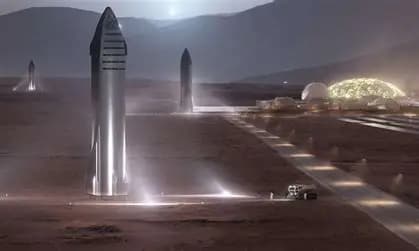
Elon Musk’s Mars Mission: SpaceX’s Starship and the Future of Humanity
July 13, 2025 – Elon Musk’s ambitious vision to make humanity a multiplanetary species is gaining momentum as SpaceX’s Starship program pushes the boundaries of space exploration. With plans to send an uncrewed Starship to Mars by the end of 2026 and human missions potentially as early as 2028 or 2029, Musk’s dream of colonizing Mars is sparking global excitement and debate. Here’s everything you need to know about SpaceX’s Mars mission, its implications for humanity, and the challenges ahead.
SpaceX’s Starship: The Rocket to Mars
SpaceX’s Starship, a fully reusable spacecraft designed for deep space travel, is at the heart of Musk’s plan to colonize Mars. Standing at 403 feet tall, the massive rocket is powered by Raptor engines and is capable of carrying large payloads and up to 100 passengers. Musk has emphasized that Starship’s reusability will drastically reduce the cost of space travel, making missions to Mars and the Moon more feasible.
In a recent presentation at SpaceX’s Starbase in Texas, Musk outlined a timeline for the Mars mission:
- Late 2026: An uncrewed Starship mission carrying Tesla’s Optimus humanoid robots to test Mars’ environment and landing systems.
- 2028–2029: Potential human missions to begin constructing Martian infrastructure, with a landing site targeted at Arcadia Planitia for its flat terrain and access to ice.
- Long-term Goal: Establish a self-sustaining Mars colony by 2050, potentially supporting millions of people.
Musk’s vision also includes a lunar base, with NASA planning to use Starship for the Artemis program’s 2027 Moon landing, a stepping stone to Mars.
The Future of Humanity: Why Mars?
Musk has long argued that becoming a multiplanetary species is critical for humanity’s survival. He believes a Mars colony could safeguard human consciousness against existential threats like asteroid impacts or global catastrophes. “The key branching point for human destiny is that Mars is self-sustaining, even if resupply ships from Earth stop coming,” Musk stated in a recent talk.
The Starship program also aims to inspire the next generation, with supporters seeing it as a bold step toward a future among the stars. Posts on X reflect this optimism, with users praising Starship’s potential to build cities on Mars and the Moon.
Challenges and Skepticism
Despite the enthusiasm, SpaceX’s Mars mission faces significant hurdles. Recent test flights, including a Starship prototype explosion during a static fire test in June 2025, have raised concerns about the rocket’s reliability. Critics argue that technical challenges, such as in-orbit fuel transfer and radiation protection for human crews, remain unresolved.
Skeptics also question the timing and cost of the mission. With Earth facing pressing issues like climate change and resource scarcity, some argue that funds would be better spent addressing terrestrial problems. Others doubt humanity’s readiness for space colonization, citing societal fragmentation as a barrier to collective endeavors.
Musk acknowledges the challenges, giving the 2026 uncrewed mission a “50/50 chance” of success. If it fails, SpaceX plans to try again in 2028 during the next Earth-Mars alignment window, which occurs every 26 months.
The Broader Implications of Space Travel
The Starship program is more than just a Mars mission—it’s a catalyst for redefining humanity’s place in the cosmos. A successful Mars colony could shift geopolitical dynamics, raising questions about governance, resource rights, and ethical frameworks for interplanetary societies.
SpaceX’s collaboration with NASA, particularly for the Artemis lunar missions, underscores the program’s role in advancing space exploration. The company’s Starlink network is also expected to provide internet connectivity on Mars, supporting communication and infrastructure development.
Public sentiment on X is mixed but vibrant. While some users see Musk’s vision as a hopeful future for humanity, others view it as an extravagant expense. One post captured the divide: “Starship is capable of building a city on Mars, but regulatory molasses is slowing us down.”
What’s Next for SpaceX and Starship?
SpaceX is preparing to launch the advanced “Version 3” Starship by the end of 2025, with plans to scale production to 1,000 rockets annually. This ambitious goal aims to support a fleet capable of transporting millions to Mars over decades.
As the world watches, SpaceX’s Starship program continues to push the boundaries of what’s possible. Whether Musk’s vision becomes reality or remains a distant dream, the pursuit of Mars is reigniting humanity’s passion for exploration.
Stay tuned to NRIGlobe.com for the latest updates on SpaceX, Elon Musk, and the future of space travel.
Keywords: Elon Musk, SpaceX, Starship, Mars mission, Mars colonization, lunar base, future of humanity, space exploration, Artemis program, Optimus robots, multiplanetary species
Related NRI Globe Coverage
- ISRO HOPE Mission: Ladakh Analogue Site for Moon and Mars Tests
- Elon Musk’s Tweet: “Europe is Dying” – What’s Behind the Alarm?
- Elon Musk's America Party: A New Political Force in the U.S.
- Elon Musk's Poll on a New U.S. Political Party: Could The America Party Represent the 80% in the Middle?
- US Rescues Colonel in Iran After 48-Hour Mission
- Indian-Origin Developer Aman Gottumukkala Joins Elon Musk's xAI to Build Next-Gen Coding AI
- NRI Concerns Rise Under Trump Policies
- Elon Musk & Dogecoin: The Meme Coin’s Defining Year in 2026
Fresh from NRI Globe
- YouTuber Nandu's World (Rama Nandana) UK Visa & Job Fraud Case: Full Details + Key Lessons for NRIs (2026)
- Dussehra / Vijayadashami 2026 Events Country-Wise — Global NRI Directory (Ram Lila, Ravana Dahan, Durga Puja Pandals, Ayudha Puja Venues + Booking)
- Diwali 2026 Events Country-Wise — Global NRI Directory (White House, Leicester, London Trafalgar, Toronto, Auckland, Sydney Parramasala, Fiji, Mauritius, Trinidad, South Africa and More)
- Diwali / Deepavali 2026 Country-Wise NRI Celebrations — Complete Global Guide (USA, UK, Canada, Australia, Fiji, Mauritius, Trinidad, South Africa, UAE and 30+ Countries)