
English New Year Parties vs Hindu New Year Rituals: What Do We Lose & Gain?
As the world gears up for the countdown to January 1, 2026, cities will light up with fireworks, parties, and global cheers. Yet, for millions in the Indian diaspora — NRIs, PIOs, and global Hindu families — a deeper, more meaningful renewal awaits just months later. The Hindu New Year, celebrated as Ugadi (in Andhra Pradesh, Telangana, Karnataka), Gudi Padwa (Maharashtra), Vishu (Kerala), Baisakhi (Punjab), and other regional names, arrives on Thursday, March 19, 2026 — marking the start of Vikram Samvat 2083 and the Shalivahana Shaka era.
This isn't just a date difference. It's a profound contrast between high-energy, outward celebrations and introspective, nature-aligned rituals. For the global Indian community, balancing both worlds offers richness — but fully prioritizing one over the other comes with real gains and losses.
The Global Appeal of English New Year Parties
The Gregorian New Year on January 1, 2026, is a worldwide phenomenon rooted in ancient Roman traditions (named after Janus, the god of beginnings) and standardized for modern convenience. It's a social, linear reset:
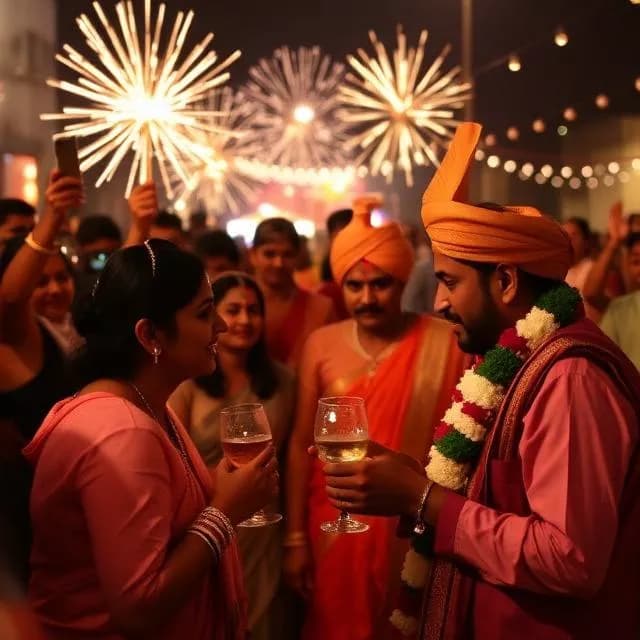
- Midnight countdowns, dazzling fireworks, and live broadcasts from Times Square to Sydney Harbour.
- Lavish parties, music, dancing, champagne toasts, and late-night revelry.
- Popular resolutions for fitness, career, or personal growth.
- Universal appeal — easy to share with multicultural friends, colleagues, and global networks.
For NRIs living abroad, January 1 provides a fun, inclusive way to connect with local cultures while feeling part of the international community.
The Timeless Depth of Hindu New Year Rituals
Hindu New Year follows the ancient lunisolar calendar, tied to astronomical events like the Sun entering Aries (Mesha Sankranti) and Chaitra Shukla Pratipada. In 2026, it falls on March 19, aligning perfectly with spring's arrival — a time of renewal, blooming nature, and agricultural hope.
Key rituals include:
- Early morning oil baths for purification.
- Cleaning homes, drawing rangoli/kolam, decorating with mango leaves and torans.
- Hoisting the Gudi (victory flag) in Maharashtra — a symbol of Lord Rama's triumph.
- Temple visits, Panchanga Shravan (reading the almanac), and family prayers.
- The iconic Ugadi Pachadi (or Bevu-Bella) — a symbolic mix of six tastes: neem flowers (bitter — life's hardships), jaggery (sweet — happiness), tamarind (sour — challenges), raw mango (astringent — surprise), chili (spicy — anger), and salt (salty — fear).
This dish beautifully teaches acceptance: life brings all emotions, and we must face them with equanimity and gratitude.
Comparative Table: English New Year vs Hindu New Year
| Aspect | English New Year (Gregorian – Jan 1, 2026) | Hindu New Year (Ugadi/Gudi Padwa – March 19, 2026) |
|---|---|---|
| Time Basis | Fixed solar (January 1) | Astronomical lunisolar (Chaitra Shukla Pratipada) |
| Origin | Ancient Roman, later European/Christian influence | Vedic, cosmic creation by Lord Brahma, seasonal cycles |
| Focus | Party, excitement, social revelry | Dharma, spiritual renewal, acceptance of life's flavors |
| Nature Link | Minimal (often mid-winter, no seasonal significance) | Strong — spring renewal, harvest, Sun/Moon alignment |
| Key Activities | Fireworks, countdowns, alcohol, dancing, resolutions | Oil bath, rangoli, Gudi hoisting, temple puja, Ugadi Pachadi |
| Symbolism | Linear progress, fresh starts | Cyclical time, embrace all experiences, victory of good |
| Spiritual Depth | Limited (occasional watchnight services) | Profound — prayers, almanac, divine blessings |
| Community Style | Global, urban, individualistic | Family-centric, regional, collective gratitude |
| Health/Wellness Aspect | Often indulgent (late nights, excess) | Cleansing, immunity-boosting (neem-jaggery), early rising |
What Do We Gain by Embracing Hindu New Year Rituals?
For the global Indian community, prioritizing these traditions offers:
- Deep Cultural & Spiritual Roots — Reconnects NRIs to Vedic wisdom, dharma, and ancestral continuity, fostering pride in heritage amid diaspora life.
- Harmony with Nature & Seasons — March's spring energy aligns with renewal, unlike January's winter — perfect for personal and family growth.
- Mental & Emotional Resilience — Ugadi Pachadi's six tastes teach equanimity: life's joys and sorrows are temporary and balanced.
- Stronger Family Bonds — Rituals involve elders, children, home pujas, and charity — building emotional support across generations and distances.
- Health & Wellness Benefits — Natural ingredients like neem boost immunity; early rising and cleansing promote holistic well-being.
What Do We Lose if We Only Chase English New Year Parties?
- Gradual Cultural Disconnect — Over-reliance on a colonial-era calendar can sideline indigenous astronomical knowledge and regional identities.
- Missed Cosmic & Seasonal Alignment — Ignoring spring's natural renewal means losing deeper harmony with nature's rhythms.
- Superficial vs Lasting Intentions — Party resolutions often fade; Hindu rituals encourage sustained reflection and dharma.
- Erosion of Unique Traditions — Iconic elements like Gudi hoisting, Pachadi tasting, or Vishu Kani risk becoming forgotten in fast-paced global life.
What Do We Gain from English New Year Parties?
- Global Belonging — A fun way to bond with diverse communities and colleagues worldwide.
- Joyful Release & Stress Relief — High-energy celebrations provide excitement and social connection.
- Modern Goal-Setting — Practical resolutions support career and personal ambitions in a global context.
- Inclusivity — Easy to share across cultures without deep religious commitment.
A Balanced Approach for the Global Indian Family
Many NRIs successfully blend both: join January 1 parties socially (greeting friends, reflecting on goals), while saving March 19, 2026, for meaningful Hindu rituals — virtual family pujas, preparing Ugadi Pachadi at home, or sharing symbolic foods with loved ones abroad.
This duality honors global citizenship while preserving civilizational roots. It teaches children the beauty of both worlds: the world's shared joy and our timeless wisdom.
In 2026, embrace the parties for fun — but reserve the rituals for depth. True renewal comes from balance.
Wishing you joyful celebrations and profound renewal — Happy English New Year 2026 & Shubh Ugadi / Gudi Padwa! 


Related NRI Globe Coverage
- Hindu New Year vs English New Year: Why Hindus Celebrate Time Differently
- Magha Pournami 2026: Complete Guide for Hindu Devotees in the USA
- New Year Celebrations 2026: How the World and Indian Diaspora Welcomed the New Year
- Independence Day Speech 2026 in English: Complete Speeches for Students and Teachers
- New Year 2026 Global Celebrations: Complete NRI Guide by City and Country
- Supreme Court on Hindu Marriage: Rituals Are Mandatory
- Buddhist Mantra, Hindu Essence: Om Mani Padme Hum
- Middle East’s First Hindu Stone Temple Opens in Abu Dhabi
Fresh from NRI Globe
- YouTuber Nandu's World (Rama Nandana) UK Visa & Job Fraud Case: Full Details + Key Lessons for NRIs (2026)
- Dussehra / Vijayadashami 2026 Events Country-Wise — Global NRI Directory (Ram Lila, Ravana Dahan, Durga Puja Pandals, Ayudha Puja Venues + Booking)
- Diwali 2026 Events Country-Wise — Global NRI Directory (White House, Leicester, London Trafalgar, Toronto, Auckland, Sydney Parramasala, Fiji, Mauritius, Trinidad, South Africa and More)
- Diwali / Deepavali 2026 Country-Wise NRI Celebrations — Complete Global Guide (USA, UK, Canada, Australia, Fiji, Mauritius, Trinidad, South Africa, UAE and 30+ Countries)