
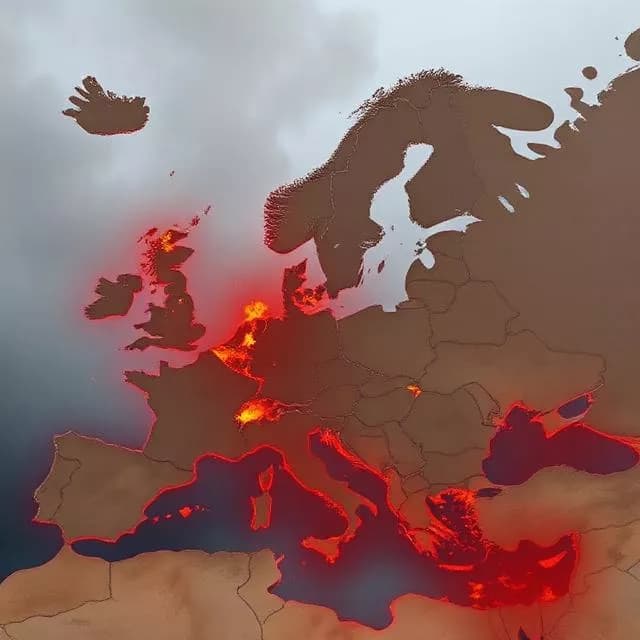
Europe Energy Crisis 2026 Amid Middle East War
Brussels, 31 March 2026 – Barely four years after the painful 2022 Russian gas shock, Europe is confronting yet another major energy crisis — this time triggered by the ongoing US-Israeli war with Iran. The conflict has effectively disrupted shipping through the Strait of Hormuz, a critical chokepoint carrying about 20% of the world’s oil and significant LNG volumes, sending energy prices soaring across the continent.
Surging Energy Prices Hit Households and Industry
European benchmark natural gas prices (TTF) have jumped more than 60-70% since late February, climbing above €50 per megawatt-hour in March. Brent crude oil has repeatedly exceeded $100–120 per barrel amid fears of prolonged disruption.
- Petrol and diesel prices have risen sharply at pumps — crossing €2 per litre in several countries.
- Electricity costs are climbing as higher gas and oil feed into power generation.
- Refined products like diesel, jet fuel, and heating oil face tight supplies, affecting transport, aviation, and manufacturing.
Europe entered 2026 with unusually low gas storage levels — just 46 billion cubic metres at the end of February — leaving the bloc more exposed than in previous years. Competition with Asian buyers for alternative LNG supplies is further driving up costs.
Why Europe Remains Vulnerable
Although the EU successfully reduced dependence on Russian pipeline gas after 2022 by building LNG terminals and diversifying sources, it still relies heavily on global oil and LNG markets. Disruptions in the Gulf — including attacks on Qatar’s LNG facilities — have created global ripple effects that Europe cannot escape.
The war has forced tankers to take longer routes around the Cape of Good Hope, increasing shipping costs and insurance premiums. This new shock comes at a time when many European economies are already grappling with slow growth and high debt.
EU Leaders Respond at Emergency Summit
At the European Council meeting in mid-March, leaders urgently called for the immediate reopening of the Strait of Hormuz and a moratorium on attacks against energy and civilian infrastructure. They discussed coordinated measures to stabilise markets and protect citizens from rising bills.
- The European Commission is exploring targeted emergency steps, including possible adjustments to gas storage targets, state aid rules, and short-term relief for energy-intensive industries.
- Several countries have already acted nationally: Spain announced over €5 billion in aid, tax cuts, and subsidies; others are considering VAT reductions on fuel, price caps, or direct support for households and farmers.
- A major political divide has surfaced over climate policy. Ten member states (including Italy, Poland, Hungary, Greece, and others) are pushing to ease strict EU Emissions Trading System (ETS) rules and extend free carbon allowances to shield industry from the cost surge. A group of greener nations is resisting any weakening of the green agenda.
European Commission President Ursula von der Leyen has described the situation as a “stark reminder” of Europe’s continued reliance on fossil fuels and called for faster investment in renewables, nuclear power, and modern electricity grids.
Economic and Political Consequences
The energy price spike is fuelling fresh inflation concerns and threatening to slow economic growth further. The European Central Bank has already revised its forecasts, warning of risks to energy-intensive economies like Germany and Italy.
Households across Europe are feeling the pinch through higher fuel and electricity bills, while industries face rising production costs that could lead to job losses or reduced competitiveness.
The crisis has revived debates about strategic autonomy and energy security. Some policymakers argue it proves the need to accelerate the clean energy transition to reduce exposure to volatile global fossil fuel markets. Others warn that pushing too hard on decarbonisation without affordable backups risks deindustrialisation and public backlash.
Outlook for the Coming Months
If the Middle East conflict continues and the Hormuz disruption persists, Europe could face severe challenges in refilling gas storage for winter 2026-27. Even a short war may result in permanently higher baseline energy prices.
EU leaders and analysts stress the need for a balanced approach: short-term relief through strategic reserves, diversified imports, and demand management, combined with long-term efforts to build a more resilient, home-grown clean energy system.
This latest energy shock is testing European unity once again and is likely to reshape the continent’s energy and climate policies for years ahead.
Latest NRI News & Global Updates:
Health, Wellness & Lifestyle for NRIs
https://nriglobe.com/lifestyle/
Latest NRI News & Global Updates
https://nriglobe.com/news/
Business & Finance News for NRIs
https://nriglobe.com/business/
Investment Guides for NRIs
https://nriglobe.com/investment/
Jobs & Career Opportunities for NRIs
https://nriglobe.com/jobs/
Related NRI Globe Coverage
- Hormuz Crisis: How NRIs Worldwide Could Be Hit
- GCC News This Week: April 2026 – Under Siege in the Strait of Hormuz Crisis, Rising Oil Prices, and Urgent Calls for Global Action
- Iran War Latest Updates April 2026: US Fighter Jet Shot Down, Trump Warns of More Strikes, Strait of Hormuz Crisis Deepens
- Rupee May Hit 100/USD Amid Iran Oil Crisis
- Europe March 2026: Impact on Indian NRIs & Students
- Iran War 2026 Impact on India: Oil Prices, Economy, NRIs & Remittances Crisis
- European Natural Gas Prices Surge Over 50% as Qatar Halts Production: Energy Crisis Deepens in Winter 2026
- Secrets of Mount Kailash: Science, Faith & Mysticism
Fresh from NRI Globe
- YouTuber Nandu's World (Rama Nandana) UK Visa & Job Fraud Case: Full Details + Key Lessons for NRIs (2026)
- Dussehra / Vijayadashami 2026 Events Country-Wise — Global NRI Directory (Ram Lila, Ravana Dahan, Durga Puja Pandals, Ayudha Puja Venues + Booking)
- Diwali 2026 Events Country-Wise — Global NRI Directory (White House, Leicester, London Trafalgar, Toronto, Auckland, Sydney Parramasala, Fiji, Mauritius, Trinidad, South Africa and More)
- Diwali / Deepavali 2026 Country-Wise NRI Celebrations — Complete Global Guide (USA, UK, Canada, Australia, Fiji, Mauritius, Trinidad, South Africa, UAE and 30+ Countries)