
Famine Crisis in Gaza: U.S. Humanitarian Efforts and Policy Shifts
By NRIGlobe Staff
July 26, 2025
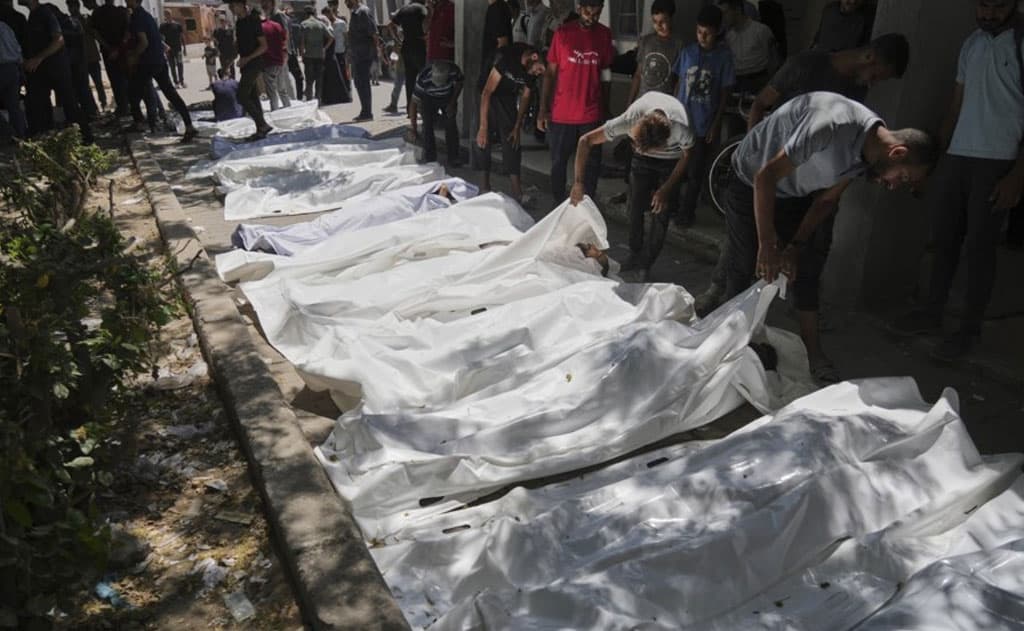
The Gaza Strip is grappling with an escalating humanitarian crisis, marked by widespread hunger and malnutrition, as reported by NPR and CBS News. With aid deliveries severely restricted and ceasefire negotiations faltering, the situation has reached what UN officials describe as "new and astonishing levels of desperation." The United States, a key player in the region, has responded with significant funding for the Gaza Humanitarian Foundation (GHF), but challenges persist amid accusations of bad faith in peace talks and ongoing debates over the nature of the crisis.
U.S. Funding for Gaza Humanitarian Foundation
In response to the deepening crisis, the U.S. has allocated $30 million to the Gaza Humanitarian Foundation, a controversial U.S.- and Israel-backed organization tasked with delivering aid in Gaza. This funding has facilitated the distribution of over 90 million meal packs to the beleaguered territory, according to U.S. State Department officials. The GHF, established to replace the UN’s role in aid distribution, aims to ensure that humanitarian assistance reaches civilians without interference from Hamas, which Israel accuses of diverting supplies.
However, the impact of these efforts has been limited. Independent assessments indicate that only a fraction of the aid reaches those in dire need due to logistical barriers and Israeli military oversight. The GHF’s militarized distribution model, operating within Israeli-controlled zones, has drawn criticism from over 100 humanitarian organizations, including Save the Children and Doctors Without Borders, for violating principles of neutrality and impartiality. Reports indicate that since May 27, 2025, over 1,000 Palestinians have been killed by Israeli forces while attempting to access GHF food distribution sites, with the UN citing incidents of gunfire near aid points as a major concern.
Despite these challenges, U.S. officials have defended the GHF, with a State Department spokesperson stating, “It is progress to see 90 million meals being distributed,” emphasizing the need to bypass Hamas-controlled channels. Critics, however, argue that the system fuels chaos, with crowds of desperate civilians facing deadly risks to obtain food.
Stalled Ceasefire Talks and U.S. Accusations Against Hamas
Efforts to secure a ceasefire, which could alleviate the hunger crisis by enabling safer and more consistent aid deliveries, have hit a wall. On July 25, 2025, the U.S. abruptly withdrew its delegation from Doha, Qatar, where mediators from Qatar, Egypt, and the U.S. had been negotiating a potential 60-day truce. The deal under discussion would have involved Hamas releasing 10 living hostages and the remains of 18 others in exchange for Palestinian prisoners, alongside increased aid flows to Gaza.
U.S. envoy Steve Witkoff accused Hamas of lacking “good faith” in the negotiations, citing their response to the latest proposal as evidence of unwillingness to reach a truce. “We have decided to bring our team home from Doha for consultations after the latest response from Hamas, which clearly shows a lack of desire to reach a ceasefire in Gaza,” Witkoff stated on X. Israel, aligning with the U.S., also recalled its negotiators, signaling a collapse in the talks.
Hamas, in turn, has demanded a permanent end to the war and a full Israeli withdrawal from Gaza as conditions for any deal, terms that Israel has rejected, insisting on continuing operations until Hamas is dismantled. The breakdown in negotiations has drawn international criticism, with 28 countries, including the UK, France, and Canada, condemning Israel’s restrictions on aid and calling for an immediate ceasefire.
Gaza Health Officials and the Famine Debate
Gaza’s health officials, operating under the Hamas-run Ministry of Health, have reported a sharp rise in hunger-related deaths, with 111 fatalities attributed to malnutrition since the conflict’s onset, including 80 children. In the past week alone, 25 children and 21 adults have died from starvation, with hospitals overwhelmed by cases of acute malnutrition. The World Health Organization (WHO) notes that 9% of children under five screened in early July showed signs of acute malnutrition, a significant increase from 2.4% in February.
Dr. Ahmed al-Farra, head of the pediatric ward at Nasser Hospital in southern Gaza, told The New York Times, “There is no one in Gaza now outside the scope of famine, not even myself.” Medical professionals, journalists, and aid workers are also suffering, with reports of doctors fainting from hunger and AFP journalists requesting evacuation due to chronic food shortages.
The question of whether Gaza is experiencing a full-scale famine remains contentious. The Integrated Food Security Phase Classification (IPC), the global authority on hunger crises, has not officially declared a famine, citing challenges in collecting reliable data on non-trauma mortality in a conflict zone. As of May 2025, the IPC estimated that 44% of Gazans are experiencing “emergency” levels of food insecurity, with 12% in “catastrophe” conditions, just shy of famine thresholds. Experts like Alex de Waal, author of Mass Starvation, argue that deaths from malnutrition, disease, and deprivation are interlinked, complicating precise classifications.
UN officials and aid groups assert that the crisis is man-made, driven by Israel’s blockade and restrictions on aid. A joint statement by 111 organizations, including Mercy Corps and the Norwegian Refugee Council, warned that “mass starvation” is spreading, with supplies of food, water, and medical aid sitting untouched outside Gaza due to access barriers. Israel denies these claims, asserting that it facilitates aid entry and blaming Hamas for disruptions.
Broader Context and International Response
The hunger crisis stems from Israel’s tightened blockade following Hamas’s October 7, 2023, attack, which killed 1,200 people and led to the abduction of 251 hostages. Israel’s military response has killed over 59,000 Palestinians, according to Gaza’s health ministry, and displaced 90% of the population. The destruction of food infrastructure, including bakeries and mills, combined with restricted aid access, has left Gaza’s 2.1 million residents almost entirely dependent on external assistance.
A brief ceasefire in January 2025 allowed some aid to flow and enabled 565,082 people to return to northern Gaza, but the truce collapsed in March, and Israel’s blockade resumed. The GHF’s introduction in May aimed to address concerns about Hamas diverting aid, but its operations have been marred by chaos, with reports of looting and armed clashes at distribution points.
International pressure is mounting, with UN Secretary-General António Guterres calling Gaza a “horror show” of starvation and devastation. The EU and 28 governments have labeled Israel’s aid restrictions “unacceptable,” while protests in Tel Aviv have seen thousands of Israelis demand an end to the blockade. Despite these calls, Israel maintains that its measures are necessary to weaken Hamas, a stance supported by the U.S. but increasingly criticized by allies.
Looking Ahead
As Gaza’s humanitarian crisis worsens, the U.S. faces a delicate balancing act: supporting Israel while addressing global outrage over civilian suffering. The $30 million investment in the GHF reflects a commitment to humanitarian aid, but its effectiveness is hampered by ongoing violence and distribution challenges. With ceasefire talks stalled and famine looming, the international community is urging all parties to prioritize civilian lives and restore unhindered aid access. Without a breakthrough, Gaza’s most vulnerable—children, the elderly, and the sick—will continue to bear the brunt of this escalating tragedy.
For more information on how to support humanitarian efforts in Gaza, visit the International Rescue Committee at www.rescue.org.
Related NRI Globe Coverage
- Israel's Tactical Pauses in Gaza: Why Aid Experts Say They're Insufficient
- Gaza Starvation Crisis: Child Malnutrition Soars Amid Ongoing Conflict
- Navigating Climate Change Challenges: How Indian-Americans Are Responding to Policy Shifts
- Hormuz Crisis: How NRIs Worldwide Could Be Hit
- GCC News This Week: April 2026 – Under Siege in the Strait of Hormuz Crisis, Rising Oil Prices, and Urgent Calls for Global Action
- Iran War Latest Updates April 2026: US Fighter Jet Shot Down, Trump Warns of More Strikes, Strait of Hormuz Crisis Deepens
- Rupee May Hit 100/USD Amid Iran Oil Crisis
- Europe Energy Crisis 2026 Amid Middle East War
Fresh from NRI Globe
- YouTuber Nandu's World (Rama Nandana) UK Visa & Job Fraud Case: Full Details + Key Lessons for NRIs (2026)
- Dussehra / Vijayadashami 2026 Events Country-Wise — Global NRI Directory (Ram Lila, Ravana Dahan, Durga Puja Pandals, Ayudha Puja Venues + Booking)
- Diwali 2026 Events Country-Wise — Global NRI Directory (White House, Leicester, London Trafalgar, Toronto, Auckland, Sydney Parramasala, Fiji, Mauritius, Trinidad, South Africa and More)
- Diwali / Deepavali 2026 Country-Wise NRI Celebrations — Complete Global Guide (USA, UK, Canada, Australia, Fiji, Mauritius, Trinidad, South Africa, UAE and 30+ Countries)