
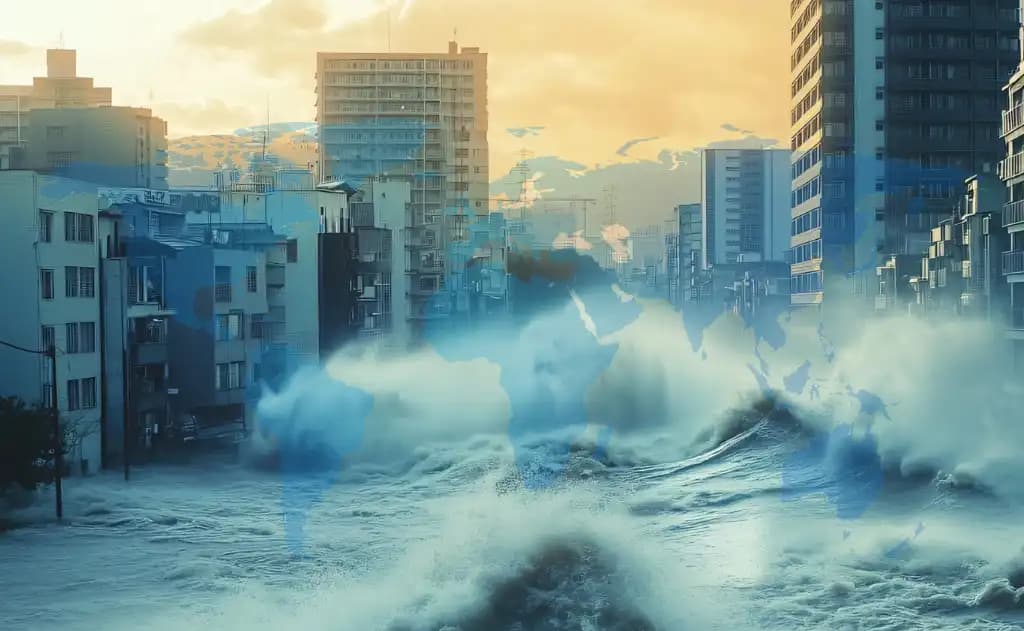
Global Tsunami Alert: How NRIs in the US, Japan & Beyond Should Stay Safe
July 30, 2025 – A powerful 8.8-magnitude earthquake struck off Russia’s Kamchatka Peninsula on Wednesday, July 30, 2025, at 8:25 AM local time, sending shockwaves across the Pacific and triggering widespread tsunami warnings. The quake, one of the strongest recorded globally since the 2011 Tohoku disaster in Japan, has prompted urgent evacuations and alerts in multiple countries, including Russia, Japan, Hawaii, Alaska, California, the Philippines, and parts of South America. For Non-Resident Indians (NRIs) living in affected regions, particularly in the US and Japan, here’s a comprehensive update on the situation and critical safety measures to follow.
Earthquake Details and Immediate Impact
The earthquake’s epicenter was located approximately 119 kilometers (74 miles) east-southeast of Petropavlovsk-Kamchatsky, a city of 180,000 on Russia’s Kamchatka Peninsula, at a shallow depth of 19.3 kilometers (12 miles). The shallow depth amplified its potential to generate tsunamis, and the U.S. Geological Survey (USGS) upgraded the quake’s magnitude from an initial 8.0 to 8.8, ranking it among the top six strongest earthquakes ever recorded. Aftershocks, including two significant ones at 6.3 and 6.9 magnitudes, continued to rattle the region, with experts warning of potential aftershocks up to 7.5 magnitude for at least a month.
In Russia’s Kuril Islands, particularly the port town of Severo-Kurilsk, tsunami waves reaching 3-4 meters (10-13 feet) caused significant flooding, damaging buildings, a fish processing plant, and sweeping vessels from their moorings. A state of emergency was declared in the North Kuril District, with nearly 3,000 residents evacuated to higher ground. No serious injuries have been reported, though minor injuries occurred as residents fled buildings during the quake. Power outages and mobile phone service disruptions were also reported in Petropavlovsk-Kamchatsky.
Tsunami Warnings Across the Pacific
The earthquake triggered a Pacific-wide tsunami alert, with warnings and advisories issued for multiple regions:
- Hawaii: The Pacific Tsunami Warning Center issued a tsunami warning for all Hawaiian islands, with the first waves expected to hit Kauai at 7:17 PM local time (1:17 AM EDT, July 31). Hawaii Governor Josh Green emphasized the severity, stating, “This is not a regular wave—it can dislodge trees and move cars. You could risk death.” Data from Midway Atoll measured waves up to 6 feet peak-to-trough, though wave heights in Hawaii could vary. Evacuation zones have been designated, and heavy traffic was reported as residents moved inland. Hilo International Airport suspended commercial operations to facilitate evacuations.
- United States West Coast: A tsunami warning is in effect for Northern California from Cape Mendocino to the Oregon border, with waves of 2-5 feet possible in Crescent City around 11:50 PM PT. A tsunami advisory covers the rest of California, Oregon, Washington, and parts of Alaska, urging residents to stay away from beaches and waterways. The National Weather Service warned that tsunamis often arrive in multiple waves over hours, and the first wave may not be the largest.
- Japan: Japan’s Meteorological Agency issued tsunami warnings for its Pacific coast from Hokkaido to Kyushu, with waves up to 3 meters (10 feet) expected. Initial waves of 60 cm (2 feet) were recorded at Kuji port in Iwate and Hamanaka in Hokkaido. Over 900,000 people across 220 municipalities were placed under evacuation advisories. Workers at the Fukushima Daiichi nuclear power plant, still under decommissioning from the 2011 disaster, were evacuated as a precaution, with no abnormalities reported.
- Philippines: The Philippine Institute of Volcanology and Seismology (PHIVOLCS) issued advisories for eastern coastal areas, warning of waves less than 1 meter that could persist for hours. Residents were urged to avoid beaches and coastal zones.
- China: China’s eastern seaboard, particularly Shanghai and Zhejiang provinces, faces a dual threat from the tsunami and Tropical Cyclone Co-May, which made landfall in Zhoushan early Wednesday. Over 280,000 people were evacuated from Shanghai, with hundreds of flights and ferry services halted. China’s Tsunami Advisory Center warned of waves between 30 cm and 1 meter, raising concerns about amplified storm surges due to the cyclone.
- Other Regions: Tsunami warnings extend to Alaska’s Aleutian Islands, parts of Canada, Chile, Peru, Ecuador, Mexico, and Pacific islands like Guam, the Northern Mariana Islands, and the Solomon Islands. Ecuador’s Galapagos Islands could see waves up to 1.4 meters (4.6 feet). New Zealand issued advisories for “strong and unusual currents” but did not call for evacuations.
Impact on NRI Communities
For NRIs in the US, Japan, and other affected regions, the situation demands immediate attention and preparedness. The Indian diaspora in these areas, particularly in tech hubs like California’s Bay Area, Hawaii, and Japan’s Tokyo and Osaka, should take proactive steps to ensure safety:
- Hawaii: NRIs in Honolulu, Maui, or Kauai should evacuate low-lying coastal areas immediately. Move to higher ground or the fourth floor or above of sturdy buildings. Avoid coastal roads, as traffic jams have been reported, and stay tuned to local alerts via tsunami.gov or the Honolulu Department of Emergency Management’s updates on X.
- California: NRIs in coastal cities like San Francisco, Los Angeles, or Crescent City should avoid beaches, harbors, and waterways. Follow the National Weather Service’s advisories and local authorities’ instructions. For those in Northern California, be prepared for potential waves late Tuesday night or early Wednesday.
- Japan: NRIs in Tokyo, Hokkaido, or other Pacific coastal areas should heed evacuation orders and move to designated safe zones or higher ground. Stay updated via Japan’s Meteorological Agency or NHK broadcasts. Indian community organizations in Japan, such as the Indian Association of Japan, may provide additional support and updates.
- Philippines and Other Regions: NRIs in Manila or other eastern coastal areas should stay away from beaches and follow PHIVOLCS advisories. Those in other Pacific regions like Guam or Canada should monitor local emergency alerts.
Safety Tips for NRIs
- Stay Informed: Monitor official sources like tsunami.gov, the National Weather Service, or local authorities for real-time updates. In Japan, follow NHK or the Japan Meteorological Agency. Enable emergency alerts on your phone.
- Evacuate Promptly: If in a tsunami warning zone, move to higher ground or inland immediately. Do not wait for visual confirmation of waves, as tsunamis can arrive suddenly and in multiple waves.
- Avoid Coastal Areas: Stay away from beaches, harbors, and low-lying areas, even under advisories. Tsunami waves can cause strong currents and unpredictable surges for hours or days.
- Prepare an Emergency Kit: Keep essentials like water, food, medications, important documents, and a flashlight ready in case of prolonged evacuations or power outages.
- Stay Connected: Inform family or friends of your location and status. Indian embassies and consulates in affected countries (e.g., Embassy of India in Washington, D.C., or Tokyo) can provide assistance if needed. Contact details:
- US: +1-202-939-7000 (Embassy in Washington, D.C.)
- Japan: +81-3-3262-2391 (Embassy in Tokyo)
- Philippines: +63-2-8843-0101 (Embassy in Manila)
- Community Support: Reach out to local Indian community organizations for guidance, especially in Japan and the US, where NRI networks are strong.
Global Response and Outlook
The international response has been swift, with governments urging residents to prioritize safety. U.S. President Donald Trump posted on X, “Due to a massive earthquake that occurred in the Pacific Ocean, a Tsunami Warning is in effect for those living in Hawaii. A Tsunami Watch is in effect for Alaska and the Pacific Coast of the United States. Japan is also in the way. Please visit tsunami.gov for the latest information. STAY STRONG AND STAY SAFE!”
In Russia, Kamchatka Governor Vladimir Solodov called the quake “the strongest in decades,” while Japan’s experience with the 2011 tsunami has prompted robust evacuation measures. China’s dual challenge with Tropical Cyclone Co-May underscores the need for coordinated disaster response in Shanghai and Zhejiang.
While initial tsunami waves have been smaller than feared in some areas (e.g., 30-60 cm in Japan and 1 foot in Alaska), experts warn that larger waves could still strike, and the threat may persist for over a day. The Pacific Tsunami Warning Center noted that waves of 1-3 meters are possible in Hawaii, Japan, Chile, and the Solomon Islands, with up to 3 meters in Russia and Ecuador.
Conclusion
For NRIs in affected regions, this is a critical time to stay vigilant and follow local authorities’ guidance. The 8.8-magnitude earthquake and resulting tsunami threat highlight the Pacific’s vulnerability to seismic events, particularly along the Ring of Fire. By staying informed, evacuating promptly, and leveraging community resources, NRIs can navigate this crisis safely. For the latest updates, visit tsunami.gov or follow local emergency agencies on X. The Indian diaspora is resilient, and together, we can weather this storm.
This article is published by NRI Globe to keep our global community informed and safe. Share this with friends and family in affected areas to spread awareness.
Related NRI Globe Coverage
- Global Tsunami Alert: How NRIs in the US, Japan & Beyond Should Stay Safe
- Alaska Tsunami Alert Downgraded After 7.3-Magnitude Earthquake Near Sand Point
- Pennsylvania 911 Outage Crisis: What Happened, Why, and How to Stay Safe
- Japan's Centenarian Population Surpasses 100,000 for the First Time in History
- Powerful 7.8 Magnitude Earthquake Strikes Southern Philippines (Mindanao) — Tsunami Warnings Issued, Damage in General Santos
- Is It Safe to Invest in Bitcoin Now? Complete Guide for NRIs in 2026
- NRI Alert: Iran War Escalates After Trump Warning
- Biosecurity Alert in USA: Las Vegas Lab Raid & Reedley Connection Shock NRIs
Fresh from NRI Globe
- YouTuber Nandu's World (Rama Nandana) UK Visa & Job Fraud Case: Full Details + Key Lessons for NRIs (2026)
- Dussehra / Vijayadashami 2026 Events Country-Wise — Global NRI Directory (Ram Lila, Ravana Dahan, Durga Puja Pandals, Ayudha Puja Venues + Booking)
- Diwali 2026 Events Country-Wise — Global NRI Directory (White House, Leicester, London Trafalgar, Toronto, Auckland, Sydney Parramasala, Fiji, Mauritius, Trinidad, South Africa and More)
- Diwali / Deepavali 2026 Country-Wise NRI Celebrations — Complete Global Guide (USA, UK, Canada, Australia, Fiji, Mauritius, Trinidad, South Africa, UAE and 30+ Countries)