
India Tables Historic Bills to Remove PM, CMs, Ministers After 30 Days in Custody
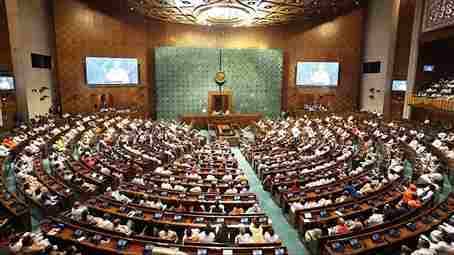
New Delhi, August 20, 2025 – In a groundbreaking move to strengthen accountability in Indian governance, Union Home Minister Amit Shah will introduce three transformative bills in the Lok Sabha today, August 20, 2025. These bills propose the automatic removal of the Prime Minister, Chief Ministers, and Ministers at the Centre, States, and Union Territories if they remain in custody for 30 consecutive days on criminal charges carrying a minimum imprisonment term of five years. This historic legislation aims to uphold constitutional morality and public trust in India's leadership, a development of keen interest to the global Indian diaspora.
Overview of the Bills
The three bills, included in the Lok Sabha's revised agenda for the ongoing Monsoon Session, are:
- The Constitution (One Hundred and Thirtieth Amendment) Bill, 2025
This bill amends Articles 75, 164, and 239AA of the Indian Constitution to mandate the resignation or automatic removal of the Prime Minister, Union Ministers, Chief Ministers, and State Ministers detained for 30 days on charges punishable by five years or more. A new clause, 5A, added to Article 239AA, specifically addresses the National Capital Territory of Delhi. If the detained official does not resign by the 31st day, they will cease to hold office. - The Government of Union Territories (Amendment) Bill, 2025
This bill amends the Government of Union Territories Act, 1963, to enforce the removal of Chief Ministers or Ministers in Union Territories such as Delhi and Puducherry if detained for 30 days on serious charges. The Lieutenant Governor will act on the Chief Minister's advice or automatically remove the official on the 31st day if no advice is given. - The Jammu and Kashmir Reorganisation (Amendment) Bill, 2025
This bill amends Section 54 of the Jammu and Kashmir Reorganisation Act, 2019, to apply similar provisions for the removal of the Chief Minister or Ministers in Jammu and Kashmir. The Lieutenant Governor will facilitate the process, with automatic removal on the 31st day if necessary.
Key Features of the Legislation
The bills outline a clear mechanism for addressing detained elected officials:
- Mandatory Resignation or Removal: Any Prime Minister, Chief Minister, or Minister detained for 30 consecutive days on charges with a minimum five-year sentence must resign by the 31st day or face automatic removal.
- Authority for Removal: The President will oversee removals for the Prime Minister and Union Ministers, Governors for State officials, and Lieutenant Governors for Union Territory officials.
- Reappointment Clause: Officials can be reappointed to their posts upon release from custody, ensuring they are not permanently barred based on unproven allegations.
The bills' statement of objects and reasons emphasizes that detained leaders risk undermining public trust and good governance, necessitating a legal framework to address such scenarios.
Background and Motivation
The legislation responds to recent controversies involving elected officials continuing in office despite prolonged detention. Cases like former Delhi Chief Minister Arvind Kejriwal, who remained in office during custody in the Delhi excise policy case, and Tamil Nadu Minister V. Senthil Balaji, who stayed in his post after arrest, have fueled demands for stricter accountability measures. Union Home Minister Amit Shah has stated that the bills aim to safeguard constitutional morality and ensure governance remains untainted by serious criminal allegations.
Political Reactions and Global Implications
The bills have sparked intense debate in India, with the Opposition, including Congress and Samajwadi Party leaders, warning of potential misuse to target non-BJP state governments through central agency arrests. An Opposition MP told India Today, "This is a dangerous precedent. We'll fight it tooth and nail." The government, however, insists the bills are a step toward decriminalizing politics and enhancing ethical governance.
For the Indian diaspora, particularly NRIs following India's political landscape, these bills signal a commitment to transparency and accountability, potentially strengthening India's global image as a robust democracy. However, concerns about political misuse could raise questions about the stability of state governments, a key issue for NRIs with ties to regional politics in India.
Procedural Challenges
The bills' introduction has faced scrutiny over procedural norms. According to The Wire, Amit Shah's request to table the bills bypassed Rules 19A and 19B, which mandate prior notice and circulation to MPs. Citing time constraints, Shah sought a relaxation of these rules, enabling the bills' inclusion in today's agenda. The government plans to refer the bills to a Joint Parliamentary Committee (JPC) with 21 Lok Sabha and 10 Rajya Sabha members for further review, signaling an intent for broader consultation despite the session's nearing end.
Impact on Indian Governance
If passed, these bills could reshape India's political framework by enabling swift action against detained leaders, even without a conviction. Unlike the Representation of the People Act, 1951, which disqualifies legislators only after a conviction with a two-year sentence, these bills set a lower threshold of 30 days in custody without bail. While supporters view this as a deterrent against misconduct, critics argue it risks being weaponized against political rivals.
Conclusion
The introduction of these bills by Amit Shah marks a pivotal moment in India's governance reform efforts. As the Lok Sabha debates this historic legislation, the global Indian community will closely watch its implications for political accountability and stability. The bills' passage through the JPC and Parliament will determine their final impact, potentially setting a new standard for ethical leadership in India.
Follow NRI Globe for the latest updates on this landmark legislation and other key developments from India.
Related NRI Globe Coverage
- What Happens to the Millions of Flags Thrown Away After 15 August?
- NRI Alert: Iran War Escalates After Trump Warning
- Emirates Suspends Dubai Flights After Drone Strike Ignites Fuel Tank Fire
- Mojtaba Khamenei Named New Supreme Leader of Iran After Father's Death in US-Israel Strikes
- Trump Attacks Supreme Court After Tariff Loss
- Three Sisters Die by Suicide After Korean Game Addiction – Diary Reveals 50 Tasks
- Davos 2026 Day 1 Highlights: India's Historic Presence & What It Means for NRIs Worldwide
- Mother of All Deals: India's Historic EU Free Trade Agreement — January 2026 Updates
Fresh from NRI Globe
- YouTuber Nandu's World (Rama Nandana) UK Visa & Job Fraud Case: Full Details + Key Lessons for NRIs (2026)
- Dussehra / Vijayadashami 2026 Events Country-Wise — Global NRI Directory (Ram Lila, Ravana Dahan, Durga Puja Pandals, Ayudha Puja Venues + Booking)
- Diwali 2026 Events Country-Wise — Global NRI Directory (White House, Leicester, London Trafalgar, Toronto, Auckland, Sydney Parramasala, Fiji, Mauritius, Trinidad, South Africa and More)
- Diwali / Deepavali 2026 Country-Wise NRI Celebrations — Complete Global Guide (USA, UK, Canada, Australia, Fiji, Mauritius, Trinidad, South Africa, UAE and 30+ Countries)