
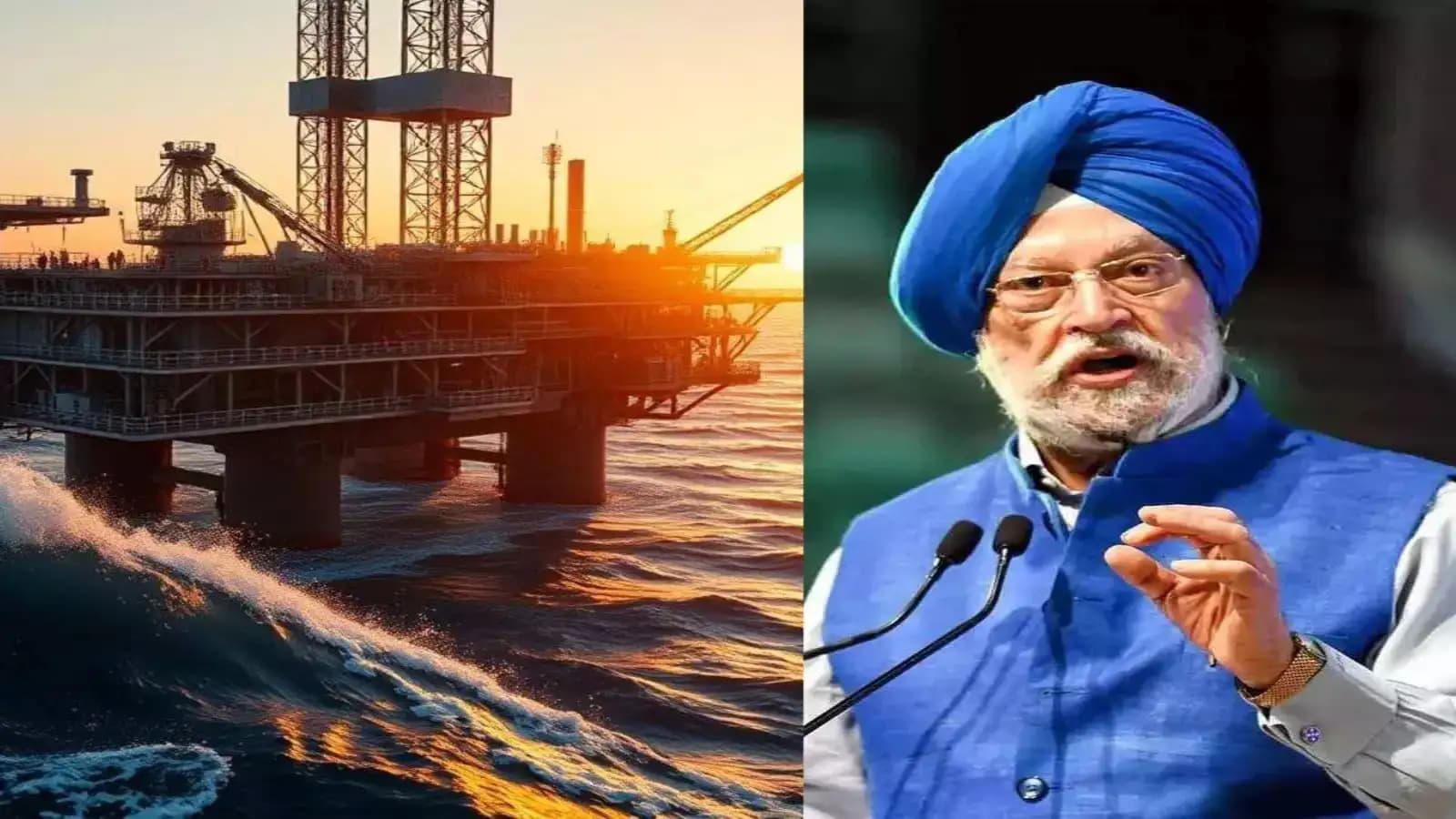
TL;DR:
- India's Andaman Sea holds an estimated 11.6 billion barrels of oil—comparable to major global reserves.
- ONGC and Oil India are drilling in ultra-deepwater formations; deepwater wells represent significant capital investments.
- Success could reduce India's oil import dependency and support long-term economic growth targets.
- Environmental safeguards are essential to balance energy gains with marine ecosystem protection.
- NRIs stand to benefit from infrastructure, energy, and technology investment opportunities.
The Andaman Sea Reserve: Scale and Significance
India's Andaman Sea oil reserve, estimated at 2 lakh crore litres (approximately 11.6 billion barrels), represents one of the world's largest untapped offshore hydrocarbon deposits. The Andaman and Nicobar Islands' sedimentary basin spans 2.25 lakh square kilometers, with geological formations indicating substantial trapped oil and gas reserves. Mud volcanoes in the Baratang region provide additional evidence of hydrocarbon potential. This discovery scale positions India alongside major oil-producing nations and opens pathways to energy self-reliance.
The reserve's magnitude mirrors Guyana's offshore discoveries, where major international operators jointly developed significant reserves beginning in 2015. Guyana's experience demonstrates how a major offshore find can accelerate economic growth and raise living standards across the nation. India's comparable discovery could similarly reshape the nation's economic trajectory, energy independence, and global standing in energy markets.
Geological surveys indicate that the Andaman basin contains multiple distinct formations at varying depths, each with different hydrocarbon compositions and extraction requirements. Seismic mapping reveals structural features typical of prolific oil-bearing regions, including anticlines and fault traps that concentrate hydrocarbons. The basin's location in a tectonically active zone presents both opportunities and challenges; while such regions often harbor substantial reserves, they require specialized drilling techniques and rigorous safety protocols. Understanding the basin's stratigraphy—the layering and composition of rock formations—remains essential for optimizing well placement and recovery strategies across the discovery area.
ONGC and Oil India: Exploration Leadership
The Oil and Natural Gas Corporation (ONGC) and Oil India Limited (OIL) are spearheading Andaman Sea exploration. ONGC operates ultra-deepwater drilling capabilities reaching depths of 3,800 meters, with planned expansion to 4,000-meter operations. The corporation has demonstrated significant drilling activity in recent years, with substantial capital investment directed toward offshore exploration. These technical achievements address the Andaman Sea's complex geological structures and challenging environmental conditions, positioning India among nations with advanced deepwater extraction capabilities.
Oil India has completed exploratory wells in shallow-water blocks and plans additional wells under phased development approaches. Deepwater drilling in the Andaman Sea represents substantial per-well investment, consistent with global deepwater economics. Partnerships with global operators strengthen ONGC's technical capacity and risk-sharing arrangements, reducing individual financial exposure while accelerating development timelines. International collaboration brings proven methodologies and specialized equipment to India's offshore operations.
Both corporations maintain dedicated research and development divisions focused on subsea engineering, reservoir characterization, and production optimization. ONGC's deepwater division has accumulated operational experience across multiple Indian offshore basins, building institutional knowledge applicable to Andaman Sea conditions. Training programs for engineers and technicians ensure workforce readiness for complex deepwater projects. The corporations' technical teams conduct detailed well-log analysis, pressure testing, and fluid sampling to characterize reservoir properties and estimate recovery factors. These data inform production forecasts and guide infrastructure design decisions essential for commercial viability.
Government Policy Framework Enabling Exploration
India's energy sector reforms have created a competitive licensing environment. The Hydrocarbon Exploration and Licensing Policy (HELP), introduced in 2016, and the Open Acreage Licensing Policy (OALP) have opened over 1 million square kilometers of sedimentary basins to exploration. The OALP's recent rounds have attracted bids targeting new and underexplored areas; successive rounds are expected to see increasing focus on frontier regions. These policies reduce barriers to entry and encourage both state-owned and private operators to pursue offshore opportunities.
India's Ministry of Petroleum and Natural Gas has introduced regulatory amendments modernizing the framework governing oil field development. Recent legislative changes shift toward models that attract private capital from major Indian energy companies alongside ONGC and OIL. This regulatory evolution aligns India's framework with international best practices and reduces bureaucratic delays in project approvals, creating clearer pathways for investment and development.
The policy framework includes provisions for revenue-sharing mechanisms that balance government interests with operator profitability, encouraging sustained investment in exploration and production. Fiscal terms define royalty rates, profit-sharing percentages, and cost recovery provisions, establishing predictable financial arrangements that reduce investment uncertainty. Regulatory bodies oversee safety standards, environmental compliance, and operational transparency. Dispute resolution mechanisms provide operators with confidence that contractual obligations will be honored and disagreements resolved through established legal channels. These institutional safeguards strengthen investor confidence and attract capital from both domestic and international sources.
Economic and Trade Implications
India currently relies on imports to meet a substantial portion of its crude oil demand, making energy security a strategic priority. The International Energy Agency projects India's oil demand will grow significantly by 2050 as the economy expands and living standards rise. A confirmed 11.6 billion-barrel reserve could support domestic consumption for multiple decades at current usage rates, depending on production efficiency, demand growth, and recovery factors.
Reducing import dependency would lower transportation costs, reduce inflation pressures, and stabilize GDP growth. Lower oil import bills would free capital for infrastructure, education, and technology investments—key drivers of long-term economic expansion. The Andaman Sea's geographic position near major Asian shipping lanes offers logistical advantages, reducing exposure to geopolitical disruptions affecting traditional supply routes. Export capacity would position India as a reliable energy supplier to neighboring markets, strengthening regional economic relationships and influence.
The discovery also influences India's currency dynamics and balance-of-payments position. Reduced crude oil imports decrease the foreign exchange outflow required to purchase energy, strengthening the rupee and improving macroeconomic stability. Domestic energy production supports manufacturing competitiveness by reducing input costs for petrochemical industries, refineries, and power generation. Employment creation across exploration, production, refining, and distribution sectors generates direct and indirect income, supporting consumption and tax revenues. Regional development around production facilities and supporting infrastructure creates opportunities for local communities, reducing geographic economic disparities and building political support for energy development initiatives.
Environmental Considerations and Sustainability
The Andaman and Nicobar Islands support rich marine biodiversity and eco-tourism, creating environmental trade-offs. Deepwater drilling operations generate carbon emissions, carry spill risks, and may disrupt marine habitats. India's commitment to the Paris Climate Agreement targets significant reductions in emissions intensity by 2030, requiring careful environmental management of energy projects.
International experience with major offshore developments offers lessons for responsible management. Rapid oil development in some regions has raised environmental concerns; India must implement robust environmental impact assessments, establish marine protected areas, and enforce strict operational standards. Technologies such as subsea carbon capture and methane management can mitigate emissions. Community consultation with local populations and transparent environmental monitoring will build public trust and ensure sustainable long-term development aligned with climate commitments.
Environmental impact assessments examine potential effects on fisheries, coral ecosystems, and migratory marine species. Baseline studies document pre-development conditions, establishing reference points for monitoring changes during and after production. Operational protocols address spill prevention through redundant safety systems, real-time monitoring, and rapid response capabilities. Waste management procedures minimize discharge of drilling fluids and produced water into marine environments. Habitat restoration programs compensate for any unavoidable environmental impacts, supporting ecosystem recovery. Regulatory oversight ensures compliance with international maritime conventions and India's environmental protection statutes, maintaining standards that protect marine resources while enabling energy development.
Opportunities for the Indian Diaspora
The Andaman Sea discovery creates investment and career pathways for NRIs. Successful energy development would elevate India's economic position and attract capital across energy, infrastructure, renewable integration, and technology sectors. NRI entrepreneurs and professionals with expertise in deepwater engineering, project management, and energy finance can contribute to exploration and development phases.
The discovery also signals India's evolution as a stable energy hub, attracting foreign direct investment and portfolio capital. NRIs with business interests in India benefit from lower energy costs, improved infrastructure spending, and expanded economic opportunities. Real estate, financial services, and technology sectors would experience accelerated growth, creating wealth-building opportunities for diaspora members with long-term India exposure. Professional networks in energy, finance, and engineering offer channels for diaspora participation in India's energy transition.
NRI investors can explore opportunities through Indian energy companies' equity offerings, infrastructure funds focused on energy development, and technology ventures supporting offshore operations. Consulting firms serving the energy sector seek diaspora professionals with international experience and technical expertise. Educational institutions in India increasingly offer specialized programs in petroleum engineering and energy management, creating opportunities for NRI academics and researchers to contribute to workforce development. Diaspora philanthropic initiatives can support scholarships and research programs advancing India's energy sector capabilities, building human capital essential for sustained development.
Timeline and Realistic Expectations
Exploration timelines for offshore oil discoveries typically span several years before commercial production begins. Industry practice suggests initial production from successful wells could commence within a multi-year timeframe, contingent on well performance, regulatory approvals, and infrastructure development. Early-stage production from individual fields could support meaningful volumes, with scaling occurring as additional fields are developed and production infrastructure is expanded. Realistic expectations require distinguishing between resource estimates (the 11.6 billion-barrel figure) and recoverable reserves, which depend on reservoir characteristics, extraction technology, and economic viability at various price points.
Quarterly updates from ONGC and OIL provide transparency on drilling progress and technical results. These reports offer investors and stakeholders insight into reserve confirmation, well performance, and development timelines. The phased approach to exploration and development allows for adaptive management, with each successful well informing subsequent drilling and production planning.
Production ramp-up follows a predictable trajectory in successful offshore developments. Initial wells establish production infrastructure and operational procedures; subsequent wells benefit from optimized designs and accumulated operational experience. Platform capacity, pipeline infrastructure, and export terminal development require parallel investment and coordination. Regulatory approvals for production facilities and environmental permits introduce scheduling uncertainties that project managers must anticipate. Market conditions, including crude oil prices and global demand trends, influence investment decisions and development pace. Conservative planning assumes extended timelines for major infrastructure projects, accounting for technical challenges and regulatory processes inherent in offshore energy development.
Next Steps
India's energy sector will benefit from continued investment in deepwater technology, workforce development, and environmental governance. NRIs can monitor quarterly updates from ONGC and OIL investor relations channels for well drilling results and reserve confirmations. Policy advocacy for streamlined environmental approvals and private sector participation will accelerate development. Engagement with industry associations and energy forums provides opportunities for diaspora professionals to contribute expertise and network with decision-makers shaping India's energy future.