
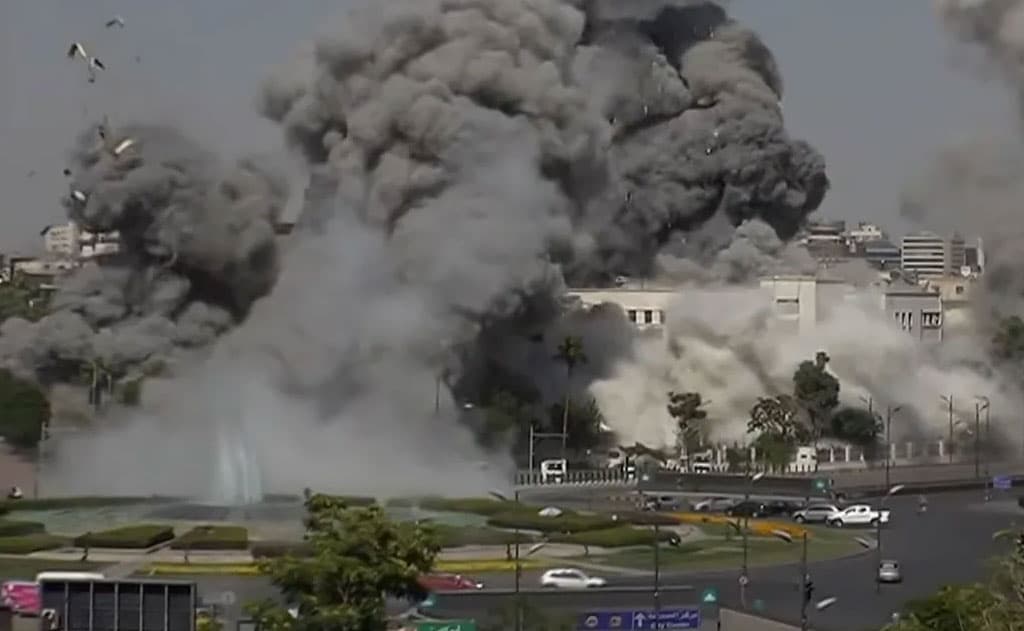
In a dramatic escalation of regional tensions, Israel launched a series of airstrikes on Syrian military targets in Damascus on Wednesday, July 16, 2025, including the Syrian Ministry of Defense headquarters and sites near the presidential palace. The strikes, which Israel claims were to protect the Druze minority in Syria’s southern Sweida province, have drawn international concern and condemnation, raising fears of a broader conflict in the volatile region.
Background: Sectarian Violence in Sweida
The airstrikes follow days of deadly clashes in Sweida, a predominantly Druze province in southern Syria near the Israeli-occupied Golan Heights. The violence, which erupted on Sunday, July 13, 2025, stems from sectarian tensions between Druze militias and Sunni Bedouin tribes, exacerbated by the abduction of a Druze merchant, according to the Syrian Observatory for Human Rights. The clashes have resulted in a staggering death toll, with reports indicating nearly 250 people killed, including 10 members of Syrian government security forces targeted by Israeli strikes.
Sweida had remained relatively insulated from Syria’s civil war in recent years, largely under the control of Druze militias that resisted integration into the new Syrian government’s security forces. The new government, led by former rebel leader Ahmed al-Sharaa, who ousted Bashar al-Assad in December 2024, has struggled to stabilize the country and address the concerns of religious and ethnic minorities, including the Druze, Alawites, and Kurds.
On Tuesday, July 15, 2025, a ceasefire was announced in Sweida, with Syrian government forces entering the city to restore order. However, the truce collapsed within hours, with Druze cleric Hikmat al-Hajri accusing Syrian troops of violating the agreement. This prompted Israel to intervene, citing the need to protect the Druze, a religious minority with historical ties to the Druze community in Israel.
Israeli Airstrikes: Targets and Impact
The Israeli Air Force carried out what it described as “dozens” of strikes across Syria, with a focus on Damascus. Key targets included the Syrian Ministry of Defense headquarters and the General Staff Command building, both of which were reportedly destroyed in dramatic explosions captured on live television broadcasts. Videos circulating on social media showed a Syrian news anchor fleeing the set as missiles struck a state TV building, underscoring the intensity of the bombardment.
Additional strikes targeted military infrastructure near the presidential palace and in the southwestern province of Daraa. According to Syria’s health ministry, at least three people were killed and 34 others injured in the attacks, though the Syrian Observatory for Human Rights reported higher casualties among government forces.
Israeli Defense Minister Israel Katz posted footage of the strikes on X, declaring, “The warnings in Damascus have ended – now painful blows will come.” Prime Minister Benjamin Netanyahu emphasized Israel’s commitment to protecting the Druze, stating, “My brothers, Druze citizens of Israel, the situation in Suwayda, the situation in southwestern Syria, is very serious.” Israel has also demanded the complete demilitarization of southern Syria, warning that it will not tolerate Syrian government forces near its borders.
International Reactions
The airstrikes have sparked widespread international concern. U.S. Secretary of State Marco Rubio expressed alarm, stating, “We’re very concerned about the Israeli attacks on Damascus,” and noted that Washington is engaging with both Israel and Syria to de-escalate the situation. The U.S. has been working to reintegrate Syria into the international community following Assad’s ouster, and Rubio’s comments suggest the strikes caught the administration off guard.
Turkey’s Foreign Minister Hakan Fidan condemned the attacks and urged an end to the violence, engaging with counterparts in Syria, Saudi Arabia, Jordan, and the U.S. Syria’s government, meanwhile, described the strikes as a “flagrant assault” and a violation of international law, with Information Minister Hamza al-Mustafa asserting that the Druze are a “fundamental pillar of the Syrian state.”
The Syrian presidency condemned the sectarian violence in Sweida as “unacceptable” and vowed to hold those responsible accountable. However, the government’s deployment of troops to the province has been met with resistance from some Druze factions, complicating efforts to restore stability.
Regional Context and Motivations
Israel’s intervention comes amid heightened regional tensions. Since Assad’s fall, Israel has conducted repeated strikes in Syria, citing concerns over the new government’s ties to former al-Qaeda affiliate Hay’at Tahrir al-Sham and the need to prevent Iran and Hezbollah from entrenching themselves in the country. Israel has also established military outposts in Syrian territory near the Golan Heights, which it annexed in 1981, further escalating tensions.
Some analysts suggest that Israel’s stated goal of protecting the Druze may also serve as a pretext for securing its strategic interests, particularly keeping Syrian forces away from its borders. The Druze community in Sweida has not universally welcomed Israeli intervention, with some leaders expressing concerns about being drawn into a broader regional conflict.
The violence in Sweida has also exposed divisions within the Druze community, with some supporting integration with the new Syrian government and others advocating for autonomy. The breakdown of the ceasefire and Israel’s subsequent strikes have raised fears of prolonged sectarian conflict, with significant implications for Syrian sovereignty and regional stability.
Looking Ahead
As fighting continues in Sweida and the fallout from the Damascus strikes reverberates, the international community faces a delicate balancing act. The U.S. and its allies are pushing for a peaceful resolution, while Israel’s actions signal a willingness to escalate militarily to protect its interests and the Druze minority. Syria’s fragile new government, meanwhile, must navigate internal divisions and external pressures to restore stability.
For now, the people of Sweida and Damascus remain caught in the crossfire, with the region teetering on the brink of further escalation. As one aid worker in Damascus described the strikes, “I was reminded of the feeling in north-west Syria when Iranian and Russian and Assad air forces were bombing us and our innocent civilians.” The path to peace remains uncertain, but the stakes could not be higher.
Related NRI Globe Coverage
- Sectarian Clashes in Suwayda: Israel Intervenes as Druze Face Violence
- Trump Channels $750M+ in U.S. Military Aid to Build IDF Airbases in Israel, Documents Reveal
- Donald Trump Deadline Nears as US–Israel Strike Iran
- Thousands Dead, Millions Displaced: The Human Toll of the 2026 US-Israel War on Iran as Infrastructure Threats Escalate
- Mojtaba Khamenei Named New Supreme Leader of Iran After Father's Death in US-Israel Strikes
- Analysis: How the US-Israel Strikes on Iran Could Impact NRIs – Economic, Security, and Personal Ramifications
- Impact Analysis: How the US-Israel Strikes on Iran Are Driving Gold and Silver Prices – What NRIs Need to Know
- Breaking: US Fires Cruise Missiles from Syria at Targets in Iran Amid Heightened Tensions
Fresh from NRI Globe
- YouTuber Nandu's World (Rama Nandana) UK Visa & Job Fraud Case: Full Details + Key Lessons for NRIs (2026)
- Dussehra / Vijayadashami 2026 Events Country-Wise — Global NRI Directory (Ram Lila, Ravana Dahan, Durga Puja Pandals, Ayudha Puja Venues + Booking)
- Diwali 2026 Events Country-Wise — Global NRI Directory (White House, Leicester, London Trafalgar, Toronto, Auckland, Sydney Parramasala, Fiji, Mauritius, Trinidad, South Africa and More)
- Diwali / Deepavali 2026 Country-Wise NRI Celebrations — Complete Global Guide (USA, UK, Canada, Australia, Fiji, Mauritius, Trinidad, South Africa, UAE and 30+ Countries)