
Published: February 12, 2026 | By NRI Globe Staff | Hyderabad, India
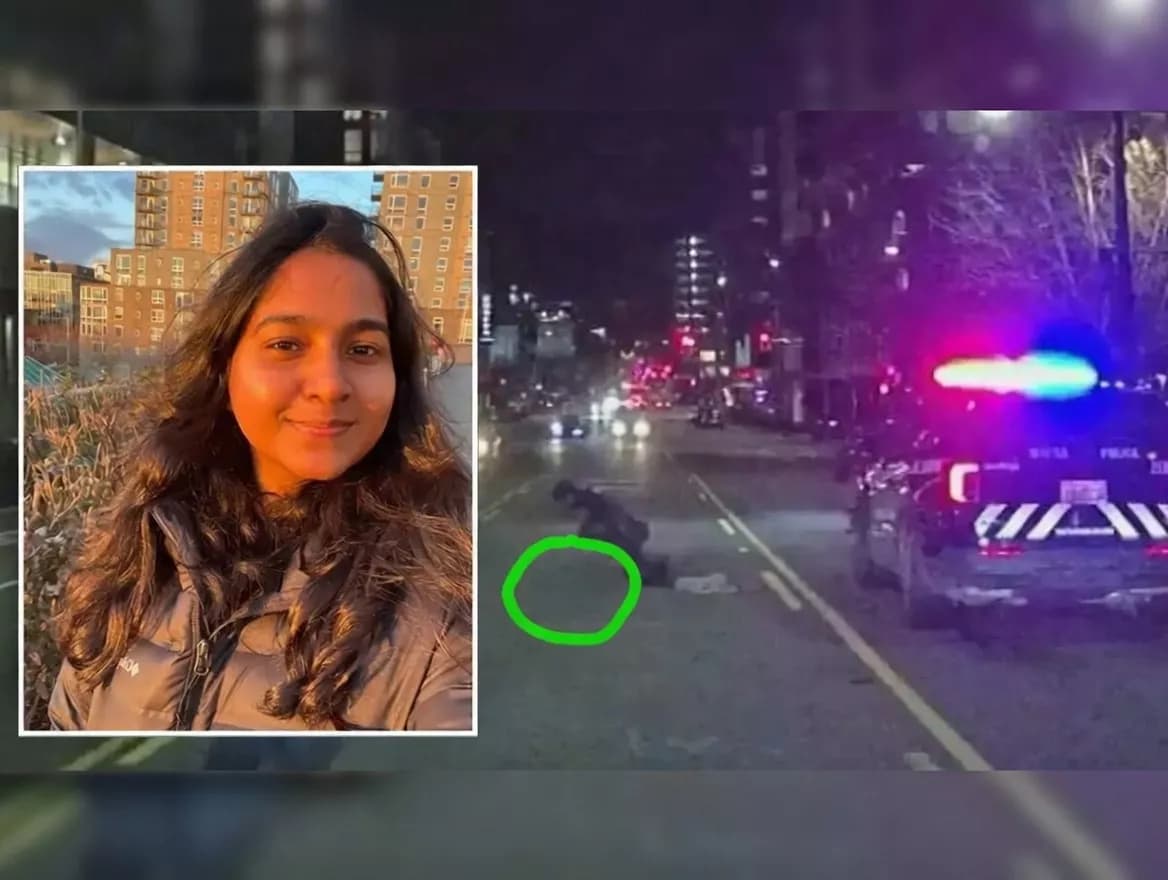
The city of Seattle has finalized a $29 million settlement with the family of Jaahnavi Kandula, a 23-year-old Indian graduate student who was fatally struck by a speeding police officer in January 2023. The agreement, announced on February 11, 2026, ends a high-profile wrongful death lawsuit originally seeking more than $110 million and has reignited conversations within the global Indian diaspora about police accountability, the value placed on human life, and stark contrasts between justice systems in the United States and India.
Who Was Jaahnavi Kandula?
Jaahnavi Kandula was pursuing a master’s degree in information systems at Northeastern University’s Seattle campus. Originally from Andhra Pradesh, she represented the thousands of Indian students who move to the United States each year in pursuit of higher education and better opportunities. Her death on January 23, 2023, sent shockwaves through NRI and student communities worldwide.
How the Fatal Collision Occurred
On the evening of January 23, 2023, in Seattle’s South Lake Union neighborhood, Seattle Police Officer Kevin Dave was responding to a priority call regarding a reported drug overdose. While driving his patrol vehicle, he reached speeds of up to 74 mph (approximately 119 km/h) in a posted 25 mph (40 km/h) zone.
Kandula was legally crossing Dexter Avenue North at the marked crosswalk on Thomas Street when Dave’s vehicle struck her. The force of the impact propelled her body nearly 138 feet (42 meters). She was rushed to Harborview Medical Center but succumbed to her injuries shortly afterward.
Investigations later confirmed that Officer Dave’s speed far exceeded department guidelines for emergency responses, even though his siren was intermittently activated. The combination of excessive speed and failure to exercise due caution was cited as the primary cause of the tragedy.
The Controversial Bodycam Audio That Sparked Global Outrage
The case gained international attention in September 2023 when previously unreleased bodycam audio became public. In the recording, Seattle Police Officers Guild Vice President Daniel Auderer is heard speaking by phone with union president Mike Solan shortly after the incident.
During the conversation, Auderer laughed while discussing the collision and remarked that Kandula, described as “26 anyway,” had “limited value.” He then suggested the city could simply “write a check” for around $11,000 to settle any claim. The callous tone and dehumanizing language triggered widespread condemnation, especially in India and among the Indian diaspora.
Protests followed in Seattle and online campaigns used the hashtag and chant: “Who has unlimited value? Jaahnavi Kandula.”
The Wrongful Death Lawsuit and $29 Million Settlement
In September 2024, Kandula’s family filed a civil wrongful death lawsuit against the City of Seattle, Officer Dave, and the Seattle Police Department. The complaint sought more than $110 million in damages and specifically included a symbolic $11,000 claim referencing Auderer’s recorded comment.
The suit alleged multiple layers of negligence:
- Reckless driving by Officer Dave
- Inadequate training and vague emergency-response policies
- Questionable hiring practices (Dave had prior speeding violations during his time with the Tucson Police Department in Arizona)
After more than two years of litigation, the city agreed to pay $29 million to resolve the case without admitting liability. Seattle City Attorney Ann Davison issued a statement saying:
“Jaahnavi Kandula’s death was heartbreaking, and the city hopes this financial settlement brings some sense of closure to the Kandula family.”
Reports indicate that approximately $20 million of the settlement will be covered by the city’s insurance carrier, with the balance paid from municipal funds. The amount ranks among the largest police-related settlements in Seattle’s history.
Accountability for the Officers Involved
- Officer Kevin Dave faced only a misdemeanor charge of negligent driving. In December 2024 he agreed to pay a $5,000 fine and avoided jail time or felony prosecution. However, in 2025, Seattle Police Interim Chief Sue Rahr terminated Dave’s employment, citing violation of department policies and endangerment of public safety.
- Daniel Auderer, the union official whose recorded comments caused widespread outrage, was also fired by the department in 2025.
Both terminations occurred well after the incident and only after sustained public pressure and media coverage.
Why This Case Resonates Deeply with the Indian Diaspora
For NRIs, international students, and families back in India, the $29 million settlement stands in sharp contrast to numerous high-profile cases of negligence and preventable deaths within India that rarely result in meaningful compensation.
Recent examples frequently discussed online include:
- Fatal road accidents caused by poor infrastructure, unmarked speed breakers, or potholes
- Deaths due to medical negligence in government hospitals
- Police encounters or custodial deaths where families often receive little or no financial redress
Many commentators on social media and in Indian online forums have pointed out the disparity: a single traffic fatality in the United States leading to a multi-crore settlement versus countless similar tragedies in India that end with minimal or no compensation.
While the Kandula settlement does not bring back a life, it underscores the importance of institutional accountability, legal recourse, and the monetary recognition of loss—principles that many in the diaspora feel are inconsistently applied in their home country.
Final Thoughts for the NRI Community
The Jaahnavi Kandula case serves as both a tragic reminder of vulnerability and a powerful example of what persistent legal advocacy can achieve in a system that allows significant civil remedies. For Indian students and professionals living abroad, it reinforces the need for awareness of local laws, traffic safety, and the availability of legal protections.
At the same time, it prompts reflection on how justice and compensation are administered closer to home.
NRI Globe will continue to follow developments related to this case and similar stories affecting the global Indian community.
If you have thoughts on this settlement or similar experiences, feel free to share them in the comments below.
Related NRI Globe Coverage
- AP Police Reportedly Initiate Lookout Notices Against 'Nandu's World' YouTuber Couple in Alleged UK Visa Scam
- Trump Orders Federal Takeover of D.C. Police, National Guard Deployment Amid Crime Concerns
- Louisiana Visa Fraud: Two Police Chiefs Charged in $5K Bribery Scheme
- YouTuber Nandu's World (Rama Nandana) UK Visa & Job Fraud Case: Full Details + Key Lessons for NRIs (2026)
- US Crime News 2026 — Top Trend Categories NRIs Are Watching (Organized Retail Theft, Auto Theft, Cybercrime, Hate Crimes, Fentanyl, AI-Enabled Fraud)
- US Crime & Safety This Week — September 17-21, 2026 (NRI Family Guide, FBI Alerts, H-1B/Immigration Scams, Tech Support Fraud, Emergency Resources)
- Japan's Centenarian Population Surpasses 100,000 for the First Time in History
- Major US News This Week (September 14-15, 2026): Supreme Court Blocks Trump Mail Voting Rules, AI Debate Explodes, Space Weapons Confirmed
Fresh from NRI Globe
- Dussehra / Vijayadashami 2026 Events Country-Wise — Global NRI Directory (Ram Lila, Ravana Dahan, Durga Puja Pandals, Ayudha Puja Venues + Booking)
- Diwali 2026 Events Country-Wise — Global NRI Directory (White House, Leicester, London Trafalgar, Toronto, Auckland, Sydney Parramasala, Fiji, Mauritius, Trinidad, South Africa and More)
- Diwali / Deepavali 2026 Country-Wise NRI Celebrations — Complete Global Guide (USA, UK, Canada, Australia, Fiji, Mauritius, Trinidad, South Africa, UAE and 30+ Countries)
- Dussehra / Vijayadashami 2026 Country-Wise NRI Celebrations — USA, UK, Canada, Australia, New Zealand, UAE, Singapore, Germany, Netherlands and More