
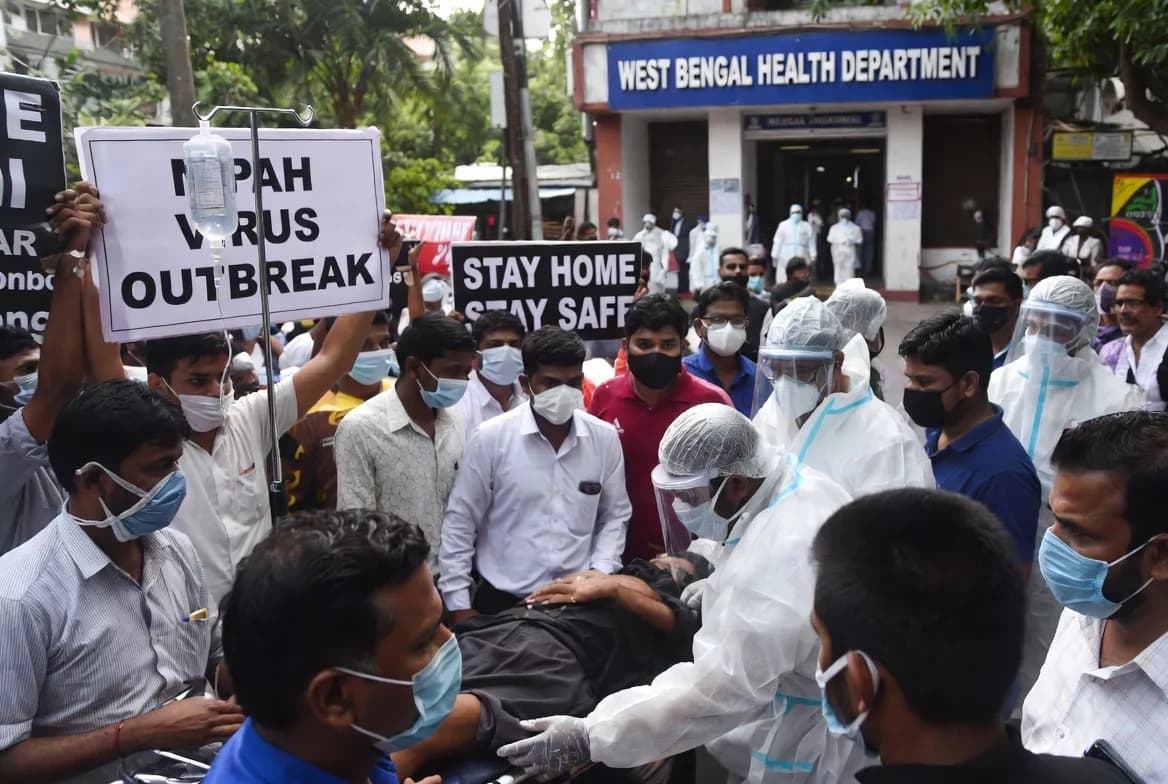
Nipah Virus Outbreak West Bengal 2026: Risks for NRIs & Prevention Tips
A confirmed Nipah virus (NiV) outbreak in West Bengal, India, in January 2026 has alerted health authorities and the global Indian diaspora, particularly Non-Resident Indians (NRIs) planning travel or with family ties in the region. With five confirmed cases—primarily among healthcare workers—and nearly 100 contacts quarantined, this bat-borne virus poses a serious threat due to its high fatality rate and lack of approved vaccines or specific cures.
As an NRI community resource, NRIGlobe.com brings you the latest verified details, travel implications, and practical guidance to stay safe while staying connected to India.
Current Status of Nipah Virus Outbreak in West Bengal (January 2026)
Health officials confirmed five Nipah infections linked to Narayana Multispeciality Hospital in Barasat, near Kolkata. The cluster began with two nurses (one male, one female) who developed severe symptoms after possible exposure to an undiagnosed patient in late December 2025. Three additional cases—a doctor, another nurse, and a health staff member—were identified through contact tracing.
- Critical cases: One nurse remains in very critical condition, while another's health shows improvement.
- No fatalities reported in this cluster so far, though the virus's progression can be rapid.
- Quarantine & monitoring: Around 100 high-risk contacts (family, hospital staff) are under home quarantine; nearly 190 people screened, all additional tests negative as of late January.
- Containment efforts: West Bengal Health Department, with support from the National Institute of Virology (Pune) and Union Ministry of Health, deployed joint outbreak response teams, RT-PCR testing, and strict isolation protocols.
This marks West Bengal's first notable Nipah event since 2007, following repeated outbreaks in Kerala.
Why NRIs Should Pay Attention to Nipah Virus Risks
Many NRIs maintain close family, business, or property links in West Bengal and eastern India. Travel for festivals, family events, or emergencies remains common despite global mobility.
- Human-to-human transmission risk: Documented in hospital settings, making healthcare visits or close family care high-risk if exposure occurs.
- International alerts: Thailand introduced screening for West Bengal arrivals at major airports; Taiwan classified Nipah as a Category 5 notifiable disease; neighboring countries increased vigilance.
- No travel ban yet: But experts advise caution for non-essential trips to affected areas until containment is assured.
- Family safety in India: NRIs with relatives in Kolkata or North 24 Parganas should ensure loved ones follow advisories and avoid high-risk foods/behaviors.
The virus rarely causes large pandemics due to limited contagiousness compared to respiratory viruses like COVID-19, but individual lethality remains high.
Nipah Virus Transmission, Symptoms & Fatality Rate
Nipah spreads primarily from fruit bats (Pteropus species) to humans, with occasional pig involvement (not seen here) and proven person-to-person spread.
Key transmission routes:
- Bat-contaminated raw date palm sap (toddy/tadi)
- Half-eaten fruits or direct bat contact
- Close contact with infected person's respiratory secretions or bodily fluids (saliva, urine, blood)
Symptoms appear 4–14 days post-exposure:
- Initial: Fever, headache, muscle pain, vomiting
- Severe: Respiratory distress, confusion, seizures, encephalitis (brain swelling)
- Progression: Can lead to coma or death within days
Case fatality rate: 40–75%, depending on early care and strain; no specific antiviral or vaccine available—treatment is supportive (ventilation, fluids, symptom management).
Essential Advice for NRIs During West Bengal Nipah Outbreak
- Travel precautions — Postpone non-urgent trips to West Bengal or bat-prone rural areas. Check MoHFW and airline updates before flying.
- Family guidance in India — Advise relatives to:
- Avoid raw date palm sap and bat-bitten fruits
- Practice strict hand hygiene
- Use masks/PPE if visiting hospitals
- Seek immediate care for fever + neurological/respiratory symptoms
- If traveling to/from India — Monitor for symptoms up to 21 days post-return; inform doctors of travel history if ill.
- Stay informed — Rely on official sources: West Bengal Health Department, MoHFW India, WHO. Avoid unverified social media claims.
- Healthcare workers — NRIs in medical fields should note heightened nosocomial risks in similar settings.
While the outbreak appears contained with no new cases reported recently, vigilance remains key for this priority pathogen.
NRIGlobe.com is committed to delivering accurate, timely information to support the global Indian community. For personalized travel health queries or NRI services, connect with us.
NRIGlobe.com – Trusted news, guidance, and resources for Non-Resident Indians worldwide.
Latest NRI News & Global Updates:
Health, Wellness & Lifestyle for NRIs
https://nriglobe.com/lifestyle/
Latest NRI News & Global Updates
https://nriglobe.com/news/
Business & Finance News for NRIs
https://nriglobe.com/business/
Investment Guides for NRIs
https://nriglobe.com/investment/
Jobs & Career Opportunities for NRIs
https://nriglobe.com/jobs/
Related NRI Globe Coverage
- NRI Dubai Investments: Returns & Risks 2026
- Trump No Tax on Tips: Boost for Indian-Americans
- NRIs in Gulf Countries: Essential Safety Tips Amid Escalating Middle East Tensions (March 2026 Update)
- Nipah Virus Outbreak India 2026: NRI Travel Risks & Advice
- Nipah Virus Cases in West Bengal Prompt Airport Health Checks Across
- e-Arrival Card for OCI Holders 2026: Mandatory Rule, How to Apply, and What to Expect
- Winter Storm Fern Alert: What NRIs in Dallas & North Texas Need to Know – Safety Tips for Indian Families This Weekend
- 2026 War Possibilities: Global Flashpoints & What They Mean for NRIs – Risks, Safety, and Diaspora Impactsa
Fresh from NRI Globe
- YouTuber Nandu's World (Rama Nandana) UK Visa & Job Fraud Case: Full Details + Key Lessons for NRIs (2026)
- Dussehra / Vijayadashami 2026 Events Country-Wise — Global NRI Directory (Ram Lila, Ravana Dahan, Durga Puja Pandals, Ayudha Puja Venues + Booking)
- Diwali 2026 Events Country-Wise — Global NRI Directory (White House, Leicester, London Trafalgar, Toronto, Auckland, Sydney Parramasala, Fiji, Mauritius, Trinidad, South Africa and More)
- Diwali / Deepavali 2026 Country-Wise NRI Celebrations — Complete Global Guide (USA, UK, Canada, Australia, Fiji, Mauritius, Trinidad, South Africa, UAE and 30+ Countries)