
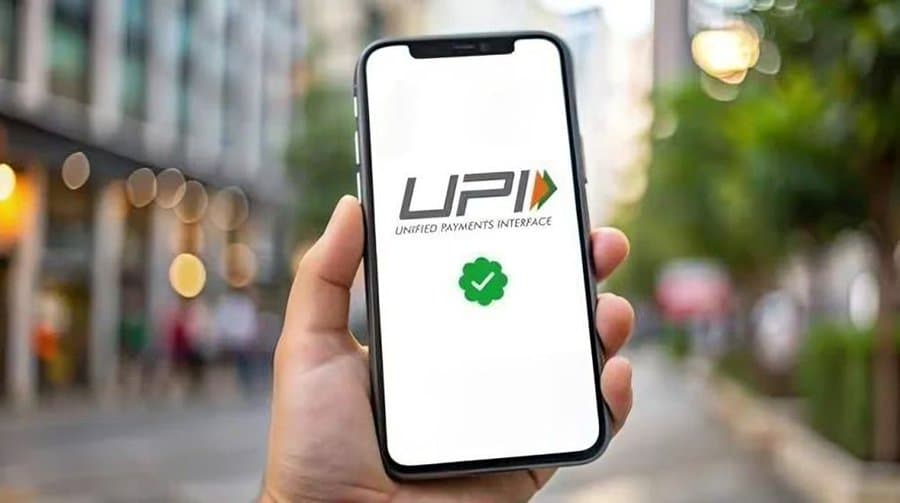
TL;DR:
- IDFC First Bank launched UPI payments for NRIs using international mobile numbers in mid-2025.
- Service available across multiple countries including Australia, Canada, France, Hong Kong, Malaysia, Oman, Qatar, Saudi Arabia, Singapore, UAE, UK, and USA, with expansion planned.
- Zero transaction fees; works with NRE and NRO accounts linked to Google Pay, PhonePe, Paytm, and other UPI apps.
- Eliminates the need to maintain an active Indian SIM card for digital payments.
A Structural Shift in NRI Banking
For decades, Unified Payments Interface (UPI)—the backbone of India's digital payment ecosystem—required an Indian mobile number. This requirement created a logistical and financial burden for Non-Resident Indians. Maintaining an active Indian SIM meant recurring costs, periodic recharges to prevent deactivation, and coordination with relatives or service providers back home. IDFC First Bank's recent announcement removes this friction entirely.
The bank now permits NRI customers holding NRE (Non-Resident External) or NRO (Non-Resident Ordinary) accounts to link their international mobile numbers directly to UPI-enabled applications. This shift reflects a broader recognition by India's banking sector that the diaspora represents a substantial, growing segment requiring tailored financial infrastructure. The decision to support international numbers acknowledges that many NRIs have deliberately severed ties with Indian telecommunications services, viewing the maintenance of a dormant SIM as an unnecessary expense and administrative hassle.
The service covers multiple nations including Australia, Canada, France, Hong Kong, Malaysia, Oman, Qatar, Saudi Arabia, Singapore, the United Arab Emirates, the United Kingdom, and the United States. Expansion to additional countries is planned, signaling IDFC First Bank's commitment to scaling this capability globally. The geographic scope reflects the distribution of India's diaspora, with concentrations in developed economies where digital payment adoption is already mature.
How NRIs Register and Activate UPI
The setup process follows four straightforward steps:
- Download a UPI Application: Install Google Pay, PhonePe, BHIM, Paytm, or another Reserve Bank of India-approved UPI app on your smartphone.
- Register Your International Number: Access your IDFC First Bank mobile app or visit a branch to link your international mobile number to your existing NRE or NRO account. The bank verifies your identity and account eligibility during this step.
- Create Your UPI PIN: Follow the UPI app's onboarding flow to establish a secure Personal Identification Number, which authorizes each transaction.
- Begin Transacting: Scan merchant QR codes, transfer funds to other UPI IDs, pay utility bills, or purchase goods and services across India's digital payment network.
The registration process is designed for speed and accessibility, with no additional charges for transactions. This cost-neutral approach distinguishes UPI from traditional remittance channels, which typically levy foreign exchange markups and processing fees. The entire onboarding sequence can be completed within minutes, often without requiring a visit to a physical branch, depending on the bank's digital verification capabilities.
For NRIs unfamiliar with UPI, the system operates on a simple principle: your mobile number serves as your unique identifier within the payment network. Previously, this identifier had to be an Indian number; now it can be your international number. The UPI ID format remains consistent—typically your name or a chosen handle followed by @bankname—but the underlying phone number validation now accepts international formats. This technical adjustment, while seemingly minor, eliminates a substantial barrier to diaspora participation in India's digital economy.
Concrete Benefits for the NRI Community
| Benefit | Impact | Use Case |
|---|---|---|
| No Indian SIM Requirement | Eliminates recurring costs and logistical coordination | Professional in Dubai paying rent to family in Bangalore |
| Zero Transaction Fees | Full amount reaches recipient; no forex markup | Student in Canada sending ₹10,000 to parents—entire amount arrives |
| Instant Settlement | Funds transfer in seconds, not days | Emergency medical bill payment processed immediately |
| Merchant Acceptance | Millions of vendors accept UPI across retail and online | Shopping at Indian e-commerce platforms or local stores during visits |
| Security Standards | RBI-regulated encryption and fraud detection | Protection against unauthorized transactions via UPI's built-in verification |
The elimination of the Indian SIM requirement addresses a persistent pain point. Many NRIs previously relied on family members to keep their Indian numbers active or used expensive international roaming plans. With international number support, this dependency disappears. The practical relief is substantial: no more coordinating with relatives to recharge a SIM, no more worrying about deactivation due to inactivity, no more paying for a service that exists solely to maintain UPI access.
Zero transaction fees represent another material advantage. Traditional wire transfers and remittance services charge 1–3% per transaction. A ₹50,000 transfer via conventional channels incurs ₹500–₹1,500 in fees. UPI eliminates this leakage, making it economically superior for frequent, smaller payments—utility bills, school fees, or family support. Over a year, an NRI sending ₹100,000 monthly to family members saves ₹12,000–₹36,000 by switching from wire transfers to UPI.
Instant settlement is equally significant. Wire transfers typically require 2–5 business days, particularly when crossing time zones and banking holidays. UPI transactions settle within seconds. For time-sensitive payments—emergency medical expenses, urgent repairs, or last-minute bill payments—this speed differential can be critical. An NRI learning of a family medical emergency can transfer funds immediately, rather than waiting days for a wire transfer to clear.
Why This Development Matters at Scale
India's diaspora remits substantial sums annually through various channels, with much of this flow still traveling through costlier traditional routes: international bank transfers, money transfer operators, and other services that charge fees and foreign exchange markups. UPI's expansion to international mobile numbers directly addresses this inefficiency by offering a lower-cost alternative for cross-border family payments and financial management.
From a first-hand NRI perspective, the practical impact is significant. An NRI professional working in Singapore can now settle utility bills for a parent's apartment in Chennai within seconds, using a familiar app interface and their own phone number. A student in London can contribute to family expenses without requesting an Indian relative to handle the transaction. An entrepreneur in San Francisco can invest in Indian mutual funds or real estate without maintaining a separate Indian phone line. These scenarios, previously requiring workarounds, now integrate seamlessly into daily financial routines.
The broader implications extend beyond individual convenience. As more NRIs adopt UPI for domestic Indian payments, the volume of digital transactions originating from the diaspora will increase, generating valuable data for Indian fintech companies and banks. This data can inform product development, credit assessment, and targeted financial services. Additionally, higher UPI adoption among NRIs may reduce their reliance on informal remittance channels or cryptocurrency-based transfers, bringing more diaspora money into India's regulated financial system.
The National Payments Corporation of India (NPCI), which operates UPI, has signaled its intention to expand the system globally. IDFC First Bank's initiative aligns with this strategic direction, positioning the bank as an early mover in diaspora-focused digital banking. As regulatory frameworks evolve and international partnerships deepen, UPI's reach will likely extend beyond the current 12 countries, eventually becoming a truly global payment rail for Indians abroad.
Competitive Landscape and Broader Adoption
Reports indicate that major Indian banks including State Bank of India, HDFC Bank, ICICI Bank, and Axis Bank are exploring or have begun supporting UPI services for NRIs, signaling that this capability is transitioning from a niche offering to an industry standard. Competition among banks to serve NRIs is intensifying, which typically benefits customers through improved features and expanded geographic coverage. Banks recognize that NRIs represent a high-value customer segment with stable income, significant financial assets, and a demonstrated willingness to use digital banking services.
IDFC First Bank's roadmap includes investment management and loan repayment functionality via UPI. These enhancements would allow NRIs to manage a broader range of financial activities through a single, unified interface—further reducing friction and transaction costs. As additional banks enter this market, customers can expect continued innovation in features and service scope. The competitive dynamic may also drive improvements in customer support, with banks offering dedicated NRI helplines and multilingual assistance.
UPI's Scale and Reliability
UPI processes billions of transactions monthly, with transaction volumes demonstrating the system's infrastructure maturity and reliability. The underlying technology is battle-tested, operating under Reserve Bank of India oversight and subject to stringent security and fraud-prevention requirements. The system's architecture is designed for high throughput, with redundancy and failover mechanisms ensuring continuous availability even during peak usage periods.
The system's capacity and stability provide confidence for NRIs considering a shift from traditional remittance methods. Downtime is rare; transaction success rates are consistently high. For individuals sending money to support dependents or manage investments, this reliability is non-negotiable. The scale of UPI's adoption across India's retail and digital economy ensures that recipients can readily access and use received funds. Merchants, utilities, and service providers across India accept UPI payments, meaning that money transferred via UPI can be spent or invested almost immediately upon receipt.
The technical infrastructure supporting UPI has been continuously upgraded to handle growing transaction volumes. Banks and payment service providers have invested in redundant systems, real-time monitoring, and rapid incident response capabilities. This operational maturity means that NRIs can rely on UPI for regular, recurring payments without concern for service interruptions.
Security Considerations and Fraud Prevention
UPI fraud has risen alongside adoption. The Reserve Bank of India has introduced enhanced fraud detection systems, with major banks implementing real-time monitoring to detect and block suspicious transactions. These safeguards are particularly important for NRIs, who may be unfamiliar with emerging scam tactics targeting diaspora members. Common fraud vectors include phishing messages impersonating banks, social engineering calls requesting UPI PIN or OTP, and unauthorized access to accounts through compromised credentials.
Best practices for NRI UPI users include verifying international number registration with your bank before initiating transactions, using only official UPI apps downloaded from verified app stores, and avoiding clicking links in unsolicited messages claiming to be from your bank. Two-factor authentication—your UPI PIN plus biometric or OTP verification—provides an additional security layer. NRIs should also remain aware of common social engineering tactics that target diaspora members, such as calls claiming to be from banks or government agencies requesting account details.
Banks typically offer fraud liability protection for unauthorized UPI transactions, provided the customer reports the incident promptly. However, prevention is preferable to remediation. NRIs should monitor their account statements regularly, enable transaction notifications, and maintain strong passwords for their banking apps. If you suspect unauthorized access, contact your bank immediately and change your UPI PIN and banking app password.
Next Steps
If you are an NRI with an IDFC First Bank account (or another participating bank), verify whether your account type qualifies for international number UPI registration. Visit your bank's mobile app or contact a branch to initiate the linking process. Confirm that your international mobile number is correctly registered before attempting your first transaction. Download a UPI app if you have not already, and complete the setup within the app itself. Once activated, test the service with a small transaction to ensure proper functionality before relying on it for regular payments.
Monitor your bank's announcements for expansions to additional countries and new features such as investment or loan management capabilities. As more banks adopt this service, competitive pressure may drive further improvements in speed, features, and geographic reach. Consider whether international number UPI might reduce your reliance on traditional remittance services, and compare the total cost of ownership—including any account maintenance fees—against your current payment methods.
Document your UPI registration details, including your UPI ID, linked mobile number, and the bank's customer service contact information. Keep this information accessible in case you need to troubleshoot issues or update your registration. Share this information with family members in India who may need to send you money, ensuring they have your correct UPI ID for transfers.
Sources
- The Bridge Chronicle: IDFC First Bank UPI NRI International Mobile Payments
- Southern Mail: IDFC First Bank Introduces UPI Services for NRI Customers Across 12 Countries
- Informal Newz: NRI Customers Can Make UPI Payments Using International Mobile Numbers
Continue reading — NRI Globe pillar guide: UAE Golden Visa Complete Guide
Related NRI Globe Coverage
- Russia’s Su-57E Offer to India: A Game-Changer for Make in India with Full Tech Transfer
- US News Weekly NRI Briefing — September 9, 2026 (Tariffs, Jobs, Gas Prices, H-1B, Visa, Diaspora)
- Women Accounted for 98% of US Job Gains in August 2026 — What It Means for the Economy & NRIs
- GPT-6 Astra Capabilities & Benchmarks: Why OpenAI's Sept 2026 Release Is the Top AI Model Right Now
- India in 1947 vs India in 2026: 79 Years in Numbers
- Is It Safe to Invest in Bitcoin Now? Complete Guide for NRIs in 2026
- Indian Diaspora Reactions Across Countries
- RBI Plans 1-Hour Delay for High-Value Digital Payments
Fresh from NRI Globe
- YouTuber Nandu's World (Rama Nandana) UK Visa & Job Fraud Case: Full Details + Key Lessons for NRIs (2026)
- Dussehra / Vijayadashami 2026 Events Country-Wise — Global NRI Directory (Ram Lila, Ravana Dahan, Durga Puja Pandals, Ayudha Puja Venues + Booking)
- Diwali 2026 Events Country-Wise — Global NRI Directory (White House, Leicester, London Trafalgar, Toronto, Auckland, Sydney Parramasala, Fiji, Mauritius, Trinidad, South Africa and More)
- Diwali / Deepavali 2026 Country-Wise NRI Celebrations — Complete Global Guide (USA, UK, Canada, Australia, Fiji, Mauritius, Trinidad, South Africa, UAE and 30+ Countries)