
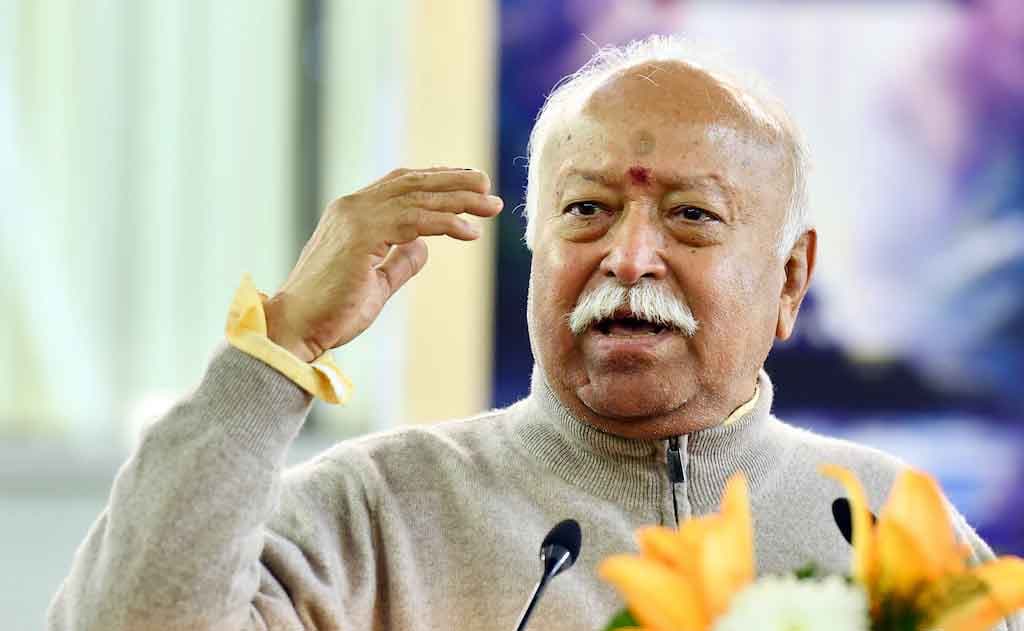
New Delhi, August 29, 2025 – During the Rashtriya Swayamsevak Sangh (RSS) centenary celebrations in New Delhi, RSS chief Dr. Mohan Bhagwat delivered a compelling message on unity, religious harmony, and India’s shared national identity. Speaking at a question-and-answer session on August 28, 2025, at Vigyan Bhawan, Bhagwat addressed key issues such as religious coexistence, illegal immigration, and social harmony, emphasizing the RSS’s commitment to fostering dialogue and mutual respect among India’s diverse communities.
Islam’s Enduring Role in India
Dr. Bhagwat unequivocally stated that Islam is an integral part of India’s cultural and historical fabric and will remain so. “Islam has been in India since its arrival, and it will continue to be here,” he affirmed, dismissing any notions to the contrary. He clarified that such thinking does not align with Hindu philosophy. “It is not the Hindu way to believe that Islam will not stay. Hindu thinking embraces coexistence,” he said, highlighting the inclusive nature of Hinduism.
Bhagwat stressed that resolving communal tensions requires mutual trust. “This conflict will only end when trust is built on both sides. First, we must accept that we are all one,” he stated. He further emphasized the shared identity of Hindus and Muslims, noting, “Hindus and Muslims are one; only their ways of worship differ. We are already united—there’s no need to create unity.” This perspective underscores his vision of a cohesive national identity that transcends religious differences.
Addressing Illegal Immigration and National Interests
On the issue of illegal immigration, Bhagwat described it as a national concern affecting all citizens, including Muslims. He advocated for stronger measures to curb infiltration, stating, “Infiltration must be stopped. The government is taking steps, and progress is underway. Muslims in India are our citizens too, and they deserve opportunities. Jobs should go to our own citizens, not outsiders.” His remarks highlight the importance of prioritizing employment for Indian citizens across all communities.
Bhagwat clarified that his stance was not against honoring Muslims but against naming public spaces after historical figures tied to aggression. “I’m not against naming places after Muslims, but they shouldn’t be named after aggressors,” he said, citing luminaries like APJ Abdul Kalam and Abdul Hameed as deserving of recognition. This approach reflects his focus on balancing national pride with historical sensitivity.
Population Control and Cultural Sensitivity
Bhagwat proposed a balanced approach to population control, suggesting that families aim for three children to maintain demographic stability. “The population should be controlled but sufficient. Ideally, families should have three children,” he said, framing it as a shared responsibility. He also called for sensitivity during religious festivals, urging avoidance of practices that could offend, such as displaying non-vegetarian food during vegetarian fasts. “During fasting periods, people prefer vegetarianism. Displaying certain things can hurt sentiments. It’s just a few days—let’s be considerate,” he advised, promoting harmony through mutual respect.
RSS’s Commitment to Dialogue and Equity
Reaffirming the RSS’s non-aggressive stance, Bhagwat said, “The RSS does not attack anyone, including on religious grounds.” He highlighted the organization’s history of aiding communities during crises like the Kerala floods and Gujarat earthquake. Bhagwat also endorsed constitutional reservation policies, stating, “We support reservations as long as they are needed.” He declared the caste system outdated, advocating for a society free of exploitation and inequality.
In a recent outreach effort, Bhagwat met with over 50 Muslim clerics and scholars on July 24, 2025, at Haryana Bhawan in Delhi, organized by the All India Imam Organisation (AIIO). The three-hour discussion aimed to build trust and understanding. AIIO chief Imam Umer Ahmed Ilyasi noted that such engagements would continue at the grassroots level to foster harmony and reduce misunderstandings.
A Vision for a United India
Bhagwat’s remarks were part of the RSS’s centenary celebrations, themed “100 Years of RSS Journey: New Horizons,” which included a three-day lecture series in New Delhi. His message reflects a vision of India where diversity is a strength and unity is paramount. By advocating for dialogue and trust, Bhagwat seeks to bridge divides, as evidenced by his outreach to Muslim leaders.
As India navigates complex social and demographic challenges, Dr. Mohan Bhagwat’s call for unity, rooted in mutual respect and a shared national identity, offers a roadmap for a harmonious future. His statements resonate with the global Indian diaspora, reinforcing the values of coexistence and collective progress that define India’s ethos.
Related NRI Globe Coverage
- Retired ATS Officer’s Bombshell: Was RSS Chief Targeted in Malegaon Blast Case?
- Big Breaking News: TVK Chief Vijay's Wife Sangeetha Sornalingam Files Divorce Petition, Alleges Extramarital Affair with Actress
- Vance Urges Elon Musk to Rejoin MAGA Before 2026 Midterms: A Call for Unity Amid Trump Feud
- Trump Fires Labor Chief After Disappointing July Jobs Report: Economic and Political Fallout
- PM Modi Commemorates Chola Anniversary at Brihadisvara Temple: A Celebration of Cultural Unity
- China Condemns Pahalgam Attack, Calls for RIC Revival
- Astronomer CEO Affair with HR Chief Sparks Scandal at Coldplay Concert: Viral Moment Shocks Internet
- YouTuber Nandu's World (Rama Nandana) UK Visa & Job Fraud Case: Full Details + Key Lessons for NRIs (2026)
Fresh from NRI Globe
- Dussehra / Vijayadashami 2026 Events Country-Wise — Global NRI Directory (Ram Lila, Ravana Dahan, Durga Puja Pandals, Ayudha Puja Venues + Booking)
- Diwali 2026 Events Country-Wise — Global NRI Directory (White House, Leicester, London Trafalgar, Toronto, Auckland, Sydney Parramasala, Fiji, Mauritius, Trinidad, South Africa and More)
- Diwali / Deepavali 2026 Country-Wise NRI Celebrations — Complete Global Guide (USA, UK, Canada, Australia, Fiji, Mauritius, Trinidad, South Africa, UAE and 30+ Countries)
- Dussehra / Vijayadashami 2026 Country-Wise NRI Celebrations — USA, UK, Canada, Australia, New Zealand, UAE, Singapore, Germany, Netherlands and More