
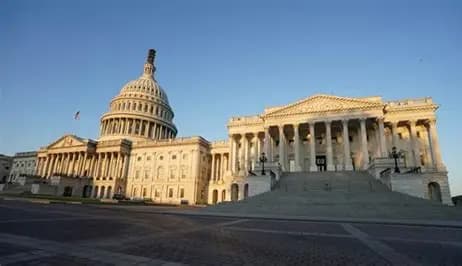
Senate Committee Advances PELOSI Act: Implications for NRIs on Congressional Stock Trading Ban
On July 30, 2025, the U.S. Senate Homeland Security and Governmental Affairs Committee passed the bipartisan Preventing Elected Leaders from Owning Securities and Investments (PELOSI) Act, now renamed the HONEST Act, with an 8-7 vote. This legislation, which prohibits members of Congress, the president, vice president, and their spouses from trading or holding individual stocks, is a significant development for Non-Resident Indians (NRIs) with investments or interests in U.S. markets. By restricting investments to diversified mutual funds, exchange-traded funds (ETFs), or U.S. Treasury bonds, the bill aims to curb insider trading and enhance trust in U.S. governance, potentially impacting NRI investors and their confidence in American financial systems.
Why This Matters for NRIs
For NRIs, particularly those with stakes in U.S. stocks or those tracking American markets, the HONEST Act addresses concerns about fairness and transparency in the U.S. financial system. Lawmakers' ability to trade stocks based on privileged information has long raised questions about market integrity, which directly affects global investors, including NRIs. The bill's push to eliminate potential conflicts of interest could stabilize investor confidence, ensuring a level playing field for those investing through U.S. brokerage accounts, mutual funds, or other financial instruments.
Key Features of the HONEST Act
The legislation, reintroduced by Senator Josh Hawley (R-Mo.), includes provisions designed to promote ethical governance:
- Ban on Individual Stock Trading: Members of Congress, the president, vice president, and their spouses are prohibited from buying, selling, or holding individual stocks during their tenure, limiting investments to diversified mutual funds, ETFs, or U.S. Treasury bonds.
- Compliance Timeline: Affected officials have 180 days to divest prohibited holdings or transfer them to a qualified blind trust.
- Penalties for Violations: Non-compliance results in forfeiture of stock profits to the U.S. Treasury, with additional fines imposed by House and Senate ethics committees.
- Transparency Measures: Lawmakers must submit annual compliance certifications, with the Government Accountability Office conducting biennial audits to ensure adherence.
- Executive Branch Scope: The ban extends to the president and vice president but applies only to future administrations, exempting President Donald Trump and Vice President JD Vance during their current term.
Background and Context
The PELOSI Act, originally named to highlight scrutiny over former House Speaker Nancy Pelosi's husband's stock trades, responds to widespread concerns about lawmakers profiting from nonpublic information. For NRIs, this issue is critical, as insider trading by U.S. officials could distort market dynamics, affecting portfolios held through platforms like Charles Schwab, Fidelity, or Indian-based brokers offering U.S. market access. A 2022 New York Times analysis revealed that 97 members of Congress traded stocks tied to their committee work, fueling public demand for reform. A University of Maryland poll showed 85% of Americans, including many in the NRI community, support banning congressional stock trading.
Senator Hawley emphasized the bill's intent: "Politicians shouldn't profit from information unavailable to the public while families, including NRIs, work hard to invest wisely." President Trump's endorsement of a stock trading ban further propelled the legislation, though he later criticized the bill on Truth Social, calling it a Democratic tactic, creating uncertainty about its final passage.
Political Dynamics and Committee Vote
The 8-7 vote saw Senator Hawley joined by Democrats, including Committee Chair Gary Peters (D-Mich.), while most Republicans, led by Chair Rand Paul (R-Ky.), opposed the measure. Critics like Senator James Lankford (R-Okla.) argued the ban could discourage wealthy candidates from public service, a concern some NRIs may share if it limits diverse representation in Congress. Democrats secured passage by exempting the current administration, a compromise that drew mixed reactions. Former Speaker Pelosi, despite the bill's original name, endorsed the HONEST Act, advocating for "robust accountability" to prioritize public interest.
Implications for NRI Investors
For NRIs, the HONEST Act could enhance trust in U.S. markets by reducing the risk of insider-driven price distortions. Many NRIs invest in U.S. stocks or mutual funds through Non-Resident External (NRE) accounts or U.S.-based platforms, and a transparent market free of congressional insider trading could encourage greater participation. However, the bill's restrictions on diversified investments may shift lawmakers' focus to mutual funds and ETFs, potentially influencing market trends in these sectors, which NRIs should monitor.
Additionally, the bill's compliance requirements, such as divestment and audits, could set a precedent for stricter financial regulations in the U.S., impacting how NRIs structure their investments. Those with significant U.S. holdings may benefit from consulting financial advisors to align portfolios with potential market shifts driven by this reform.
Challenges Ahead
Despite its committee approval, the HONEST Act faces hurdles in the Republican-controlled Senate and the House, where competing proposals like the ETHICS Act and TRUST in Congress Act have stalled. For NRIs, the uncertainty surrounding the bill's passage underscores the need to stay informed about U.S. legislative developments that could affect market stability. The 2012 STOCK Act, which mandated trade disclosures, has been criticized for weak enforcement, and similar challenges could undermine the HONEST Act without robust implementation.
Looking Forward
The HONEST Act represents a step toward greater accountability in U.S. governance, a priority for NRIs seeking confidence in American markets. By addressing insider trading concerns, the bill could foster a fairer investment environment, benefiting global investors. However, its success depends on overcoming political resistance and ensuring effective enforcement. NRIs with U.S. investments are advised to track the bill's progress and consider its potential impact on their financial strategies.
For the latest updates on U.S. legislation and its implications for NRIs, visit www.nriglobe.com.
Related NRI Globe Coverage
- What Is the Insurrection Act? Implications for NRIs Amid U.S. Domestic Unrest
- Texas Senate Approves GOP-Favored Redistricting Map: Implications for NRIs and Indian-American Representation
- SAVE America Act: Impact on NRIs Explained
- JD Lakshminarayana’s Wife Victim of ₹2.58 Crore Fake Stock Trading Scam
- Global EV Adoption Map 2026: Implications for NRIs and the Indian Diaspora
- American Jewish Committee Defends India Against Trump Administration Criticism
- Nobel Peace Prize Controversy: Three Committee Members Oppose Trump’s 2026 Bid
- Trump’s Bold Push to Ban Mail-In Voting Before 2026: A Constitutional Clash Looms
Fresh from NRI Globe
- YouTuber Nandu's World (Rama Nandana) UK Visa & Job Fraud Case: Full Details + Key Lessons for NRIs (2026)
- Dussehra / Vijayadashami 2026 Events Country-Wise — Global NRI Directory (Ram Lila, Ravana Dahan, Durga Puja Pandals, Ayudha Puja Venues + Booking)
- Diwali 2026 Events Country-Wise — Global NRI Directory (White House, Leicester, London Trafalgar, Toronto, Auckland, Sydney Parramasala, Fiji, Mauritius, Trinidad, South Africa and More)
- Diwali / Deepavali 2026 Country-Wise NRI Celebrations — Complete Global Guide (USA, UK, Canada, Australia, Fiji, Mauritius, Trinidad, South Africa, UAE and 30+ Countries)