
Solar Eclipse Hoax Debunked: The Truth About August 2, 2027
In the age of instant information, where a single post on social media can ignite global curiosity—or panic—a recent viral claim about a "6-minute darkness" sweeping the world on August 2, 2025, sent imaginations into overdrive. Videos and posts on platforms like X and TikTok painted a dramatic picture: the entire planet shrouded in an eerie, apocalyptic blackout caused by a rare total solar eclipse. The claim even suggested this cosmic event wouldn’t occur again for a century, sparking both awe and fear among skywatchers and casual scrollers alike. But here’s the twist: it’s all a hoax. NASA, the gold standard of space science, has stepped in to set the record straight, and the real story is just as fascinating—if not more so.
The Viral Rumor That Captivated the World
Picture this: it’s a typical July evening in 2025, and your phone buzzes with a notification. A video pops up, claiming that on August 2, 2025, the world will plunge into six minutes of total darkness, courtesy of a solar eclipse so rare it’s a "once-in-a-century" event. The post, shared thousands of times, cites NASA, warning of cosmic shifts and urging people to prepare. Schools reportedly cancel classes, skywatchers plan viewing parties, and some even whisper about apocalyptic omens. The excitement is palpable, but there’s a problem: it’s not true.
This viral rumor, which spread like wildfire across social media, was fueled by a mix of misinformation and genuine enthusiasm for celestial events. Some posts exaggerated the eclipse’s impact, claiming the entire Earth would be cloaked in darkness—an astronomical impossibility. Others confused dates, mixing up 2025 with a real, spectacular event set for 2027. The buzz was amplified by sensational headlines, like one from the Daily Galaxy that misleadingly suggested a global blackout was imminent. But NASA, ever the voice of reason, has debunked the claim with cold, hard facts. There is no total solar eclipse on August 2, 2025. Instead, the next major eclipse is two years away, on August 2, 2027—and it’s a show worth waiting for.
NASA’s Clarification: No Eclipse in 2025, but 2027 Is Coming
According to NASA’s official astronomical records, August 2, 2025, will be an ordinary day in the skies. No total solar eclipse is scheduled, and certainly no global blackout. The closest celestial event is a partial solar eclipse on September 21, 2025, visible in parts of Africa, Europe, and southern Asia. This partial eclipse, where the Moon covers only a portion of the Sun, won’t cause darkness—think of it as a crescent-shaped Sun, not a plunge into night. For North America and most of Asia, including India, this event will be invisible.
The real star of the show, however, is the total solar eclipse slated for August 2, 2027. Dubbed the “Eclipse of the Century,” this event will be one of the longest and most spectacular of the 21st century, with totality lasting up to 6 minutes and 23 seconds. Unlike the fictional 2025 blackout, this eclipse will be visible only along a narrow path stretching across southern Europe, North Africa, and the Middle East. Cities like Luxor, Egypt, will experience over six minutes of total darkness, while southern Spain, Morocco, and Saudi Arabia will also witness the Moon completely obscuring the Sun. For those outside this path, including most of Europe, Africa, and western India, a partial eclipse will offer a less dramatic but still stunning view.
Why the 2027 Eclipse Is a Big Deal
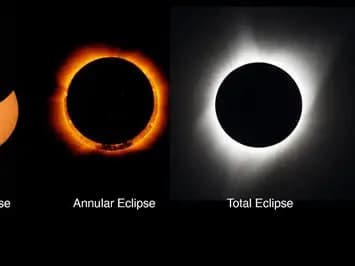
What makes the August 2, 2027, eclipse so special? It’s all about cosmic geometry. A total solar eclipse occurs when the Moon passes directly between the Earth and the Sun, casting a shadow that temporarily turns day into a twilight-like darkness. The 2027 eclipse is extraordinary for three reasons:
- The Moon’s Proximity: On August 2, 2027, the Moon will be near perigee—its closest point to Earth—making it appear larger in the sky. This allows it to fully cover the Sun for an extended period.
- The Sun’s Distance: Earth will be near aphelion, its farthest point from the Sun, making the Sun appear slightly smaller. This perfect alignment enhances the duration of totality.
- The Path’s Location: The eclipse’s path crosses near the equator, where the Moon’s shadow moves more slowly across Earth’s surface, prolonging the experience.
This rare alignment results in a totality lasting 6 minutes and 23 seconds—the longest on land since 1991 and until 2114. The path of totality, about 160 miles wide, will sweep across 11 countries, including Spain, Gibraltar, Morocco, Algeria, Tunisia, Libya, Egypt, Sudan, Saudi Arabia, Yemen, and Somalia. In Luxor, Egypt, the duration will peak, offering a breathtaking view of the Sun’s corona—the glowing outer atmosphere usually hidden by the Sun’s brightness.
A Cultural and Scientific Spectacle
For centuries, solar eclipses have captivated humanity, inspiring myths, legends, and scientific breakthroughs. Ancient civilizations saw them as omens, while today, they’re opportunities to study the Sun’s corona, test astronomical theories, and unite people in awe. The 2027 eclipse is already generating buzz among scientists, photographers, and eclipse chasers. In Egypt, where clear August skies are almost guaranteed, Luxor is poised to become a prime viewing spot, blending astronomical wonder with visits to ancient sites like the Valley of the Kings. Tour operators in Spain and North Africa are already booking eclipse packages, expecting a surge in tourism.
For those in western India, like Rajasthan or Gujarat, a partial eclipse will be visible in the late afternoon, obscuring 10-30% of the Sun. While not as dramatic as totality, it’s still a chance to witness a cosmic dance—provided you use proper eye protection, like certified solar glasses, to avoid permanent damage.
Separating Fact from Fiction
The 2025 hoax highlights the power of misinformation in the digital age. A single post, amplified by shares and likes, can spark global panic or excitement. NASA and astronomers worldwide urge people to verify claims with reputable sources, like NASA’s eclipse website or the American Astronomical Society. The confusion likely arose from excitement about the 2027 eclipse, misdated by two years in viral posts. While the idea of a global blackout is scientifically impossible—eclipses only darken a narrow path—the enthusiasm for celestial events is a silver lining, showing humanity’s enduring fascination with the cosmos.
How to Prepare for 2027
If you’re inspired to witness the “Eclipse of the Century,” start planning now. Here’s how:
- Choose Your Spot: Luxor, Egypt, offers the longest totality, while southern Spain and Morocco provide more temperate climates. Check NASA’s eclipse maps for precise timings.
- Safety First: Never look directly at the Sun without certified solar glasses, except during the brief totality phase when the Sun is fully blocked.
- Join the Community: Connect with astronomy groups or book eclipse tours for a guided experience.
- Mark Your Calendar: August 2, 2027, will be a Monday, with totality peaking in the early to mid-afternoon, depending on your location.
For those in India, the partial eclipse will be a teaser, but the real show awaits in 2027. Whether you’re a scientist, a photographer, or just curious, this eclipse promises to be a once-in-a-lifetime spectacle—a moment when the universe reminds us of its vast, awe-inspiring beauty.
Related NRI Globe Coverage
- NASA Busts Viral Eclipse Hoax: The Real Deal on August 2, 2027
- Total Solar Eclipse 2027 – 6 Minutes of Darkness You Can’t Miss
- Major US News This Week (September 14-15, 2026): Supreme Court Blocks Trump Mail Voting Rules, AI Debate Explodes, Space Weapons Confirmed
- Women Accounted for 98% of US Job Gains in August 2026 — What It Means for the Economy & NRIs
- Erin Piacenti Times Square Stabbing — BofA VP Killed in Random Attack
- Why Is India's Independence Day on 15 August? The Reason Behind the Date
- What Happened on 15 August 1947? The Complete Story of India's First Independence Day
- Trump’s Iran Ceasefire Claim Faces New Doubts
Fresh from NRI Globe
- YouTuber Nandu's World (Rama Nandana) UK Visa & Job Fraud Case: Full Details + Key Lessons for NRIs (2026)
- Dussehra / Vijayadashami 2026 Events Country-Wise — Global NRI Directory (Ram Lila, Ravana Dahan, Durga Puja Pandals, Ayudha Puja Venues + Booking)
- Diwali 2026 Events Country-Wise — Global NRI Directory (White House, Leicester, London Trafalgar, Toronto, Auckland, Sydney Parramasala, Fiji, Mauritius, Trinidad, South Africa and More)
- Diwali / Deepavali 2026 Country-Wise NRI Celebrations — Complete Global Guide (USA, UK, Canada, Australia, Fiji, Mauritius, Trinidad, South Africa, UAE and 30+ Countries)