
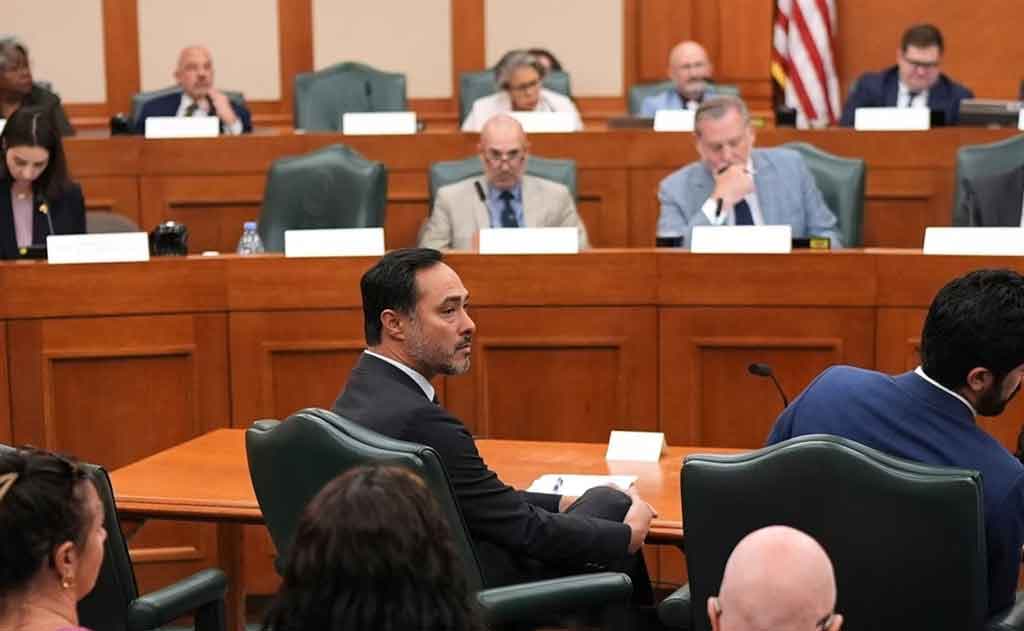
Texas is at the center of a fierce political showdown as Republicans push forward a controversial redistricting plan to redraw congressional maps, aiming to flip five Democratic seats and cement their grip on the U.S. House ahead of the 2026 midterms. On August 3, 2025, Texas Democratic lawmakers fled the state to deny a quorum, stalling a vote on the proposal in a dramatic bid to protect their districts. This bold maneuver, backed by President Donald Trump and Governor Greg Abbott, has sparked accusations of partisan gerrymandering and racial bias, setting the stage for legal battles and nationwide repercussions. At NriGlobe.com, we unpack the details of this high-stakes plan, its potential impact on representation, and what it means for Texas and beyond.
The Redistricting Plan: A GOP Power Grab
On July 30, 2025, Texas House Republicans, led by state Rep. Todd Hunter (R-Corpus Christi), unveiled a proposed congressional map designed to secure five additional GOP seats in the U.S. House. The plan targets Democratic strongholds in Austin, Dallas, Houston, and South Texas, redrawing district lines to favor Republican candidates based on 2024 election results, where Trump carried 27 of Texas’ 38 congressional districts. Under the proposed map, Trump would have won 30 districts by at least 10 percentage points, compared to the current 25 Republican-held seats.
The map employs classic gerrymandering tactics: “packing” Democratic voters into fewer, heavily blue districts and “cracking” others by diluting Democratic strongholds with Republican-leaning rural areas. Key targets include:
- South Texas: The districts of Reps. Henry Cuellar (D-Laredo) and Vicente Gonzalez (D-McAllen), both majority-Hispanic, would shift from narrow Trump wins (7 and 4 points in 2024) to safer GOP margins (around 10 points each).
- Austin and Central Texas: Rep. Greg Casar’s (D-Austin) District 35 would be eliminated, forcing a primary showdown with Rep. Lloyd Doggett (D-Austin) in a redrawn, solidly Democratic seat.
- Dallas-Fort Worth: Rep. Julie Johnson’s (D-Farmers Branch) District 32 would extend into rural East Texas, flipping it to a GOP-leaning seat Trump would have won by 18 points. Rep. Marc Veasey’s (D-Fort Worth) District 33 would lose Fort Worth, his political base, but remain blue.
- Houston: Rep. Al Green’s (D-Houston) District 9 would be redrawn to include conservative east Harris County, becoming 50% Hispanic and GOP-leaning (Trump +15 points). The vacant District 18, historically Black and Democratic, would pack in more Democratic voters, ensuring it stays blue but reducing Democratic influence elsewhere.
The plan, advanced by a Texas House panel on August 2, 2025, follows a 30-day special session called by Governor Abbott, who added redistricting to the agenda alongside flood relief. The move, spurred by Trump’s political team, aims to bolster the GOP’s slim 219-212 House majority (with four vacancies) amid fears of midterm losses.
Democrats’ Quorum Break: A Desperate Stand
On August 3, 2025, Texas Democratic lawmakers fled the state to deny the Republican-controlled House the two-thirds quorum needed to vote on the map, echoing a similar tactic used in 2003 and 2021 to protest GOP-led initiatives. This dramatic exodus, likely to states like New Mexico or Colorado, aims to delay or derail the redistricting process before the special session ends on August 19. However, it carries risks: Republicans have imposed $500 daily fines for absent lawmakers, and Democrats face pressure to return for flood relief legislation.
House Minority Leader Hakeem Jeffries (D-N.Y.) met with Texas Democrats in Austin on July 30, signaling national support. The Democratic Congressional Campaign Committee (DCCC) and House Majority PAC have pledged $20 million to fight the plan, with former President Barack Obama headlining a fundraiser to support competitive Democratic candidates. Democrats are also exploring legal challenges, arguing the map violates the Voting Rights Act by diluting minority voting power. “This proposed map is a racially discriminatory, brazen power grab,” said Marina Jenkins of the National Redistricting Foundation.
The Racial and Legal Controversy
The redistricting plan has drawn sharp criticism for allegedly targeting minority voters, who drove 95% of Texas’ population growth since 2020. The Department of Justice, in a July 2025 letter, flagged four current districts (9, 18, 29, and 33) as unconstitutional “coalition districts” combining Black and Hispanic voters, a claim Texas disputes. The proposed map creates four majority-Hispanic districts and two majority-Black districts but reduces opportunities for minorities to elect their preferred candidates, critics argue. For example, District 9’s Black voter share drops from 45% to 12%, while white voters increase to 34%.
Democrats, including Rep. Al Green, have called the map “racist,” accusing Republicans of exploiting a DOJ letter from Harmeet K. Dhillon as a pretext for partisan gerrymandering. Texas officials, including Attorney General Ken Paxton, insist the 2021 maps were drawn without racial considerations, and Republicans defend the new plan as reflecting shifting Hispanic voter preferences, with Trump gaining ground among Latinos in 2024.
Legal challenges are inevitable. Democrats and voting rights groups plan to sue, citing violations of the Voting Rights Act and the 14th Amendment. However, the conservative 5th U.S. Circuit Court of Appeals may delay rulings until after the 2026 elections, allowing the map to take effect.
Potential Impacts: Short-Term and Long-Term
Short-Term Impacts
- GOP Gains: If passed, the map could immediately shift five seats to Republicans, giving them 30 of Texas’ 38 congressional districts and bolstering their House majority.
- Electoral Chaos: The redrawn District 18, vacant since Rep. Sylvester Turner’s death in March 2025, could disrupt its competitive November 2025 election. Candidates like Cuellar and Gonzalez face tougher races, while Casar and Doggett may clash in a costly primary.
- Voter Suppression Concerns: Critics argue the map dilutes minority voting power, particularly in Houston and Dallas, prompting protests and public hearings where Texans overwhelmingly opposed the plan.
Long-Term Impacts
- Polarization and Reduced Competition: By creating safer GOP seats, the map could further polarize Texas politics, reducing incentives for candidates to appeal to moderates.
- Demographic Risks for GOP: Relying on 2020 census data, the map may not account for Texas’ rapidly growing and diversifying population. Democratic strength in 2018 and 2022 suggests some districts could remain competitive, especially if 2026 is a Democratic wave year.
- National Redistricting War: The Texas plan has sparked a “redistricting arms race,” with Democratic governors in California, Illinois, and New York considering retaliatory map redraws, though legal hurdles like independent commissions complicate their efforts.
The Bigger Picture: A Test for Democracy
Texas’ redistricting battle is more than a state issue—it’s a flashpoint in the national fight for congressional control. Republicans, backed by Trump, see it as a firewall against midterm losses, while Democrats view it as an assault on fair representation. The plan’s reliance on gerrymandering tactics like cracking and packing raises questions about electoral integrity, especially in a state where minority voters are driving growth. Public hearings revealed widespread opposition, with Texans like Christy Stockman of Corpus Christi calling it a “bait-and-switch” power grab.
As Democrats weigh their next moves—quorum breaks, lawsuits, or counter-gerrymandering in blue states—the outcome will shape the 2026 midterms and beyond. For now, the Texas legislature faces a ticking clock, with the special session nearing its end and flood relief competing for attention. Whether the map passes or falters, its ripple effects will resonate across the U.S. political landscape.
Stay informed with NriGlobe.com for the latest on Texas politics and the fight for fair representation.
Related NRI Globe Coverage
- Abbott’s Redistricting Plan Ignites Fierce Political Battle in Texas
- Texas Rep. Nicole Collier Locked in House Chamber Amid Redistricting Standoff
- Texas Senate Approves GOP-Favored Redistricting Map: Implications for NRIs and Indian-American Representation
- FEMA Budget Cuts Leave Texas Reeling: The Devastating Impact on Central Texas Flood
- Tropical Storm Edouard Landfall Sep 1, 2026 — Texas + Louisiana
- Winter Storm Fern Alert: What NRIs in Dallas & North Texas Need to Know – Safety Tips for Indian Families This Weekend
- Doña Ana County SBA Disaster Loans After New Mexico Floods
- Texas Democrats Flee State to Block GOP Map, Face Bribery Charges and Expulsion Threat
Fresh from NRI Globe
- YouTuber Nandu's World (Rama Nandana) UK Visa & Job Fraud Case: Full Details + Key Lessons for NRIs (2026)
- Dussehra / Vijayadashami 2026 Events Country-Wise — Global NRI Directory (Ram Lila, Ravana Dahan, Durga Puja Pandals, Ayudha Puja Venues + Booking)
- Diwali 2026 Events Country-Wise — Global NRI Directory (White House, Leicester, London Trafalgar, Toronto, Auckland, Sydney Parramasala, Fiji, Mauritius, Trinidad, South Africa and More)
- Diwali / Deepavali 2026 Country-Wise NRI Celebrations — Complete Global Guide (USA, UK, Canada, Australia, Fiji, Mauritius, Trinidad, South Africa, UAE and 30+ Countries)