
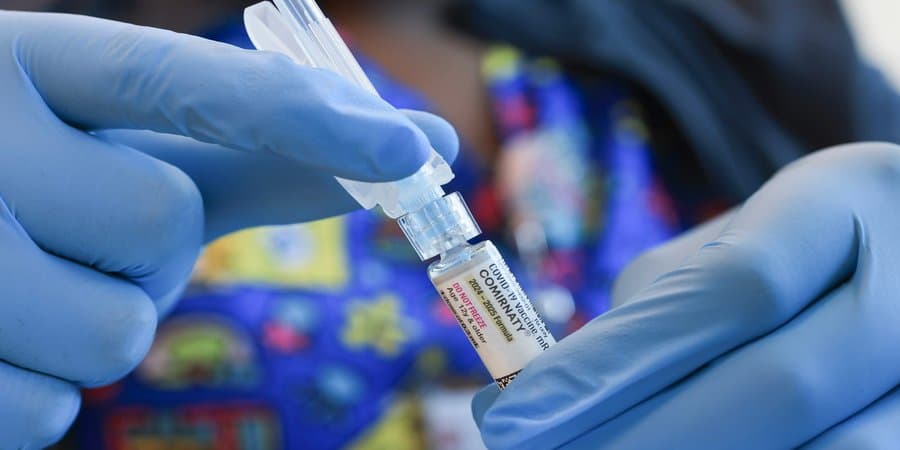
Trump Administration Orders Federal Agencies to Scrub Worker COVID Vaccination Records
Washington, D.C. – August 9, 2025 – The Trump administration has reportedly issued a directive to federal agencies to delete all records of employee COVID-19 vaccination statuses, sparking widespread discussion about privacy, public health, and workplace policy. The move, which comes amid ongoing debates over vaccine mandates and data privacy, has raised questions about its implications for federal workers, public health tracking, and future pandemic preparedness.
Background of the Directive
According to sources familiar with the matter, the executive order mandates that all federal agencies erase any documentation related to employees' COVID-19 vaccination statuses from their databases. This includes records collected during the height of the pandemic when federal agencies implemented vaccine mandates for employees and contractors under the Biden administration's policies. Those mandates, which were rolled back in 2023, required federal workers to provide proof of vaccination or request exemptions based on medical or religious grounds.
The Trump administration's decision appears to align with its broader agenda to reduce government oversight and protect individual privacy. Supporters of the order argue that retaining vaccination records could lead to potential misuse of personal health information, while critics warn that erasing such data could hinder public health efforts and workplace safety protocols.
Reactions from Stakeholders
The directive has elicited a range of responses from federal employees, unions, public health experts, and privacy advocates. The American Federation of Government Employees (AFGE), one of the largest unions representing federal workers, expressed concerns about the lack of transparency surrounding the order. "While we support protecting employee privacy, the sudden decision to delete these records without consultation raises questions about the administration's intentions and the impact on workplace safety," an AFGE spokesperson stated.
Public health experts have voiced apprehension about the potential loss of valuable data. Dr. Anita Patel, a public health researcher, noted, "Vaccination records, even if anonymized, are critical for understanding immunization rates and preparing for future health crises. Erasing this data could limit our ability to track trends or respond effectively to new outbreaks."
On the other hand, privacy advocates have praised the move as a step toward safeguarding personal health information. The Electronic Privacy Information Center (EPIC) released a statement supporting the directive, saying, "Federal agencies have no ongoing need to retain sensitive health data, especially when the mandates requiring such records have been lifted. This action reduces the risk of data breaches or unauthorized access."
Legal and Ethical Considerations
The order raises several legal and ethical questions. Federal agencies are subject to strict data management protocols under laws like the Privacy Act of 1974, which governs the collection, use, and storage of personal information by federal entities. Legal experts suggest that the directive could face challenges if it is found to conflict with existing regulations or if it inadvertently leads to the destruction of records needed for ongoing litigation or audits.
Ethically, the move touches on the balance between individual privacy and collective public health needs. While some argue that vaccination records are no longer relevant in a post-mandate era, others contend that such data could be critical for monitoring long-term health outcomes or responding to new variants of the virus.
Implications for Federal Workers
For the approximately 2.1 million federal employees, the directive could have immediate practical effects. Agencies may need to revise their human resources policies, update employee databases, and ensure compliance with the order while maintaining other health-related records. Workers who had previously submitted vaccination information may receive notifications about the deletion of their records, though it remains unclear whether agencies will provide detailed communication on the process.
The directive could also influence workplace culture. Some employees may welcome the removal of vaccination records as a step toward moving past the divisive debates of the pandemic era. Others, particularly those in high-risk roles such as healthcare or law enforcement, may worry about the loss of data that could inform workplace safety measures.
Broader Context and Political Ramifications
The order comes as part of the Trump administration's broader push to roll back policies associated with the previous administration's handling of the COVID-19 pandemic. President Trump has repeatedly criticized vaccine mandates and other public health measures implemented during the pandemic, framing them as government overreach. The decision to scrub vaccination records aligns with this narrative and may resonate with voters who prioritize individual freedoms and limited government intervention.
However, the move could also reignite debates about the role of vaccines in public health. With COVID-19 still circulating globally, though at lower levels than during the pandemic's peak, some public health officials worry that erasing vaccination records could complicate efforts to monitor and respond to potential surges.
What's Next?
Federal agencies are expected to begin implementing the directive immediately, though the timeline for compliance remains unclear. The Office of Management and Budget (OMB) is reportedly tasked with overseeing the process and ensuring that agencies adhere to the order while complying with existing privacy laws.
As the directive rolls out, it is likely to face scrutiny from lawmakers, advocacy groups, and the public. Congressional hearings or legal challenges could emerge if stakeholders believe the order oversteps executive authority or undermines public health. Meanwhile, federal workers and the broader public will be watching closely to see how this policy shapes the intersection of privacy, health, and government accountability.
For now, the Trump administration's decision marks a significant shift in how federal agencies handle sensitive health data, with far-reaching implications for employees, public health policy, and the ongoing legacy of the COVID-19 pandemic.
This is a developing story, and NRI Globe will continue to provide updates as more information becomes available.
About NRI Globe
NRI Globe is a leading news platform dedicated to delivering accurate and timely information to the global Indian diaspora and beyond. Stay informed with our in-depth coverage of politics, health, technology, and more.
Related NRI Globe Coverage
- Trump Orders Federal Takeover of D.C. Police, National Guard Deployment Amid Crime Concerns
- American Jewish Committee Defends India Against Trump Administration Criticism
- Trump Proposes Federal Takeover of Washington, D.C. Amid Crime and Governance Concerns
- MLK Assassination Files Released: What the 230K Documents Reveal
- Trump Administration Ends 988 Suicide & Crisis Lifeline’s LGBTQ+ Youth Service: Impact on Americans and NRIs
- Major US News This Week (September 14-15, 2026): Supreme Court Blocks Trump Mail Voting Rules, AI Debate Explodes, Space Weapons Confirmed
- $5,000 Trump Dividend Proposal — Complete Details, Feasibility & NRI Impact Analysis (Nov 2026 Midterms)
- Trump Urges Support for AI Data Centers on Fox News — US-China Race, Stocks, Local Opposition (NRI Perspective)
Fresh from NRI Globe
- YouTuber Nandu's World (Rama Nandana) UK Visa & Job Fraud Case: Full Details + Key Lessons for NRIs (2026)
- Dussehra / Vijayadashami 2026 Events Country-Wise — Global NRI Directory (Ram Lila, Ravana Dahan, Durga Puja Pandals, Ayudha Puja Venues + Booking)
- Diwali 2026 Events Country-Wise — Global NRI Directory (White House, Leicester, London Trafalgar, Toronto, Auckland, Sydney Parramasala, Fiji, Mauritius, Trinidad, South Africa and More)
- Diwali / Deepavali 2026 Country-Wise NRI Celebrations — Complete Global Guide (USA, UK, Canada, Australia, Fiji, Mauritius, Trinidad, South Africa, UAE and 30+ Countries)