
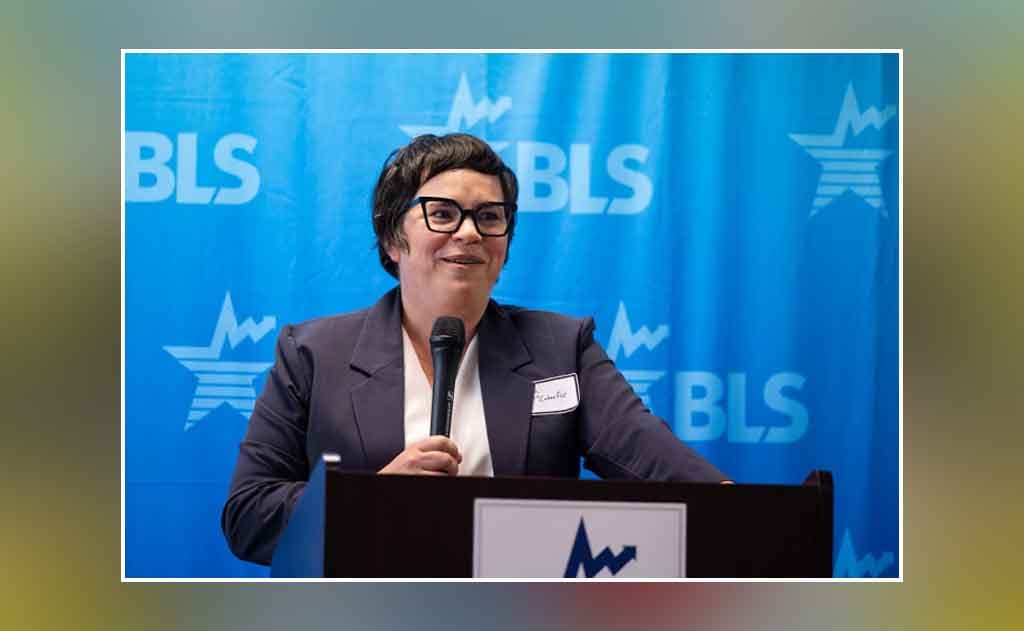
Washington, D.C., August 2, 2025 – President Donald Trump dismissed Dr. Erika McEntarfer, Commissioner of the Bureau of Labor Statistics (BLS), following the release of a lackluster July jobs report that revealed only 73,000 jobs added, falling short of the anticipated 110,000. The report, which also revised down job gains for May and June by 258,000 and showed the unemployment rate rising to 4.2%, sparked controversy and raised questions about the U.S. economy's trajectory. This article explores the firing, its implications, and the broader economic context for NRIGlobe.com.
Weak Jobs Report Triggers Political Firestorm
The July jobs report, released by the BLS on Friday, August 1, 2025, painted a concerning picture of the U.S. labor market. Key highlights include:
- Job Growth: Only 73,000 nonfarm jobs were added, significantly below economists' expectations of 110,000.
- Revisions: May's job gains were revised down from 144,000 to 19,000, and June's from 147,000 to 14,000, marking the largest two-month revision since the 2020 recession.
- Unemployment Rate: The rate climbed to 4.2%, signaling a potential slowdown in the labor market.
In response, President Trump took to Truth Social, accusing McEntarfer, a Biden appointee, of manipulating data to favor Vice President Kamala Harris's 2024 presidential campaign. "I was just informed that our Country's 'Jobs Numbers' are being produced by a Biden Appointee, Dr. Erika McEntarfer, who faked the Jobs Numbers before the Election," Trump wrote, offering no evidence for his claims. He announced her immediate firing and vowed to appoint a "more competent and qualified" replacement.
Who is Erika McEntarfer?
Dr. Erika McEntarfer, a respected labor economist, was confirmed as BLS Commissioner in January 2024 with strong bipartisan support (86-8 Senate vote). With over 20 years of federal government experience, including roles at the U.S. Census Bureau, Treasury Department, and the White House Council of Economic Advisers, McEntarfer was praised for her data-driven approach. Her nomination was endorsed by four former BLS commissioners and the American Statistical Association.
Despite her credentials, Trump's decision to fire McEntarfer has drawn widespread criticism. Economists, former BLS officials, and some Republican lawmakers argue that the move threatens the agency's independence and credibility, which is vital for producing reliable economic data.
Economic and Political Implications
The firing comes amid broader economic challenges. On the same day as the jobs report, Trump's administration imposed new tariffs on dozens of countries, contributing to a sharp market decline. The Dow Jones Industrial Average dropped 1.23%, and the S&P 500 fell 1.6%, reflecting investor concerns about trade policies and the labor market slowdown.
Critics, including Senate Minority Leader Chuck Schumer and House Minority Leader Hakeem Jeffries, attribute the economic slowdown to Trump's tariffs, with Schumer stating they are "bleeding the economy." Meanwhile, Trump has intensified attacks on Federal Reserve Chair Jerome Powell, accusing him of manipulating interest rates to favor Harris's campaign, despite Powell's resistance to rate cuts amid tariff-driven inflation concerns.
BLS Independence Under Scrutiny
The BLS, a nonpartisan agency, is responsible for critical economic indicators like jobs reports, inflation data, and wage statistics. Economists warn that politicizing the agency could erode trust in its data, with far-reaching consequences for markets, businesses, and policymakers. "It is absolutely essential for financial markets to be able to trust the incoming data," said Torsten Slok, chief economist at Apollo Global Management.
Former BLS commissioners, including William Beach (Trump's first term) and Erica Groshen (Obama administration), condemned the firing. Beach called it "totally groundless" and a "dangerous precedent," while Groshen warned it could undermine the federal statistical system. The BLS's data collection process, involving hundreds of career civil servants, is designed to prevent manipulation, yet staffers expressed fears of political interference following McEntarfer's dismissal.
What's Next for the BLS?
Deputy Commissioner William Wiatrowski, a career civil servant, will serve as interim head while the administration seeks a permanent replacement. Trump, speaking to reporters en route to his Bedminster, New Jersey, golf club, said he has "three people in mind" for the role, emphasizing the need for "honesty" in reporting.
The firing has intensified concerns about the BLS's capacity, already strained by staffing shortages. In June, the agency ceased collecting Consumer Price Index data in three cities due to resource constraints, and further disruptions could compromise its ability to deliver accurate economic data.
Broader Economic Context
The jobs report and McEntarfer's firing highlight growing economic uncertainty under Trump's second term. Key factors include:
- Trade Policies: New tariffs have sparked fears of inflation and reduced global trade, impacting market confidence.
- Labor Market Slowdown: The revised jobs figures indicate the weakest three-month hiring pace since 2020.
- Federal Reserve Tensions: Trump's ongoing feud with Powell complicates monetary policy as inflation risks rise.
As the administration navigates these challenges, the integrity of institutions like the BLS remains critical. With markets and policymakers closely monitoring Trump's next moves, the firing of McEntarfer could have lasting implications for economic trust and stability.
Sources: CNBC, NBC News, The Hill, POLITICO, The Washington Post, CNN, The New York Times, Bloomberg, Yahoo Finance, BBC News, The Guardian, PBS News, The Independent, CBS News, Reuters, Fortune, Fox Business, Times Now
Related NRI Globe Coverage
- NRI Alert: Iran War Escalates After Trump Warning
- Trump Attacks Supreme Court After Tariff Loss
- Trump Fires CDC Director Susan Monarez, Sparks Resignations and Protests
- Trump-Putin Summit Fallout: Implications for Ukraine and the Indian Diaspora
- Putin Honors Soviet Soldiers at Fort Richardson Cemetery After Trump Summit
- Trump's Epstein Files Controversy: Legal Implications and Political Fallout
- Major US News This Week (September 14-15, 2026): Supreme Court Blocks Trump Mail Voting Rules, AI Debate Explodes, Space Weapons Confirmed
- How AI Is Changing NRI Life 2026 — Visas, Jobs, Money, Family and the New Frauds
Fresh from NRI Globe
- YouTuber Nandu's World (Rama Nandana) UK Visa & Job Fraud Case: Full Details + Key Lessons for NRIs (2026)
- Dussehra / Vijayadashami 2026 Events Country-Wise — Global NRI Directory (Ram Lila, Ravana Dahan, Durga Puja Pandals, Ayudha Puja Venues + Booking)
- Diwali 2026 Events Country-Wise — Global NRI Directory (White House, Leicester, London Trafalgar, Toronto, Auckland, Sydney Parramasala, Fiji, Mauritius, Trinidad, South Africa and More)
- Diwali / Deepavali 2026 Country-Wise NRI Celebrations — Complete Global Guide (USA, UK, Canada, Australia, Fiji, Mauritius, Trinidad, South Africa, UAE and 30+ Countries)