
TL;DR:
- Trump posted an AI-generated deepfake video on Truth Social depicting former President Obama being arrested by FBI agents in the Oval Office.
- The video lacked any disclaimer indicating its fictional nature, drawing criticism for potentially spreading misinformation and inflammatory political rhetoric.
- The release coincided with Director of National Intelligence Tulsi Gabbard's allegations that Obama administration officials fabricated the Trump-Russia collusion narrative.
- The incident highlights growing concerns about AI-generated content's role in political discourse and the erosion of trust in visual media.
The Video and Its Immediate Impact
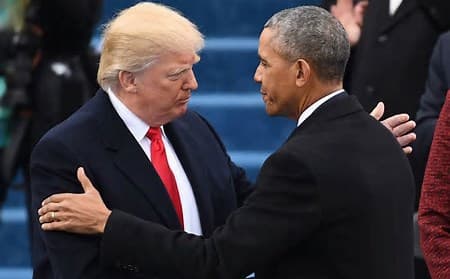
In July 2025, former President Donald Trump posted a 33-second AI-generated video to his Truth Social platform depicting former President Barack Obama being arrested by FBI agents inside the Oval Office. The video shows Obama seated before federal agents storm in, handcuff him, and escort him away, with Trump visible in the background. The production quality—leveraging advanced AI and deepfake technology—created a disturbingly realistic appearance that made it difficult for casual viewers to recognize the content as fictional without close examination.
Trump captioned the video "No one is above the law," a phrase commonly invoked in political discourse to emphasize accountability. However, critics contended the caption was deliberately provocative, especially given the absence of any context or disclaimer about the video's fictional nature. The post generated thousands of interactions on Truth Social, with reactions splitting sharply along political lines—enthusiastic support from Trump's base and outrage from political opponents and media observers.
The video's spread across social media platforms, particularly X (formerly Twitter), amplified its reach beyond Trump's immediate followers. Pro-Trump accounts shared the clip widely, and some users hailed it as a bold political statement, while others condemned it as a dangerous escalation of political rhetoric that exploited AI technology to create misleading content.
Context: Gabbard's Allegations and Political Timing
The video's release came shortly after Director of National Intelligence Tulsi Gabbard made public allegations claiming to possess evidence that former Obama administration officials had fabricated the Trump-Russia collusion narrative following the 2016 election. According to the Office of the Director of National Intelligence, Gabbard's document alleged that Obama and key figures, including former intelligence chief James Clapper, used intelligence assessments in ways that critics characterized as politically motivated to undermine Trump's presidency.
Gabbard's accusations asserted that the Obama administration pursued sustained efforts to delegitimize Trump's 2016 victory. The documents, though heavily redacted, reportedly indicated findings regarding the scope of Russian interference activities. Gabbard's calls for investigations and prosecutions amplified existing political tensions, creating a charged environment where Trump's AI video appeared strategically positioned within broader political narratives about accountability and alleged misconduct.
The video's release also resonated with sentiment in certain online communities, where users linked it to broader political grievances. Some posts celebrated the video as symbolic of accountability for alleged past actions, though these interpretations remained speculative and unverified. This connection underscored how AI-generated political content could circulate within ideologically aligned digital ecosystems.
Political Reactions Across the Spectrum
The video drew sharp criticism from Democratic leaders, civil rights advocates, and media outlets. Critics labeled it "deeply irresponsible" and a dangerous misuse of AI technology, arguing that its hyper-realistic presentation could deceive viewers into believing the depicted events were real. The absence of a disclaimer became a focal point of contention, with observers accusing Trump of deliberately stoking division and eroding public trust in media.
The Mirror US reported that the video "triggered a political firestorm," while The Daily Star noted its role in escalating concerns about AI's impact on political discourse. Media analysts emphasized that deepfakes—even when framed as satire—contribute to an environment where distinguishing fact from fiction becomes increasingly difficult.
Reactions within conservative circles proved mixed. On Truth Social, some Trump supporters praised the video as a bold political statement. However, some conservative commentators expressed reservations about the video's potential to alienate undecided voters or be perceived as inflammatory by broader audiences. This internal debate within right-wing media reflected broader tensions about the strategic use of AI-generated content in political messaging.
AI-Generated Content and the Erosion of Visual Trust
The Obama arrest video exemplifies a broader pattern of Trump's embrace of AI-generated content for political messaging. Earlier in 2025, Trump shared a video depicting Gaza as a luxurious resort, complete with architectural renderings and beachfront imagery. NBC News reported that creators of similar Gaza-themed AI videos emphasized their work was intended as satire and expressed concern about its repurposing by political figures.
These incidents highlight a critical challenge in the digital age: the accessibility of AI tools allows rapid creation and distribution of convincing synthetic media without clear labeling. When such content reaches mass audiences through high-profile figures, the distinction between satire and misinformation blurs considerably. Image forensics experts have warned that AI-generated content erodes trust in visual media, noting that the technology's widespread availability enables rapid creation of synthetic content with minimal technical expertise.
The Obama video's origins remain unclear, though its initial spread via pro-Trump accounts on X suggests it may have been created by supporters before Trump amplified it. This pattern—where user-generated synthetic media reaches mainstream audiences through political figures—underscores the challenges facing social media platforms and regulators in combating misinformation at scale. The ease with which AI tools can generate convincing political imagery means that verification and fact-checking must occur rapidly to prevent widespread dissemination of false narratives.
Historical Context: Trump and Obama's Ongoing Rivalry
Trump's decision to share the video reflects a long-standing antagonism toward Obama, whom he has repeatedly accused of orchestrating efforts to undermine his presidency. The Russia collusion narrative, which prompted the Mueller investigation and years of political scrutiny, remains a significant grievance for Trump. He has vowed to investigate and prosecute political opponents, framing the collusion investigation as a weaponized abuse of government power.
Trump's reliance on Truth Social as a primary communication platform intensified after his Twitter account suspension in January 2021 following the Capitol riot. On Truth Social, Trump reaches a self-selecting audience of supporters, often sharing provocative content tailored to their worldview. The Obama arrest video represents a continuation of this strategy—using AI to create vivid, emotionally charged imagery designed to resonate with his base and reinforce their existing political narratives about accountability and alleged misconduct by political opponents.
The video's timing also coincided with renewed attention on various investigations and allegations involving political figures. This convergence of grievances—the Russia collusion investigation, Gabbard's allegations, and other ongoing political disputes—created an environment where the Obama arrest video appeared as a symbolic expression of Trump's broader political agenda regarding accountability and investigation of his opponents.
Implications for Digital Literacy and Platform Responsibility
The incident raises urgent questions about platform responsibility and digital literacy. Truth Social, as a private platform, has fewer content moderation obligations than traditional social media companies, yet it serves as a primary distribution channel for content reaching millions. The absence of platform-level warnings about synthetic media on Truth Social contrasts with policies at X and Meta, which have implemented labels for AI-generated content in various contexts.
Media literacy experts emphasize that consumers must develop critical viewing skills to identify deepfakes. Key indicators include unnatural eye movements, audio-visual misalignment, and artifacts around edges and shadows. However, as AI technology advances, these visual cues become increasingly subtle, making detection difficult even for trained observers. This technological arms race between deepfake creation and detection capabilities poses a fundamental challenge to information ecosystems and public trust in visual media.
The video also highlights the need for clearer regulatory frameworks governing AI-generated political content. Several countries have begun implementing requirements for synthetic media disclosure, though enforcement remains inconsistent. In the United States, no comprehensive federal legislation currently mandates disclaimers for AI-generated political content, leaving platforms and creators largely self-regulating. This regulatory gap creates uncertainty about standards and accountability for synthetic media in political discourse.
Next Steps
As AI-generated content becomes increasingly prevalent in political discourse, stakeholders must address several critical areas. Platforms should implement mandatory labeling systems for synthetic media, particularly content involving public figures. Policymakers should consider legislation requiring disclosure of AI-generated content in political contexts. Media organizations should invest in forensic analysis capabilities and educate audiences about deepfake detection. Finally, technologists should develop tools that embed authenticity markers into legitimate media, creating a verifiable chain of custody for important content.
Sources
- Office of the Director of National Intelligence — Press Release 15-25
- The Mirror US — Trump AI Video Coverage
- Daily Star — Trump Shares AI Video
- NBC News — Trump Gaza AI Video Analysis
- NPR — Image Forensics and AI Content
Related NRI Globe Coverage
- Nobel Peace Prize Controversy: Three Committee Members Oppose Trump’s 2026 Bid
- The Controversy Surrounding Trump's AI Action Plan and Homelessness Executive Order
- Trump's Epstein Files Controversy: Legal Implications and Political Fallout
- Epstein Files Debate: Trump's Hoax Claim, Musk's Challenge, Comey's Firing
- Emirates Suspends Dubai Flights After Drone Strike Ignites Fuel Tank Fire
- How Trump's 2026 Tariffs & Greenland Row Affect India
- Trump's Greenland Interest: Strategic Priorities and Global Reactions – An NRI Perspective
- Arrest Warrant Issued for Actor Timothy Busfield on Child Sex Abuse Allegations
Fresh from NRI Globe
- YouTuber Nandu's World (Rama Nandana) UK Visa & Job Fraud Case: Full Details + Key Lessons for NRIs (2026)
- Dussehra / Vijayadashami 2026 Events Country-Wise — Global NRI Directory (Ram Lila, Ravana Dahan, Durga Puja Pandals, Ayudha Puja Venues + Booking)
- Diwali 2026 Events Country-Wise — Global NRI Directory (White House, Leicester, London Trafalgar, Toronto, Auckland, Sydney Parramasala, Fiji, Mauritius, Trinidad, South Africa and More)
- Diwali / Deepavali 2026 Country-Wise NRI Celebrations — Complete Global Guide (USA, UK, Canada, Australia, Fiji, Mauritius, Trinidad, South Africa, UAE and 30+ Countries)