
Venezuela Crisis 2026: World Reacts to US Action
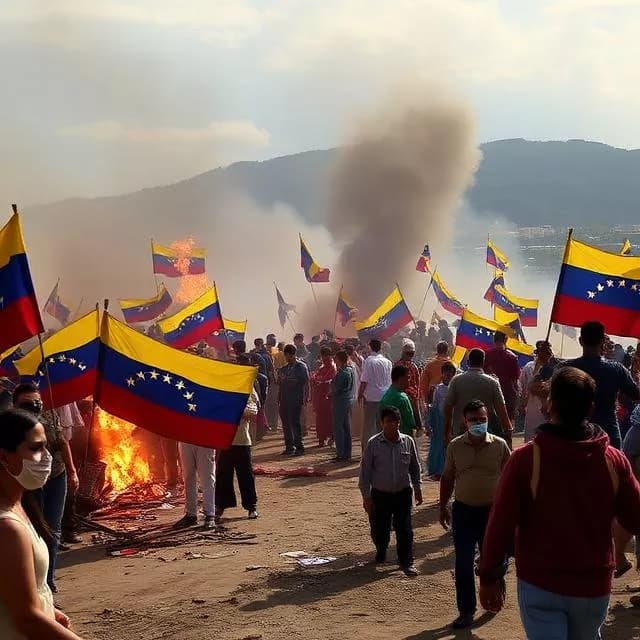
The dramatic U.S. military operation that captured Venezuelan President Nicolás Maduro on January 3-4, 2026, has sent shockwaves across the world. From celebrations in Venezuelan diaspora communities to sharp condemnations by major powers, the international response highlights deep divisions over sovereignty, international law, and U.S. power. For Non-Resident Indians (NRIs) living in the U.S., Canada, Europe, and beyond, this event could influence energy markets, migration policies, and global stability—key concerns for our community amid fluctuating oil prices and visa uncertainties.
President Donald Trump framed the strikes and Maduro's capture as a decisive blow against a "narco-terrorist regime," with the leader and his wife now facing drug-trafficking charges in New York. While some hail it as the end of a repressive era, others decry it as a violation of international norms, setting a "dangerous precedent."
- Strong Condemnations from Latin America and Allies Much of Latin America reacted with outrage. Brazil's President Luiz Inácio Lula da Silva called it an "unacceptable line" crossed, evoking past U.S. interferences. Mexico, Colombia, Chile, Spain, and Uruguay jointly condemned the action as risking regional instability. Cuba labeled it "state terrorism," while Nicaragua echoed concerns over sovereignty. These responses underscore fears of renewed U.S. dominance in the hemisphere, potentially affecting trade and migration flows that impact NRIs with ties to the Americas.
- Russia, China, and Iran Denounce the Move Venezuela's key allies were vocal in opposition. Russia demanded Maduro's immediate release, calling the operation "armed aggression." China expressed being "deeply shocked," condemning it as a blatant violation of sovereignty and a threat to regional peace. Iran termed it a "flagrant violation" of territorial integrity. This alignment reinforces geopolitical tensions, which could escalate trade disputes or energy supply chains—directly relevant for NRIs in oil-dependent sectors or those monitoring India-U.S. relations.
- Mixed Signals from Europe and the West European leaders tread carefully. The EU's Kaja Kallas urged respect for international law while noting Maduro's lack of legitimacy. UK's Keir Starmer said Britain "sheds no tears" for Maduro's regime but emphasized upholding global rules. Italy's Giorgia Meloni defended it as legitimate against drug threats, while France's Emmanuel Macron highlighted Venezuelan rejoicing without endorsing the method. The UN Secretary-General António Guterres voiced "deep alarm," warning of a dangerous precedent. This caution reflects transatlantic strains, important for NRIs navigating European visas or business ties.
- Support from U.S. Allies in the Region Not all reactions were negative. Argentina's Javier Milei celebrated it as a "victory for freedom," El Salvador's Nayib Bukele signaled approval, and Ecuador's Daniel Noboa called it a strike against "narco-Chavismo." These pro-U.S. voices from right-leaning leaders boost Trump's narrative domestically, potentially strengthening U.S. immigration enforcement—a hot-button issue for our NRI community amid H-1B debates and border policies.
- India's Measured Response and Implications for NRIs India expressed "deep concern" over the developments, reiterating worries for Venezuelan people's safety without outright condemnation. This neutral stance aligns with India's non-aligned tradition, focusing on stability amid global volatility. For NRIs, lower oil prices from potential Venezuelan production revival could ease fuel costs and inflation back home, while heightened U.S. assertiveness might influence Indo-Pacific dynamics and bilateral ties.
As Venezuelan expatriates celebrate in cities like Miami (home to intertwined South Asian communities), protests erupt elsewhere against perceived imperialism. The UN Security Council meets soon, but the operation's fallout—oil market fluctuations, refugee movements, and shifted alliances—will linger.
For NRIs worldwide, this underscores a multipolar world's uncertainties: from energy security affecting remittances to geopolitical risks impacting travel and investments. Stay informed with NRIGlobe.com as we track how the Maduro capture reshapes global affairs for the Indian diaspora in 2026
Related NRI Globe Coverage
- Venezuela Crisis 2026: US Captures Maduro, What It Means
- YouTuber Nandu's World (Rama Nandana) UK Visa & Job Fraud Case: Full Details + Key Lessons for NRIs (2026)
- AP Police Reportedly Initiate Lookout Notices Against 'Nandu's World' YouTuber Couple in Alleged UK Visa Scam
- Hormuz Crisis: How NRIs Worldwide Could Be Hit
- GCC News This Week: April 2026 – Under Siege in the Strait of Hormuz Crisis, Rising Oil Prices, and Urgent Calls for Global Action
- Iran War Latest Updates April 2026: US Fighter Jet Shot Down, Trump Warns of More Strikes, Strait of Hormuz Crisis Deepens
- Rupee May Hit 100/USD Amid Iran Oil Crisis
- Europe Energy Crisis 2026 Amid Middle East War
Fresh from NRI Globe
- Dussehra / Vijayadashami 2026 Events Country-Wise — Global NRI Directory (Ram Lila, Ravana Dahan, Durga Puja Pandals, Ayudha Puja Venues + Booking)
- Diwali 2026 Events Country-Wise — Global NRI Directory (White House, Leicester, London Trafalgar, Toronto, Auckland, Sydney Parramasala, Fiji, Mauritius, Trinidad, South Africa and More)
- Diwali / Deepavali 2026 Country-Wise NRI Celebrations — Complete Global Guide (USA, UK, Canada, Australia, Fiji, Mauritius, Trinidad, South Africa, UAE and 30+ Countries)
- Dussehra / Vijayadashami 2026 Country-Wise NRI Celebrations — USA, UK, Canada, Australia, New Zealand, UAE, Singapore, Germany, Netherlands and More