
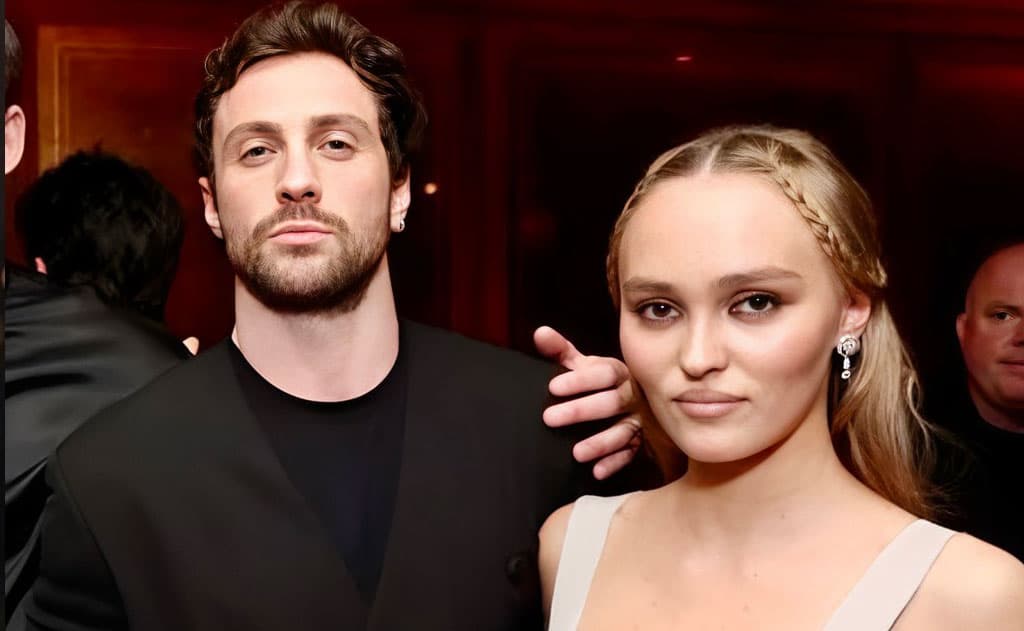
Acclaimed director Robert Eggers is set to unleash his darkest vision yet with Werwulf, a chilling werewolf film slated for release on December 25, 2026. Aaron Taylor-Johnson will take on the lead role as the tormented werewolf, while Lily-Rose Depp is in final negotiations to portray his wife in this gripping tale set in 13th-century England. Blending elements of horror, witchcraft, and historical drama, Werwulf promises to be a standout addition to Eggers' bold filmography and a significant event for cinephiles and genre enthusiasts worldwide.
A Haunting Tale of Lycanthropy and Witchcraft
Known for his atmospheric masterpieces like The Witch, The Lighthouse, and The Northman, Robert Eggers is diving deeper into the horror genre with Werwulf. The film explores the brutal and mystical world of medieval England, where superstition and fear reign supreme. The choice of setting is particularly significant for Eggers, whose previous work has demonstrated an uncompromising commitment to historical authenticity and period-appropriate atmosphere. By anchoring the werewolf narrative in 13th-century England—a time when belief in supernatural curses and witchcraft was widespread and deeply embedded in the social fabric—Eggers positions the film not merely as a creature feature but as a meditation on medieval psychology, religious anxiety, and the collision between Christian doctrine and pagan superstition.
Aaron Taylor-Johnson, fresh off his role in Kraven the Hunter, will embody the tortured soul of a man cursed with lycanthropy. Taylor-Johnson has demonstrated considerable range across his career, moving fluidly between action-oriented roles and more introspective, character-driven performances. His casting as the werewolf protagonist suggests that Eggers intends to center the film on the psychological and emotional torment of the curse rather than relying solely on spectacle or creature design. The actor's ability to convey internal conflict and physical transformation will be crucial to the film's success, particularly given Eggers' reputation for demanding nuanced performances from his leads.
Lily-Rose Depp, celebrated for her performances in The Idol and The King, is poised to bring emotional depth to the role of the werewolf's wife, caught in a web of dark forces and supernatural terror. Depp's involvement in the project, still in final negotiations at the time of announcement, underscores the high-profile nature of the production. Her character appears positioned as a crucial emotional anchor—a mortal woman attempting to navigate the horrifying transformation of her spouse and the societal consequences that inevitably follow. This dynamic recalls the emotional core of The Witch, where family relationships and trust fracture under the pressure of supernatural events.
Eggers has teased that Werwulf will be his most intense and unsettling project to date, weaving together themes of witchcraft, betrayal, and primal horror. The director's previous films have consistently pushed boundaries in terms of visual style, narrative structure, and thematic ambition. The Witch redefined the folk-horror subgenre by prioritizing psychological dread and period-authentic dialogue over conventional scares. The Lighthouse employed black-and-white cinematography and an unconventional aspect ratio to create a claustrophobic, hallucinatory experience. The Northman blended Viking mythology with Shakespearean tragedy to explore themes of revenge, fate, and masculine identity. With Werwulf, Eggers appears to be synthesizing these approaches—combining folk-horror sensibilities, historical rigor, and mythological depth to create what he describes as his most disturbing work to date.
The film's 13th-century setting offers a gritty, immersive backdrop, with Eggers' signature attention to historical detail and visceral storytelling. Production design, costume, dialect, and visual texture will all be calibrated to create an authentic medieval world—one where the werewolf curse exists not as an anomaly but as a plausible horror within the belief systems and fears of the era. This approach aligns with Eggers' established methodology and suggests that Werwulf will feel less like a contemporary fantasy film transplanted to the past and more like a genuine artifact of medieval consciousness.
Star Power and Production Details
Aaron Taylor-Johnson, a versatile actor known for roles in Bullet Train and Nocturnal Animals, is expected to deliver a transformative performance as the werewolf, blending physicality and emotional complexity. Taylor-Johnson's filmography reveals an actor comfortable with both mainstream commercial projects and ambitious indie cinema. His work with David Fincher in Nocturnal Animals demonstrated his capacity for psychological intensity, while his recent action roles have showcased his physical capabilities. For Werwulf, these skill sets will likely converge—the role demands both the visceral, embodied performance of a man experiencing a monstrous transformation and the subtle emotional work of conveying a character's internal deterioration and despair.
Lily-Rose Depp, whose rising star power continues to captivate audiences, is in talks to join the cast, adding a layer of intrigue to the project. Depp's career trajectory has been marked by strategic choices that balance high-profile productions with critically acclaimed work. Her involvement in The Idol, a prestige HBO series, and her earlier role in The King alongside Timothée Chalamet have established her as a serious performer capable of handling complex, morally ambiguous characters. Her casting in Werwulf signals Eggers' intention to populate the film with actors of considerable talent and commitment, rather than relying on star power alone.
The pairing of these two dynamic talents under Eggers' direction has already generated significant buzz among fans and critics alike. The combination of Taylor-Johnson's proven ability to anchor character-driven narratives and Depp's rising prominence creates a compelling central partnership. Their on-screen chemistry and ability to convey the deterioration of a relationship under supernatural duress will be essential to the film's emotional resonance. Eggers' track record suggests he will extract deeply committed performances from both actors, likely pushing them toward interpretations that avoid melodrama in favor of authentic human response to impossible circumstances.
A24 and the Eggers Legacy
Werwulf is being produced by A24, the studio behind Eggers' previous hits, ensuring a commitment to bold, auteur-driven filmmaking. A24 has established itself as a distributor and producer willing to champion unconventional, visually ambitious horror and genre films. The studio's partnership with Eggers on The Witch, The Lighthouse, and The Northman has proven mutually beneficial—Eggers gains the resources and distribution infrastructure necessary to realize his ambitious visions, while A24 benefits from the critical prestige and audience loyalty that Eggers' films generate. Werwulf represents a continuation of this productive relationship, with both parties presumably confident in the commercial and critical potential of a medieval werewolf epic directed by one of contemporary cinema's most distinctive voices.
The December 25, 2026 release date positions Werwulf as a counterprogramming option during the holiday season—a period typically dominated by family-friendly fare and mainstream blockbusters. This placement suggests A24's confidence in the film's ability to attract adult audiences seeking sophisticated, challenging cinema during the year-end moviegoing window. The Christmas release date also carries symbolic weight; a dark, horrifying medieval tale arriving on a day associated with redemption, renewal, and spiritual themes creates an intriguing juxtaposition that Eggers may well exploit thematically.
Implications for NRI Audiences and Global Cinema
For NRI audiences with an interest in contemporary cinema, Werwulf represents a significant moment in the evolution of horror and genre filmmaking. Eggers' films have consistently found international audiences, with his work resonating across cultural boundaries through universal themes of family, mortality, ambition, and the supernatural. The success of The Northman in particular demonstrated that audiences worldwide are receptive to ambitious, visually stunning films that blend historical settings with mythological and psychological depth.
The film's 13th-century English setting, while geographically distant from South Asia, may appeal to NRI audiences familiar with historical epics and period dramas. The themes of curse, supernatural intervention, and the collision between belief systems and rational authority have parallels in Indian mythology and folklore, potentially creating points of thematic resonance for viewers from the subcontinent. Additionally, the involvement of internationally recognized actors like Taylor-Johnson and Depp, combined with Eggers' global reputation, suggests that Werwulf will receive wide distribution, making it accessible to NRI audiences in major diaspora centers including the United States, United Kingdom, Canada, and Australia.
Looking Ahead to 2026
As production on Werwulf progresses toward its December 2026 release, the film will undoubtedly become one of the most anticipated genre offerings in the coming years. Eggers' commitment to his artistic vision, combined with the considerable talents of Taylor-Johnson and Depp, suggests that Werwulf will be a film of substantial ambition and craft. Whether the director succeeds in creating what he describes as his most unsettling work remains to be seen, but the early indicators—the source material, the casting, the production design philosophy, and A24's backing—all point toward a project of considerable artistic merit and cinematic significance.
Related NRI Globe Coverage
- LEGO Batman: Legacy of the Dark Knight - A New Epic Adventure Unveiled for 2026
- Aaron Donald Unretires: Three-Time Defensive Player of the Year Returns to Los Angeles Rams for 2026 Season
- S. S. Rajamouli & Mahesh Babu Epic Begins in Varanasi
- Kantara: Chapter 1 Trailer to Roar on September 22 with Star-Studded Launches by Hrithik Roshan, Prabhas, and More
- Tamil Star Vishal Engaged to Sai Dhanshika: A Love Story 15 Years in the Making
- Taylor Swift’s Engagement Dress: A Fairytale Moment That Broke the Internet
- Rajinikanth and Kamal Haasan Plan Epic Gangster Reunion with Lokesh Kanagaraj
- Madison Beer and Justin Herbert: A New NFL-Pop Star Power Couple in the Making?
Fresh from NRI Globe
- YouTuber Nandu's World (Rama Nandana) UK Visa & Job Fraud Case: Full Details + Key Lessons for NRIs (2026)
- Dussehra / Vijayadashami 2026 Events Country-Wise — Global NRI Directory (Ram Lila, Ravana Dahan, Durga Puja Pandals, Ayudha Puja Venues + Booking)
- Diwali 2026 Events Country-Wise — Global NRI Directory (White House, Leicester, London Trafalgar, Toronto, Auckland, Sydney Parramasala, Fiji, Mauritius, Trinidad, South Africa and More)
- Diwali / Deepavali 2026 Country-Wise NRI Celebrations — Complete Global Guide (USA, UK, Canada, Australia, Fiji, Mauritius, Trinidad, South Africa, UAE and 30+ Countries)