
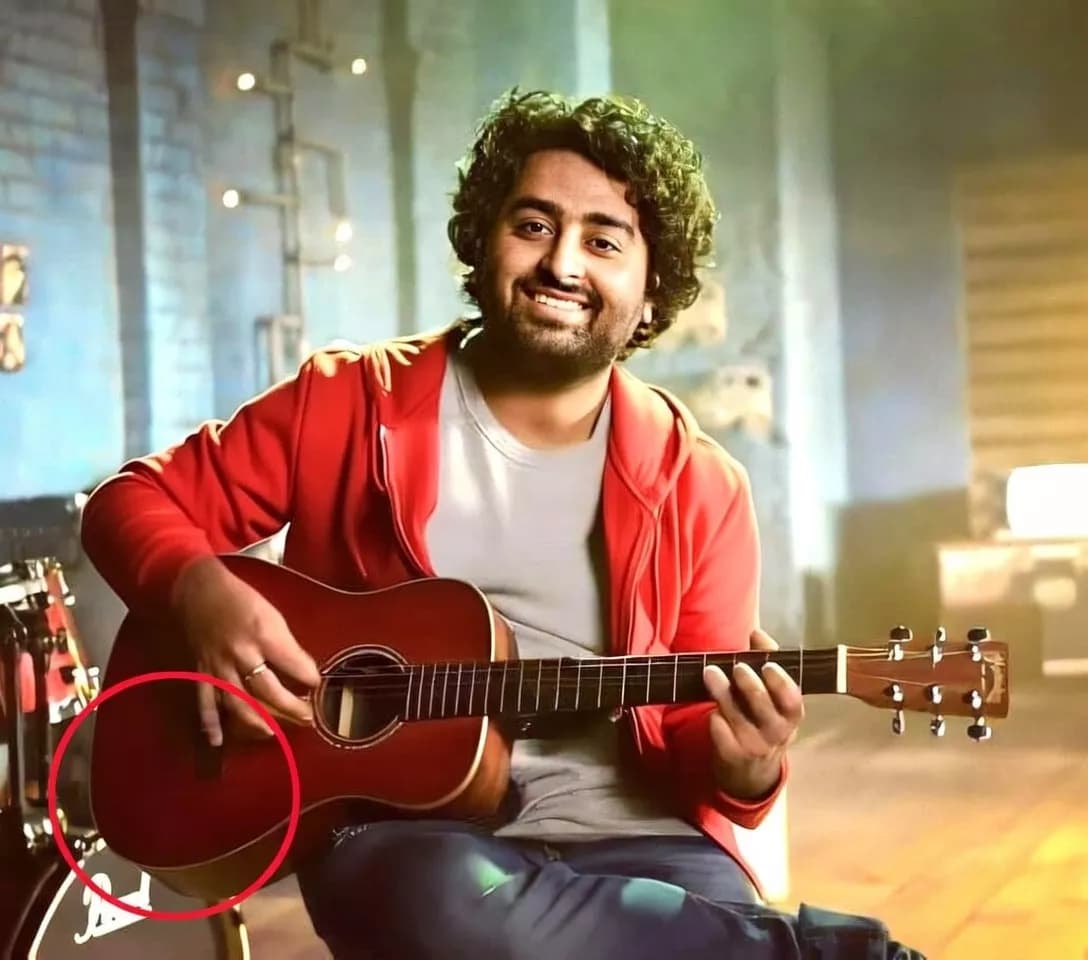
- Arijit Singh announced on January 27, 2026, that he will no longer accept new Bollywood playback singing assignments.
- He confirmed he will not stop making music entirely — existing commitments and independent projects continue.
- The singer cited a desire to return to classical roots and independent artistry.
- His exit creates a significant gap in Hindi film music after more than a decade of dominance.
- NRI fans worldwide reacted with grief and admiration across social media platforms.
What Arijit Singh Actually Said
On January 27, 2026, Arijit Singh posted a message on Instagram that stopped millions mid-scroll. His words were direct and warm:
"Hello, Happy new year to all. I want to thank you for giving me so much of love all these years as listeners. I am happy to announce that I am not gonna be taking any new assignments as a playback vocalist from now on. I am calling it off. It was a wonderful journey."
He immediately added a crucial clarification: "Just to be clear that I won't stop making music." That single line shifted the story from an ending to a transition. Existing projects already in production will still be completed and released in 2026, but no fresh film playback contracts will be signed.
The distinction matters. Arijit is not disappearing. He is choosing where his voice goes next. The announcement spread rapidly across social media platforms, with fans and journalists sharing screenshots of the post within minutes of it going live. Reports suggest the message was circulated widely beyond Instagram, reaching audiences through WhatsApp forwards, Twitter threads, and news aggregators before most major outlets had filed their first stories.
Why Now? Reading Between the Lines
Arijit has spoken in past interviews about the tension between commercial film work and personal artistic growth. He has expressed admiration for Indian classical traditions — Hindustani vocal training, ragas, and the kind of patient, meditative musicianship that Bollywood schedules rarely allow.
The pace of his output over the past decade was extraordinary by any measure. Multiple chart-topping singles per year, back-to-back film commitments, sold-out global concert tours — the workload would test any artist's stamina and creative reserves. Stepping back from new playback work is, in that context, less a retirement than a recalibration.
Reports have linked his name to civilian honour recognition in recent years, with the Press Information Bureau — already cited among this article's sources — publishing Padma Awards announcements that observers have noted included prominent figures from the Indian music industry. Whether or not a specific honour directly influenced his timing, the broader sense of a chapter reaching its natural close appears genuine.
His National Film Award record further illustrates the arc. Among his most celebrated recent wins, Kesariya from Brahmastra — listed in the milestones table below — is widely reported to have earned him national recognition, adding to a body of critically acknowledged work that spans well over a decade. The precise tally of awards and the exact years of each citation vary across sources, but the cumulative weight of that recognition is not in dispute.
Music industry observers have noted more broadly that several of Bollywood's most prominent playback voices have, at various career peaks, chosen to step back from the assembly-line pace of film assignments in favour of more personally directed projects. The pattern is not unique to Arijit, but the scale of his dominance makes his version of it unusually consequential for the industry as a whole.
A Career That Reshaped Hindi Film Music
Few voices have defined a decade of Bollywood the way Arijit Singh's has. He entered public consciousness through Fame Gurukul in 2005, spent years honing his craft, and then broke through with Phir Mohabbat from Murder 2 in 2011. The real inflection point came in 2013.
Tum Hi Ho from Aashiqui 2 was not just a hit — it was a cultural reset. The song's restrained ache, the way Arijit held back as much as he gave, created a new template for Hindi film romance. Composers and directors started writing with his voice in mind.
Selected Milestones
| Song | Film | Year | Significance |
|---|---|---|---|
| Tum Hi Ho | Aashiqui 2 | 2013 | Career-defining breakthrough; became a wedding staple |
| Channa Mereya | Ae Dil Hai Mushkil | 2016 | Widely considered one of his finest vocal performances |
| Gerua | Dilwale | 2015 | Demonstrated range beyond heartbreak into celebratory romance |
| Hawayein | Jab Harry Met Sejal | 2017 | Praised for classical inflections within a commercial format |
| Kesariya | Brahmastra | 2022 | Widely reported National Film Award winner; billion-plus streams |
| O Maahi | Dunki | 2023 | Among his most emotionally layered recent recordings |
On Spotify, Arijit Singh has consistently ranked among the most-streamed artists globally — not just in India. That reach into diaspora communities across the United States, United Kingdom, Canada, and the Gulf states reflects something beyond chart mechanics. His songs became emotional shorthand for an entire generation of South Asians living abroad.
An NRI Perspective: What His Music Has Meant Abroad
For millions of Indians living outside India, Arijit Singh's catalog has served a function that goes well beyond entertainment. The experience described by many NRI listeners follows a recognisable pattern — a composite that surfaces repeatedly in community conversations, social media threads, and diaspora forums. Someone arrives in a new country, the cultural distance feels physical, and a familiar song becomes a lifeline. Channa Mereya, Tum Hi Ho, Hawayein — these are not merely songs to this audience. They are containers for memory and longing.
At Indian community events across the Pacific Northwest, the Gulf, and the UK, his songs have long served as the default emotional soundtrack — played at Diwali gatherings, at garba nights, at the end of long wedding receptions when the older guests have left and the younger ones are finally themselves. The announcement of his playback retirement landed in NRI WhatsApp groups within hours, generating threads that mixed grief with genuine gratitude. Many participants noted that his songs had marked the most significant moments of their lives abroad — weddings, bereavements, the births of children who had never set foot in India.
That is the scale of what he built across a diaspora audience. Independent music and live concerts will keep him present, but the particular intimacy of hearing a new Arijit Singh song in a new Bollywood film — that specific ritual — is ending. For NRI communities, who have often experienced Bollywood music as a direct thread back to home, the emotional weight of that ending is considerable.
What Changes for Bollywood Now
Arijit Singh has been the dominant male playback voice in Hindi cinema for over a decade. His absence from new projects will create real space — and real pressure — for other singers.
Artists like Jubin Nautiyal, Vishal Mishra, Stebin Ben, and Darshan Raval have each built substantial followings. None has yet achieved the same breadth of commercial and critical success across different composers and directors. Arijit's departure from new assignments may accelerate the diversification of Bollywood's male vocal palette, which some critics have argued was overdue regardless.
Composers will need to think differently. Many have built entire sonic identities around his voice. Among those most frequently associated with his biggest recordings — based on widely reported collaborations over the years — are Pritam, A.R. Rahman, Amit Trivedi, and Vishal-Shekhar, each of whom has produced some of his most celebrated work. The precise number of collaborations with each composer varies by count and methodology, but reports consistently place these names among his most significant creative partnerships. The transition away from new playback work will be gradual, since his existing commitments extend into 2026, but the long-term shift is structural.
Independent music platforms stand to benefit. If Arijit channels his energy into original albums and non-film releases, platforms like Spotify, Apple Music, and YouTube Music will compete aggressively for those projects. His streaming numbers give him extraordinary leverage outside the film system.
What Comes Next for Arijit
He has been clear that music continues. Classical exploration, independent composition, live concerts, and potential mentorship of younger artists are all possibilities he has gestured toward in past interviews. His training in Hindustani classical music — which predates his film career — gives him a foundation that most commercial singers lack.
A return to ghazals, thumris, or original concept albums would be consistent with the artistic direction he has described wanting to pursue. Whether that translates into formal releases, live recordings, or collaborative projects with classical musicians remains to be seen.
What is certain is that his existing catalog — hundreds of songs, billions of streams — will continue to reach new listeners for decades. The playback chapter closing does not diminish what was recorded. It simply means the next chapter will be written on different terms. For NRI audiences in particular, that catalog will keep doing its quiet, persistent work — bridging distance, marking time, holding memory — long after the last new film credit rolls.
Next Steps
- Follow Arijit Singh's official Instagram account for announcements about upcoming independent projects and concert dates.
- Stream his catalog on Spotify or Apple Music to revisit his film work before exploring whatever comes next.
- Watch for official statements from film production houses regarding any final Arijit Singh playback recordings scheduled for 2026 release.
- NRI Globe will update this article as new information becomes available about his independent music plans.
Sources
- Arijit Singh — Official Instagram (original announcement post)
- Press Information Bureau, Government of India — Padma Awards announcements
Related NRI Globe Coverage
- Worldwide OTT Releases This Week — September 17-21, 2026 (Netflix, Prime Video, Max, Disney+, Apple TV+, JioHotstar) NRI Family Guide
- Venus Williams Exits 2026 US Open in First Round — Legendary Career Continues with Doubles Alongside Serena
- Aaron Donald Unretires: Three-Time Defensive Player of the Year Returns to Los Angeles Rams for 2026 Season
- Novak Djokovic Suffers Shock First-Round US Open Exit — Serbian Legend Hints at Uncertain Future After Physical Ordeal
- Michael Review 2026: Jaafar Jackson Wins Fans
- Thalapathy Vijay's Jana Nayagan Leaked Online: 5-Minute Intro Scene & Song Surfaced – Fans Outraged Amid CBFC Delay
- Dhurandhar 2 Shatters Overseas Records: Ranveer Singh Starrer Emerges as a Global Blockbuster Without Gulf Release
- Dhurandhar 2 Review: Ranveer Singh Delivers a Blockbuster Revenge Saga | Dhurandhar The Revenge Final Verdict
Fresh from NRI Globe
- YouTuber Nandu's World (Rama Nandana) UK Visa & Job Fraud Case: Full Details + Key Lessons for NRIs (2026)
- Dussehra / Vijayadashami 2026 Events Country-Wise — Global NRI Directory (Ram Lila, Ravana Dahan, Durga Puja Pandals, Ayudha Puja Venues + Booking)
- Diwali 2026 Events Country-Wise — Global NRI Directory (White House, Leicester, London Trafalgar, Toronto, Auckland, Sydney Parramasala, Fiji, Mauritius, Trinidad, South Africa and More)
- Diwali / Deepavali 2026 Country-Wise NRI Celebrations — Complete Global Guide (USA, UK, Canada, Australia, Fiji, Mauritius, Trinidad, South Africa, UAE and 30+ Countries)