
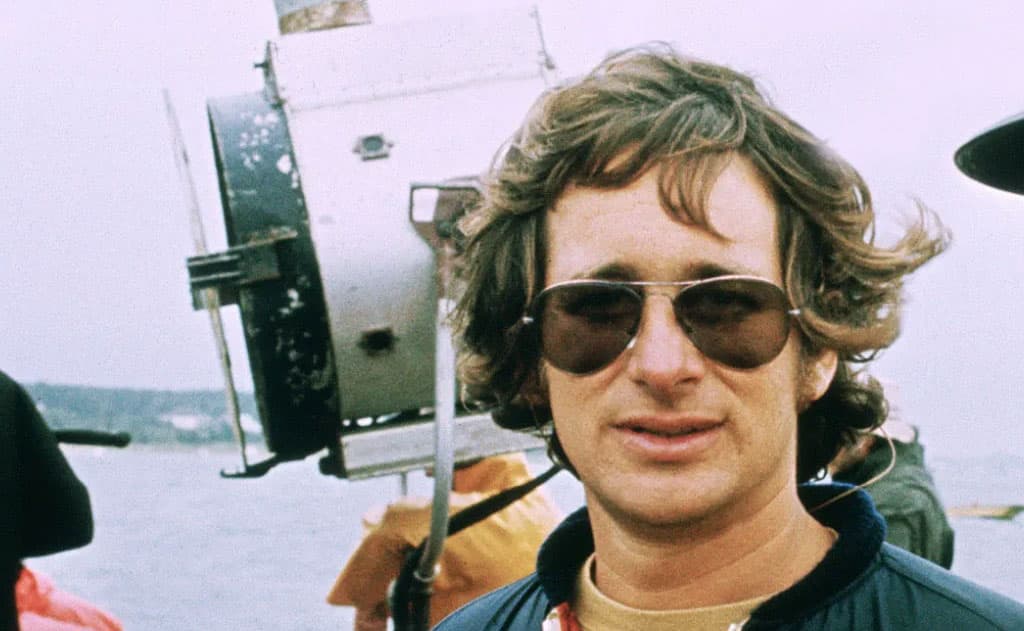
In the summer of 1975, a 27-year-old Steven Spielberg stood on the brink of cinematic history, battling a malfunctioning mechanical shark and a ballooning budget on the set of Jaws. As the Atlantic Ocean tested his resolve, a harsh encounter with an unnamed Hollywood star left him reeling. “Everybody’s talking about you,” the actor sneered, “You’re never gonna get a job after this movie because you’re irresponsible with the budget.” This demoralizing jab, revealed by Spielberg in the 2025 National Geographic documentary Jaws @ 50: The Definitive Inside Story, could have sunk a lesser director. Instead, it fueled Spielberg’s determination, transforming Jaws into the first summer blockbuster and cementing his legacy as a filmmaking titan. For Indian-American families, who often face skepticism in pursuit of bold dreams, Spielberg’s triumph over doubt is a powerful story of resilience. Here’s how he defied his early doubters to redefine Hollywood, with lessons for NRIs chasing their own ambitions.
The “Mean” Comment That Almost Broke Spielberg
In 1974, Spielberg was a young director with only one theatrical feature, The Sugarland Express, under his belt—a box office disappointment despite critical praise. Tasked with adapting Peter Benchley’s bestselling novel Jaws for Universal Pictures, he faced a production nightmare. Filming on the open waters of Martha’s Vineyard, a bold departure from studio tanks, led to relentless setbacks: the mechanical shark, “Bruce,” frequently broke down, weather conditions disrupted shoots, and the budget skyrocketed from $3.5 million to $12 million. The 55-day schedule stretched to 159 days, and Hollywood buzzed with rumors of a sinking ship. “We didn’t know how they were ever going to finish this movie,” recalled actor Jeffrey Kramer in Variety.
Amid this chaos, the unnamed actor’s cruel words hit Spielberg hard. In Jaws @ 50, he shared, “It was a very mean thing to say, by the way. It was demoralizing.” The comment, delivered 60 days into filming when the production was already 20 days behind, echoed the industry’s skepticism about the young director’s gamble. George Lucas, a friend and fellow filmmaker, noted in the documentary that the troubled production was “reported everywhere,” amplifying the pressure. Even Martin Scorsese visited the set to offer moral support, a testament to the industry’s doubt. Yet, Spielberg’s refusal to crumble under this criticism became a defining moment.
Turning Doubt into Triumph: The Making of Jaws
Spielberg’s response to adversity was nothing short of revolutionary. When Bruce malfunctioned, he pivoted, using John Williams’ iconic two-note score and POV camera angles to suggest the shark’s presence, building suspense that terrified audiences. “It’s what we don’t see that’s truly frightening,” he later told Inc.com. This creative constraint became Jaws’ greatest strength, earning praise for its Hitchcockian tension. Editor Verna Fields reworked comedic scenes into terrifying ones, and the cast—Roy Scheider, Robert Shaw, and Richard Dreyfuss—delivered authentic performances that grounded the film’s primal fear.
Despite the chaos, Spielberg’s vision paid off. Universal’s $1.8 million marketing blitz, including TV ads and tie-in merchandise, was unprecedented for 1975, and preview audiences erupted in screams, with popcorn flying from buckets. Released on June 20, 1975, Jaws shattered box office records, grossing $260.7 million domestically and $475 million worldwide, becoming the highest-grossing film until Star Wars in 1977. It won three Academy Awards (Best Sound, Best Original Score, Best Film Editing) and birthed the summer blockbuster model, forever changing Hollywood’s approach to wide releases and merchandising.
For Spielberg, the success was personal salvation. “I thought my career as a filmmaker was over,” he admitted in Literary Hub, recalling rumors that he’d never work again. Instead, Jaws gave him final cut freedom and launched a career that includes Jurassic Park, Schindler’s List, and Saving Private Ryan. Reflecting in Jaws @ 50, he said, “It was a life-altering experience… I hope all the people who worked on Jaws wore that experience proudly, like a badge of honor.”
Lessons for Indian-American NRIs
Spielberg’s journey resonates deeply with Indian-American families, who often navigate skepticism in their pursuit of success in competitive fields like tech, medicine, or the arts. The unnamed actor’s doubt mirrors the naysayers NRIs face—whether it’s questioning unconventional career paths or overcoming cultural barriers. Spielberg’s resilience, rooted in his belief in Jaws’ potential, offers a blueprint: embrace challenges, adapt creatively, and trust your vision. His decision to shoot on the ocean, despite warnings, echoes the bold risks Indian-American entrepreneurs take when launching startups or pursuing creative ventures in the U.S.
The Indian-American community, with over 5 million members, has produced trailblazers like Sundar Pichai and Indra Nooyi, who faced their own doubters. Spielberg’s story encourages NRIs to persevere, whether they’re aspiring filmmakers, engineers, or artists. Community organizations like The Indus Entrepreneurs (TiE) offer mentorship for young Indian-Americans chasing dreams, while groups like the South Asian Bar Association (SABA) provide legal support for navigating professional hurdles. Spielberg’s triumph reminds NRIs that setbacks are temporary, and doubters can be proven wrong with grit and innovation.
Young Stars and Hollywood’s Future
Spielberg’s success with Jaws not only solidified his status but also paved the way for a new generation of filmmakers. At 27, he was part of the New Hollywood movement, alongside Lucas and Scorsese, challenging the old studio system. His battle against doubt set a precedent for young talents like Jordan Peele, whose Nope draws on Jaws’ hide-the-creature technique, and Greta Gerwig, who credits Spielberg’s storytelling as inspiration. For Indian-American youth, this underscores the power of breaking barriers in creative industries, where representation is growing through talents like Mindy Kaling and Dev Patel. Spielberg’s legacy shows that young visionaries, regardless of background, can redefine an industry.
A Legacy Forged in Resilience
Picture a young Spielberg, alone on the Orca’s bowsprit, staring at the horizon as doubts swirled. That “mean” comment from a Hollywood star could have been the end, but instead, it was the spark that ignited a revolution. Jaws didn’t just scare audiences—it reshaped cinema, proving that a director’s belief in their craft can overcome even the harshest skepticism. As Spielberg prepares for his upcoming UFO film in 2026, his journey from underdog to icon inspires Indian-American families to chase their dreams, no matter the obstacles.
Call to Action
Have you faced doubters in your own journey, like Spielberg did with Jaws? Share your story in the comments or on social media at @NRIGlobe to inspire the Indian-American community. Explore resources like TiE (www.tie.org) or SABA (www.sabanorthamerica.com) to support your ambitions, and join us in celebrating the resilience that turns dreams into legends.
Related NRI Globe Coverage
- Keith David to Receive Hollywood Walk of Fame Star in 2026: Celebrating a Cinematic Legend
- Fall 2026 Hollywood Movie Preview for NRI Families — October, November, December Big Releases (Oscar Contenders, Marvel, Family Films)
- Hollywood This Week — September 17-21, 2026 New Movie Releases, Box Office Update and Where to Watch (NRI Family Guide)
- September 2026 Major Hollywood Movie Releases: Practical Magic 2, Onslaught, Resident Evil, The Uprising & More
- Hollywood and Country Music Pay Tribute to Dolly Parton — Specials, Memories, and Legacy Coverage Dominate US Screens
- Anne Hathaway Joins Tom Cruise in Highly Anticipated Days of Thunder 2 — Release Date and Casting Details Revealed
- NRI Guide to Hollywood Films with Indian Talent and Stories: 2026 Landscape
- NRI Stories on Hollywood and Global OTT in 2026: The Diaspora Content Wave Has Structural Reasons
Fresh from NRI Globe
- YouTuber Nandu's World (Rama Nandana) UK Visa & Job Fraud Case: Full Details + Key Lessons for NRIs (2026)
- Dussehra / Vijayadashami 2026 Events Country-Wise — Global NRI Directory (Ram Lila, Ravana Dahan, Durga Puja Pandals, Ayudha Puja Venues + Booking)
- Diwali 2026 Events Country-Wise — Global NRI Directory (White House, Leicester, London Trafalgar, Toronto, Auckland, Sydney Parramasala, Fiji, Mauritius, Trinidad, South Africa and More)
- Diwali / Deepavali 2026 Country-Wise NRI Celebrations — Complete Global Guide (USA, UK, Canada, Australia, Fiji, Mauritius, Trinidad, South Africa, UAE and 30+ Countries)