
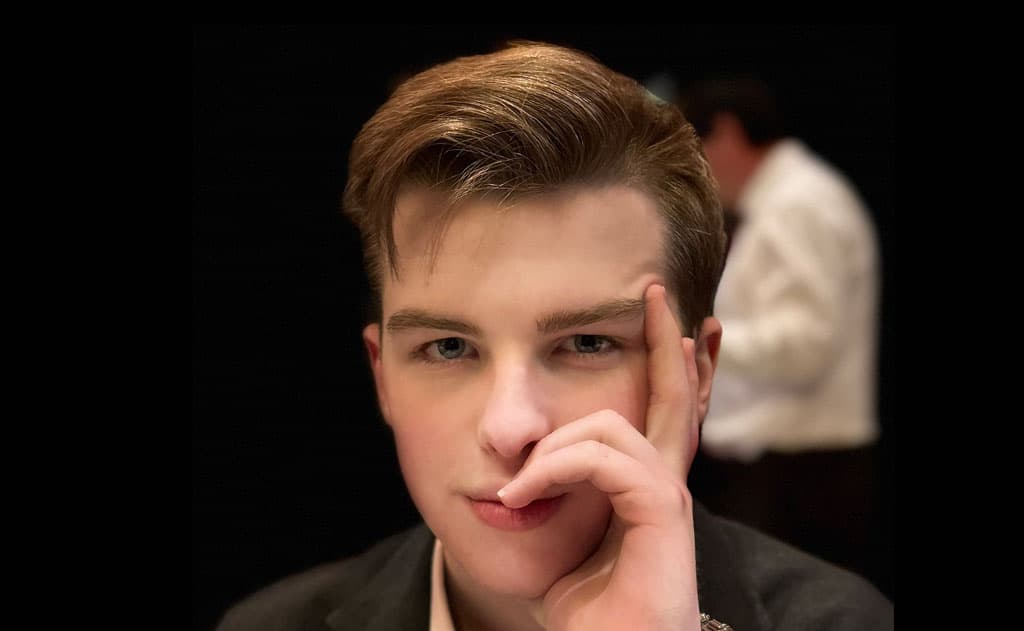
Quick Summary
- Iain Armitage, born July 15, 2008, in Savannah, Georgia, grew up in a theatrical family and began his YouTube channel at age five.
- He transitioned from Broadway critic to actor, landing roles in Big Little Lies and starring as young Sheldon Cooper in Young Sheldon (2017–2024).
- His professional success in television reflects his sustained commitment to acting while balancing education and diverse interests.
- Beyond acting, Iain speaks multiple languages, earned a black belt in Taekwondo, and obtained his student pilot's license during his teenage years.
- His grounded approach to fame and advocacy for arts funding position him as a role model for young performers and Indian-American families.
A Star is Born: Iain's Early Beginnings
Born on July 15, 2008, in Savannah, Georgia, Iain Armitage entered a household where creativity was not a hobby but a way of life. His father, Euan Morton, is a Scottish actor who performed as Boy George in the Broadway production of Taboo and as King George III in Hamilton. His mother, Lee Armitage, works as a theater producer. This artistic environment shaped Iain's early fascination with performance.
At three years old, Iain's mother recorded him singing "Stars" from Les Misérables in the bathtub. The video eventually accumulated millions of views on YouTube, introducing him to audiences before he could read. By age five, he launched Iain Loves Theatre, a YouTube channel where he reviewed Broadway productions. His first review covered Leap of Faith in 2012, and his articulate observations—delivered with the poise of someone decades older—quickly attracted viewers.
Industry professionals took notice. At six, Iain served as a red-carpet correspondent for Perez Hilton at the 2015 and 2016 Tony Awards. He interviewed established performers including Chita Rivera and Bryan Cranston, wearing a $30 Amazon tuxedo and demonstrating remarkable composure. This early exposure to the entertainment industry's inner circles accelerated his transition from online personality to working actor.
From Broadway to Hollywood: Breaking into Acting
Iain's first on-screen role arrived in January 2017 when he guest-starred on Law & Order: Special Victims Unit, playing Theo Lachere, a six-year-old kidnapped child. Weeks later, he joined the cast of HBO's Big Little Lies as Ziggy Chapman, the son of Shailene Woodley's character. At seven, he appeared opposite established actors including Reese Witherspoon and Nicole Kidman.
Woodley became a significant mentor during filming. Iain later reflected on Instagram that she made acting feel "like playing," which solidified his commitment to the craft. When Woodley made her Broadway debut in Cult of Love in 2024, Iain publicly supported her achievement, demonstrating the lasting professional bond they formed.
In 2017, Iain auditioned for the role of young Sheldon Cooper in CBS's prequel series Young Sheldon. At eight years old, he won the part and spent the next seven seasons—from 2017 through 2024—developing the character. He studied Jim Parsons' performance in The Big Bang Theory to understand Sheldon's mannerisms and speech patterns. By the series finale, his compensation reflected his prominence in the cast, and he accumulated substantial earnings during his tenure on the show. Early in his tenure on Young Sheldon, he received an Emmy nomination for Outstanding Supporting Actor in a Comedy Series, marking significant industry recognition at a young age. He also won a Young Artist Award for the role.
Expanding Beyond Television: Film and Voice Acting
While Young Sheldon remained his primary commitment, Iain pursued film roles that demonstrated his dramatic range. In 2017, he appeared in The Glass Castle alongside Brie Larson and in Our Souls at Night with Jane Fonda and Robert Redford. These projects allowed him to work with acclaimed actors and directors outside the television environment.
Voice acting became another avenue for his talents. He voiced young Shaggy Rogers in the 2020 animated film Scoob! and Chase in PAW Patrol: The Movie (2021). He also contributed voice work to the animated series Harley Quinn, portraying young Bruce Wayne. These roles showcased his ability to convey character and emotion without relying on physical performance, a skill that expanded his professional toolkit and demonstrated versatility across multiple mediums.
Intellectual Pursuits and Personal Development
Iain's interests extend well beyond acting. He is a vegetarian by birth and has pursued language learning with deliberate focus. During the COVID-19 pandemic, he used language-learning applications to study multiple languages, reflecting intellectual curiosity and a commitment to cultural understanding. This multilingual capability—qualities that resonate with Indian-American families who often emphasize educational achievement alongside creative pursuits—suggests a young person invested in global competencies.
His extracurricular accomplishments include earning a black belt in Taekwondo during his teenage years. In 2024, at age 16, he obtained his student pilot's license and celebrated by flying his grandmother around Los Angeles. On Instagram, he described the experience as "one of the very best days of my life." These achievements demonstrate that Iain has maintained a balanced life despite the demands of a professional acting career.
Beyond personal interests, Iain has engaged in advocacy work. He has been associated with The Creative Coalition, an organization that lobbies for arts funding and cultural policy. This involvement indicates his awareness of systemic issues affecting the arts and his willingness to use his platform for broader social benefit. Young performers and their families increasingly recognize that advocacy and civic engagement complement creative careers, and Iain's participation in such efforts models this integrated approach.
Navigating Fame: A Model for Young Performers
Iain Armitage's approach to celebrity differs markedly from some child stars who experience burnout or public controversy. His parents' industry experience—his father's long Broadway career and his mother's work as a producer—provided him with mentorship rooted in professional values. They emphasized education, discipline, and maintaining a life outside of entertainment.
Peer comparison offers instructive context. Millie Bobby Brown, who rose to prominence through Stranger Things, and Noah Jupe, known for A Quiet Place, represent a cohort of young actors who have managed sustained careers without the personal crises that plagued earlier generations of child performers. Iain fits this pattern: he continues his education, pursues hobbies unrelated to acting, and maintains a measured public presence on social media.
For Indian-American families, Iain's trajectory illustrates how parental guidance, cultural values emphasizing education, and a diversified skill set can support young people pursuing creative careers. The Indian-American community's traditional emphasis on academic achievement alongside artistic development aligns with Iain's demonstrated priorities. His willingness to balance entertainment with education and personal development reflects values that transcend cultural boundaries but are particularly emphasized within many Indian-American households.
The Transition to Adult Roles
As of 2025, Iain is 17 years old and entering a critical phase in his career: the transition from child actor to adult performer. Young Sheldon concluded after seven seasons, removing the stable employment that had defined his teenage years. However, reports suggest he has secured upcoming projects that indicate continued momentum in his career trajectory.
He has been reported to be attached to projects in development that would represent departures from his previous work, offering opportunities to demonstrate his capacity for complex, mature dramatic roles. Industry observers note that a potential continuation of Big Little Lies would reunite him with Shailene Woodley and the HBO production ecosystem that launched his film career, though such projects remain in development stages.
The success of this transition remains uncertain. Many child actors struggle to secure meaningful roles as adults, particularly if their early fame becomes inseparable from a single iconic character. Iain's diverse experience—spanning television, film, voice acting, and theater—provides a stronger foundation than actors whose resumes are dominated by a single project. His demonstrated ability to work across genres and formats suggests adaptability that may serve him well as he pursues adult roles.
Cultural Resonance for Indian-American Audiences
Iain Armitage's story carries particular significance for Indian-American families. The Indian diaspora in the United States has historically emphasized professional achievement in fields like medicine, engineering, and business. However, a growing segment of Indian-American families supports children pursuing careers in the arts, including acting, music, and theater.
Iain's example demonstrates that success in entertainment is achievable through discipline, education, and parental support—values central to Indian-American culture. His intellectual pursuits and language learning reflect the diaspora's commitment to maintaining cultural connections while acquiring global competencies. His advocacy for arts funding aligns with broader conversations within Indian-American communities about the importance of cultural expression and creative industries in American society.
Additionally, Iain's relationship with his parents—who have guided his career while prioritizing his education and personal development—mirrors the family-centered values that characterize many Indian-American households. His parents' decision to maintain balance between his professional opportunities and his personal growth demonstrates an approach to parenting that resonates across cultural communities but is particularly emphasized within Indian-American culture. This model suggests that creative ambition and traditional educational values need not be in conflict.
Next Steps
For young people interested in pursuing careers similar to Iain's, several pathways merit consideration. Theater training through local community productions or arts organizations provides foundational experience. Social media platforms offer opportunities to build audiences and demonstrate talent to industry professionals. However, parental involvement, professional guidance, and a commitment to education remain essential safeguards against the pitfalls that have affected previous generations of child performers.
Indian-American families interested in supporting their children's creative ambitions might explore organizations like The Indus Entrepreneurs (TIE), which has expanded to support creative industries, or local arts councils that offer training and mentorship. Iain's example suggests that combining artistic training with academic rigor and diverse skill development creates the most resilient foundation for sustained success. As the entertainment industry continues to evolve, young performers who maintain educational commitments and develop skills beyond their primary craft position themselves for longer, more adaptable careers.