
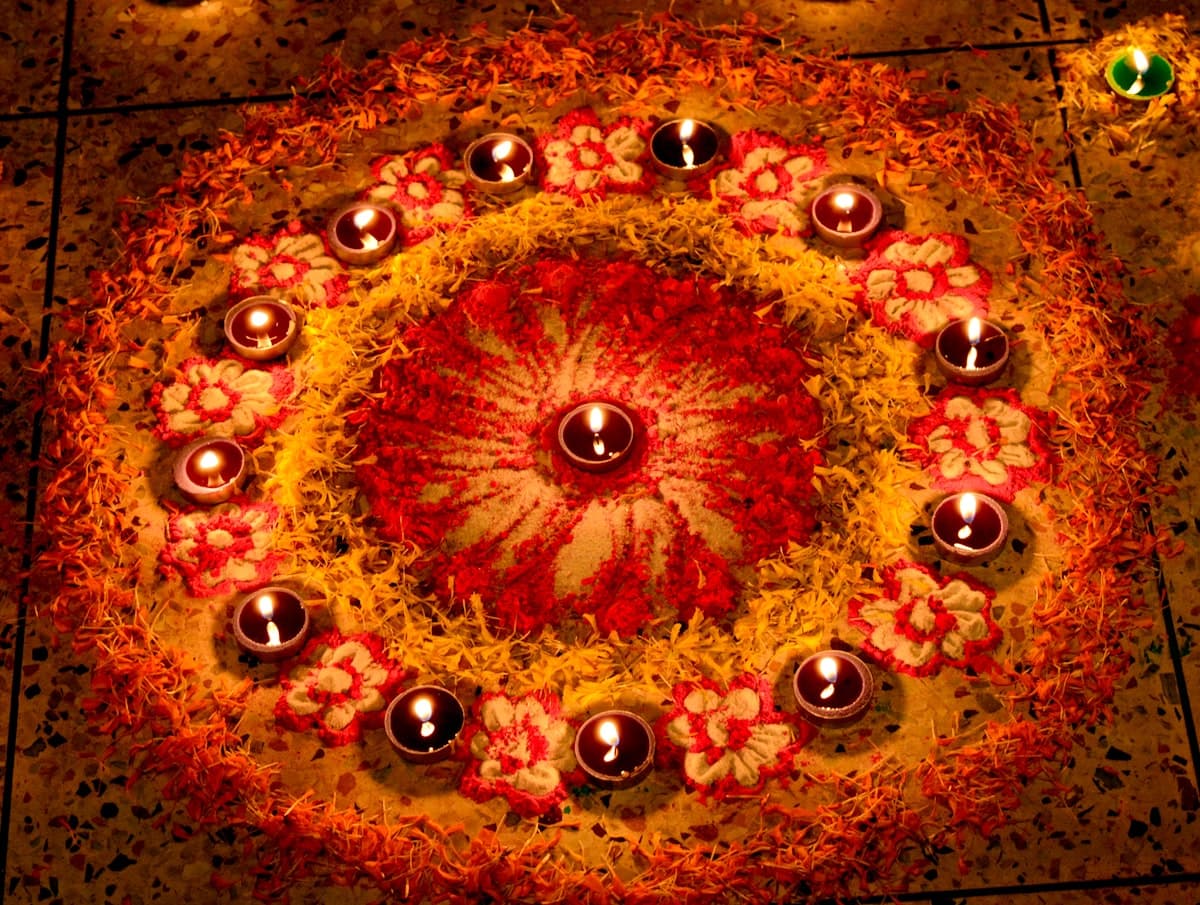
The Lakshmi Puja on Diwali night is the heart of the festival. Performed on Amavasya evening (New Moon of Kartik month), it invokes Goddess Lakshmi's blessings for wealth, prosperity, health and spiritual growth.
This complete NRI vidhi guide covers samagri checklist, puja steps, mantras, aarti and NRI apartment adaptations.
Puja vidhi varies by regional tradition (Gujarati, Marathi, Punjabi, Bengali, South Indian). This guide follows the widely-followed pan-Hindu Panchopachara + Shodashopachara approach.
Diwali 2026 Lakshmi Puja Best Time
Sunday, November 8, 2026 evening:
- Pradosh Kaal: approximately sunset + 2h 24m (best for family puja)
- Vrishabha Lagna: Fixed sign period (most auspicious)
- Sthir Lagna Muhurat: ideal for wealth-oriented worship
- Nishita Kaal (midnight): for tantric traditions
Use Drik Panchang app set to your city for exact times.
Complete Samagri (Materials) Checklist
Idols / Pictures
- Lakshmi murti or picture (main deity)
- Ganesha murti (worshipped first)
- Saraswati (optional - some traditions include)
- Kubera picture (wealth deity)
Puja Thali Items
- Roli / kumkum
- Haldi
- Akshat (unbroken rice)
- Chandan (sandalwood paste)
- Sacred thread (mauli)
- Camphor (kapoor)
- Agarbatti / incense sticks
- Ghee for diya
- Cotton wicks (batti)
- Small bell (ghanta)
Offerings
- Fresh flowers (marigolds, lotus, roses)
- Fresh fruits (banana, apple, pomegranate, orange)
- Sweets (kheer, laddu, barfi, halwa)
- Coconut (whole)
- Paan (betel leaf + betel nut)
- New clothes / cloth piece for offering
- Gold / silver coins (for prosperity blessing)
Sacred Water
- Kalash (brass or copper pot) with water + coconut on top + 5 mango leaves
- Panchamrit (milk + curd + honey + ghee + sugar mix)
- Ganga jal (or clean water)
Diyas + Lights
- Traditional clay diyas (at least 5-11, ideally 21)
- Larger central Lakshmi diya
- Ghee for diya (traditional) or sesame oil
- String lights around puja area
Symbolic Items
- Business account books / laptop (Chopda Puja tradition)
- Gold jewellery / bank account book for blessing
- Broom (goddess Lakshmi's symbol per some traditions)
- Kauri shells (small sea shells - Lakshmi's symbols)
Puja Preparation (Day of Diwali)
- Deep-clean home - especially puja area + entrance
- Rangoli at entrance + around puja area
- Take bath + wear new/clean clothes (traditional attire preferred)
- Set up puja space - low table facing east or north
- Place red/gold cloth on puja table
- Arrange idols: Ganesha to LEFT of Lakshmi (Ganesha always worshipped first)
- Place Kalash with water + mango leaves + coconut
- Arrange all samagri within reach
- Light diyas + agarbatti before starting
Puja Vidhi - Step by Step
Step 1: Achamana + Sankalpa (5 min)
- Sip water from spoon 3 times (achamana - self-purification)
- Take Sankalpa (intention statement): "Today is Kartik Amavasya, Diwali. I [name] with my family perform this Lakshmi puja for prosperity, health, wisdom + spiritual blessings."
Step 2: Ganesha Puja (10 min)
- Ganesha is always worshipped first
- Offer flowers, akshat, chandan, kumkum to Ganesha
- Chant: "Om Ganeshaya Namah" (108 times if time permits, 21 minimum)
- Offer modak / any sweet
- Aarti to Ganesha
- Request Ganesha's blessing to remove obstacles
Step 3: Kalash Puja (5 min)
- Sprinkle water from kalash for purification
- Chant: "Om Varunaya Namah" (5-11 times)
- Offer akshat + kumkum to Kalash
- Kalash represents cosmic waters + Devi's presence
Step 4: Lakshmi Puja - Main Ritual (25-45 min)
This is the heart of Diwali puja. Choose your approach:
Panchopachara Puja (5-Step - Simple)
- Gandha - offer chandan/haldi/kumkum
- Pushpa - offer flowers
- Dhupa - offer incense
- Dipa - offer diya/light
- Naivedya - offer sweets + fruits
Suitable for busy NRI families - ~15-20 minutes.
Shodashopachara Puja (16-Step - Traditional)
- Avahana - invocation
- Asana - offering seat
- Padya - water for feet
- Arghya - water for hands
- Achamana - water to sip
- Snana - bath (panchamrit)
- Vastra - offering clothes
- Yajnopavita - sacred thread
- Gandha - fragrance
- Pushpa - flowers
- Dhupa - incense
- Dipa - lamp
- Naivedya - food offering
- Achamana - water again
- Tambula - betel
- Namaskara - prostration
Traditional ~40-60 minutes. Preferred by observant families.
Step 5: Mantra Recitation During Lakshmi Puja
- Om Mahalakshmyai Namah - Simple Lakshmi mantra (108 times ideal)
- Sri Suktam - 15-verse Rig Vedic hymn (highly auspicious)
- Kanakadhara Stotram - Adi Shankaracharya's hymn (very powerful for wealth)
- Ashtalakshmi Stotram - eight forms of Lakshmi
- Lakshmi Ashtottara Shatanamavali - 108 names
Step 6: Kubera Puja (10 min)
- Kubera is the treasurer of gods - wealth deity
- Offer flowers + akshat + kumkum
- Chant: "Om Kuberaya Namah" (21 times)
- Place gold coin / valuables before Kubera picture
- Often paired with Chopda Puja (account books blessing)
Step 7: Chopda Puja (Gujarati/Marathi Tradition, 5 min)
- New account books opened + first entry made
- Modern: NRIs can offer laptop/business documents
- Blessing new business year
- Especially popular Gujarati New Year (next day Padwa)
Step 8: Aarti (10 min)
Perform aarti to all deities:
- Ganesha Aarti: "Jai Ganesh Jai Ganesh Deva"
- Lakshmi Aarti: "Om Jai Lakshmi Mata"
- Family gathers around; camphor light offered
- Everyone takes aarti (waves hands over flame + touches to forehead)
Step 9: Distribution (5 min)
- Prasadam distributed to family + neighbours
- Small kumkum + akshat blessing given
- Elder blessings - touch feet of parents/grandparents
- New clothes worn (fresh Diwali clothes)
Key Mantras for Diwali Puja
Ganesha Mantra
"Vakratunda Mahakaya Suryakoti Samaprabha
Nirvighnam Kuru Me Deva Sarva Karyeshu Sarvada"
"O Lord Ganesha, with curved trunk + massive body, radiant as a crore suns - remove all obstacles from all my endeavours always."
Sri Lakshmi Mantra
"Om Shreem Mahalakshmyai Namah"
Simple + powerful. Chant 108 times ideal, 21 minimum.
Ashtalakshmi Mantra (Eight Forms)
"Adi Lakshmi, Dhanya Lakshmi, Dhairya Lakshmi, Gaja Lakshmi,
Santana Lakshmi, Vijaya Lakshmi, Vidya Lakshmi, Dhana Lakshmi
Ashtabhuta Devi Namah"
Kubera Mantra
"Om Yakshaya Kuberaya Vaishravanaya Dhana-Dhanyadhipataye Dhana-Dhanya Samriddhim Me Dehi Dapaya Swaha"
NRI Apartment Adaptations
- Small altar: corner of living room or kitchen counter with cloth covering
- LED diyas: if oil-diya restricted by fire regulations
- Battery-operated bells: for renters who cannot use physical bell
- Video call priest: some Indian priests offer virtual guided puja
- Puja duration: Panchopachara 20 min ideal for busy families
- Kids involvement: let children ring bell, offer flowers, help with prasadam
Common NRI Diwali Puja Mistakes
- Starting puja with Lakshmi (should always start with Ganesha)
- Ganesha placed to RIGHT of Lakshmi (should be LEFT)
- Broken or cracked idol used
- Feet pointing toward puja area during aarti
- Skipping achamana + sankalpa
- Rushing through without proper mantra chanting
- Facing south during puja (should be east or north)
- Turmeric-only wet on Ganesha (kumkum needed too)
- Puja area not thoroughly cleaned beforehand
- Aarti done in different direction (should circle deity)
After Puja - Traditions
- Aarti flame + camphor taken around house (blessing home)
- Diyas placed at all doors + windows
- Family Diwali dinner
- Fireworks (where legal + permitted)
- Sweets distribution to neighbours
- Elder blessings
- Video call India family showing them your puja
- Do not sweep house immediately after puja (Lakshmi should stay)
FAQ
Do I need a priest for Diwali puja?
Not required. Family head can perform. Priest optional for elaborate shodashopachara. Video-call priest option available.
How long is a proper Diwali puja?
Panchopachara: 20-30 min. Shodashopachara: 60-90 min. Family decides based on tradition + time.
Can we do Diwali puja next day if we're busy?
Not ideal. Diwali puja MUST be on Amavasya evening (Nov 8, 2026). Choose Panchopachara if time-constrained.
Which direction should we face during puja?
East or North. NEVER South (associated with Yama). Face deity's front.
Can non-Hindu spouses participate?
Absolutely welcome. Puja is spiritual not exclusionary. Non-Hindu spouses commonly participate.
Related NRI Globe Coverage
- Diwali 2026 Complete NRI Guide
- Diwali 2026 Events Country-Wise Directory
- Karwa Chauth 2026 NRI Guide (Nov 8)
- Dussehra 2026 Country-Wise Celebrations
- Ashwayuja Masam 2026 NRI Pillar
- All Festival & Culture Coverage
Disclaimer: Puja vidhi varies by regional tradition + family lineage. Consult family priest for lineage-specific practices.
More NRI Globe Coverage For You
- Complete Diwali Puja Guide: Lakshmi Puja Vidhi, Mantras & Spiritual Significance
- Diwali 2026 for NRIs - USA, UK, Australia, Canada, UAE Pillar Guide (Dates, Local Panchang Muhurat, Choti Diwali, Lakshmi Puja, Bhai Dooj, Padwa)
- Lakshmi Puja Vidhi 2026 for NRIs Abroad — Complete Mantras, Muhurat & Prasad Guide
- Diwali 2026 USA NRI Complete Guide — Dates, Puja Muhurat, Home + Temple Celebrations (November 8, 2026)
- Kanya Puja / Kumari Puja 2026 - Complete NRI Guide (Ashtami/Navami Nine-Girls Devi Worship for USA, UK, Australia, October 18-19)
- Ashta Lakshmi: Exploring the 8 Divine Forms of Goddess Lakshmi & Their Mantras
- Step-by-Step Guide to Ganesh Chavithi Puja for NRIs: Rituals, Meaning, and Easy Practice Abroad
- Diwali 2026 in Toronto — Biggest Canadian Diwali Parties, Temples & GTA Community Events
- Navratri Home Decor 2026 - Complete NRI Apartment & House Decoration Guide (Diyas, Torans, Rangoli, Devi Altar Ideas for USA, UK, Australia)
- Best Garba & Dandiya Songs Playlist Navratri 2026 - NRI Complete Guide (Traditional Gujarati, Bollywood Remixes, Falguni Pathak, Spotify + YouTube)
- Chaniya Choli & Kediyu Navratri 2026 - Complete NRI Shopping Guide (Online, Amazon, Etsy, USA/UK/India Sourcing, Styles, Sizes, Prices)
- Navratri 2026 with Kids - Complete NRI Parent Guide (Teach Children Nine Devi Forms, Garba, Crafts, Activities for Indian-American, British, Australian Families)