
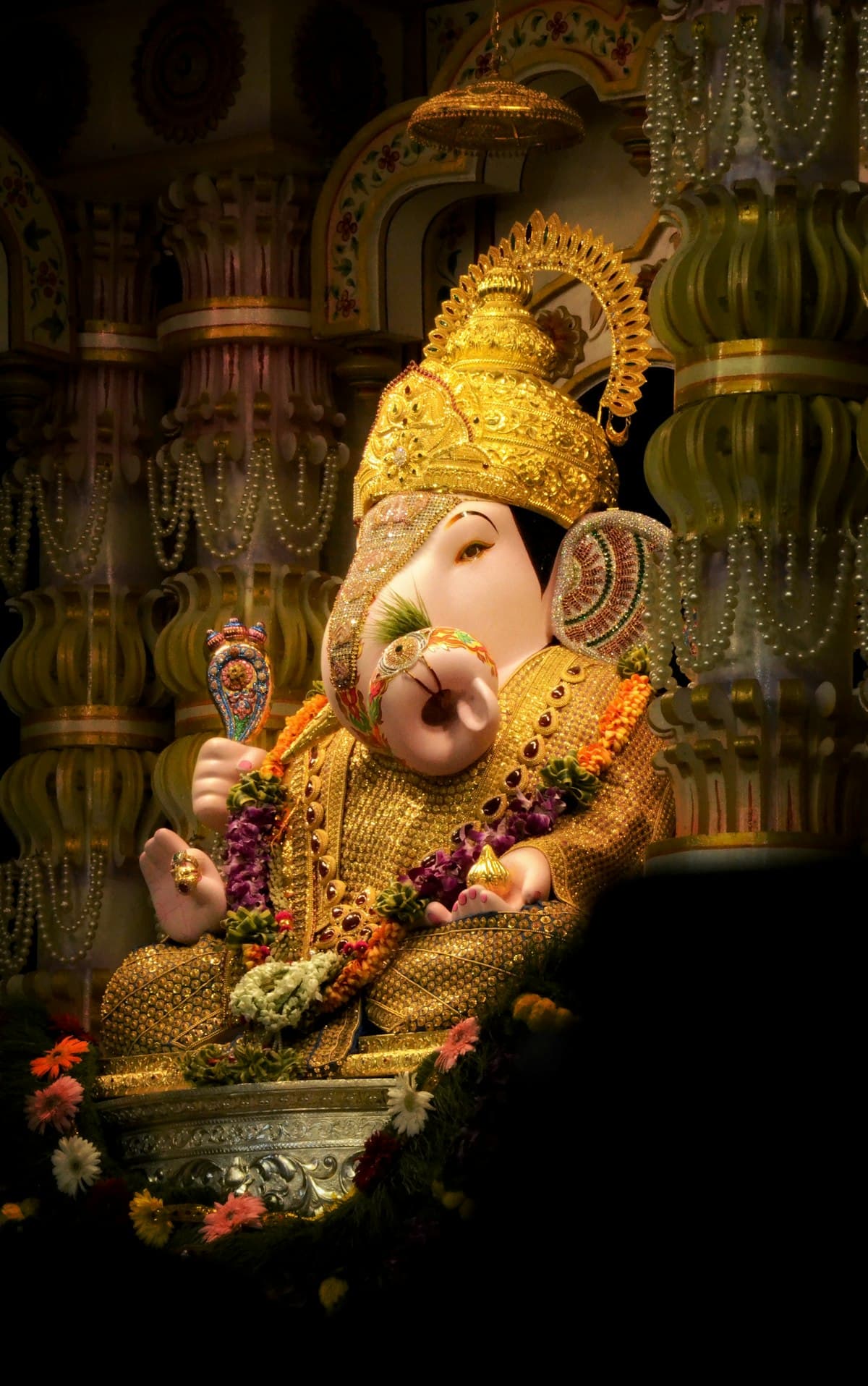
Every September, the same question moves through diaspora WhatsApp groups: where do we actually immerse the idol?
Back home the answer is obvious. Abroad, it is a legal question before it is a devotional one. Immersing a clay idol in an American lake, a British river or an Australian waterway is governed by environmental law, and in most cases what looks like an innocent act of faith is a permit matter. Getting it wrong can mean a fine, a confiscated murti, or a community organisation losing the venue it has used for a decade.
This is a practical, country-by-country briefing for NRI families on what is permitted in 2026, where communities are gathering, and how to do visarjan properly where you live.
Ganesh Chaturthi 2026 is Monday, 14 September. Main visarjan on Anant Chaturdashi is Friday, 25 September 2026. But your local date may not match — see the next section first.
Your Festival Date May Not Be India's Date
This is the detail most diaspora coverage skips. Ganesh Chaturthi is fixed by the Chaturthi tithi calculated against local sunrise and the local madhyahna period, not by the Indian calendar date.
For most of the world in 2026 this resolves to Monday, 14 September. But in some far-eastern time zones — Australia and New Zealand in particular — the tithi window can push observance to Tuesday, 15 September 2026. Some Australian panchangs list 14 September, others 15 September, depending on which calculation method they follow.
What to do: follow whichever date your local temple or family purohit observes, and do not assume the Indian date transfers. If you are hosting, confirm with your temple this week rather than on the morning itself.
A separate note for families in Mauritius, where Ganesh Chaturthi is a gazetted public holiday: the holiday in 2026 falls on Wednesday, 16 September, not on the Chaturthi itself.
And a practical reality across every country: because 14 September is a Monday and 25 September a Friday, most diaspora temples and associations are holding their main public events on the surrounding weekends — 12-13 September and 26-27 September — so working families can attend. Check your temple's calendar rather than assuming the event is on the tithi.
United States
The legal position
Natural water bodies in the US are protected under the Clean Water Act, reinforced by state environmental codes and local municipal ordinances. Introducing materials into a lake, river, bay or the ocean — including a religious idol — generally counts as discharge, regardless of intent or material.
There is no blanket religious exemption. A handful of jurisdictions have historically issued event-specific permits to temple organisations for supervised group immersions at designated sites, but these are negotiated arrangements with conditions attached, not a general right.
In plain terms: do not take a murti to a public lake or beach on your own. If you want a water immersion, join an organised temple event that holds the permit.
What communities actually do
The established American solution is the artificial immersion tank — a temporary above-ground tank set up on temple grounds, where murtis are immersed, the clay is allowed to settle, and the sediment is recycled into temple gardens or landscaping. Most major temples across New Jersey, New York, Texas, California, Illinois, Georgia, Michigan and the DC-Maryland-Virginia corridor run these during Ganeshotsav.
Capacity is usually limited and pre-registration is common. If you have not booked a slot yet for the 25 September window, call today.
Home visarjan
Fully valid and increasingly the default for apartment and HOA-restricted households. Immerse an unpainted clay murti in a tub or large bucket of clean water, let it dissolve over a few hours to two days, then pour the clay water into a garden bed, a potted plant or the base of a tree.
Never pour clay sediment into a sink, drain, storm drain or toilet. Beyond the disrespect, clay silt will block household plumbing, and storm drains in most US cities discharge to the same protected waterways you were avoiding.
HOA and apartment considerations
Outdoor processions on shared property, amplified dhol, and open flames on balconies are the three things that draw HOA complaints. If you are hosting a group aarti, a courtesy note to neighbours in advance resolves almost all of it. Check your lease on incense and open-flame diyas; several managed buildings prohibit both.
United Kingdom
The legal position
Watercourses in England and Wales fall under Environment Agency regulation, with equivalent bodies in Scotland (SEPA) and Northern Ireland. Depositing material in a river or coastal water without authorisation is an offence.
Unlike the US, the UK has a longer history of negotiated public immersions. British Hindu organisations have run supervised visarjan events on the Thames and at coastal sites on the Essex and Kent coasts for years, working with the Environment Agency, local councils and the relevant harbour authorities. These are permitted, stewarded events with clay-only conditions and a clean-up commitment.
In plain terms: the UK does have real public immersion options, but they run through organisations that hold the permissions. Join one; do not improvise.
Where communities gather
London, Leicester, Birmingham and Manchester are the principal hubs, with temple and cultural-society programmes in all four. Leicester's concentration of Gujarati and wider Hindu community organisations makes it one of the largest Ganeshotsav centres outside London.
Practical note
British clay murtis are widely available from Indian grocers in Wembley, Southall, Leicester's Belgrave Road and Birmingham's Soho Road from late August. They sell out. Order online in early August for future years.
Canada
The legal position
Immersion in Canadian lakes and rivers is governed by the federal Fisheries Act and provincial environmental legislation, with municipal bylaws on top. Ontario and British Columbia both treat deposits into waterways seriously.
As in the US, the functional answer for most families is a temple immersion tank or home visarjan.
Where communities gather
The Greater Toronto Area carries the largest concentration — Toronto, Mississauga and Brampton all host substantial public celebrations — with further hubs in Calgary, Edmonton, Ottawa, Montreal and Vancouver.
Winter-adjacent practicality
Late September in Canada is manageable, but outdoor processions in Calgary or Edmonton can meet genuinely cold evenings. Most organisations run the procession indoors or keep it short. Plan for weather when you decide idol size — a large murti carried outdoors in wind is harder than it looks.
Australia and New Zealand
The date question
Australia is the country most likely to observe on 15 September rather than 14 September, depending on the panchang used. Confirm with your temple before finalising anything.
The legal position
Immersion is regulated by state EPAs — separate authorities in NSW, Victoria, Queensland, WA and SA — plus local council rules on beaches and waterways. Australia's protections around coastal and marine environments are strict, and Sydney Harbour and Port Phillip Bay both sit under layered jurisdiction.
Hindu organisations in Sydney and Melbourne have run organised immersions with council coordination. Individual beach immersion is not a safe assumption.
Where communities gather
Sydney (Westmead, Parramatta and the broader western suburbs), Melbourne (the southeastern corridor around Carrum Downs and Clayton), plus Brisbane, Perth, Adelaide and Canberra. In New Zealand, Auckland carries the largest gathering, with Wellington and Christchurch smaller.
UAE and the Gulf
The position
The UAE has expanded formal Hindu worship infrastructure significantly — the Hindu temple at Jebel Ali in Dubai and the BAPS mandir in Abu Dhabi both now anchor large community observances alongside the long-established Bur Dubai mandir complex.
Water immersion in the sea, creeks or public water features is not an available option. Gulf states regulate coastal and marine waters tightly, and there is no equivalent of the permitted community immersion seen in the UK.
What families do
Home visarjan in a tub is the near-universal practice across the UAE, Saudi Arabia, Qatar, Oman, Bahrain and Kuwait. Some temples and community organisations arrange collective tank immersion; check directly, as arrangements vary year to year and by emirate.
Practical notes for Gulf residents
- Public processions are generally not permitted outside designated temple premises. Keep celebrations indoors or within temple grounds.
- Clay murtis are available through Indian supermarkets in Bur Dubai, Karama and Sharjah, and via community suppliers in Doha and Manama.
- In Saudi Arabia, observance is private and household-based. Plan accordingly.
Singapore, Malaysia and Southeast Asia
Singapore's Hindu temples run structured Ganesh Chaturthi programmes, and immersion is handled through temple-managed arrangements rather than individual sea immersion — Singapore's waters and reservoirs are closely regulated by PUB and NEA.
Malaysia has a large, long-settled Hindu population, particularly Tamil, where the festival is observed as Vinayagar Chaturthi, with temple processions in Kuala Lumpur, Penang and Ipoh. Immersion practices vary by state and temple.
Where to Buy an Eco-Friendly Clay Murti Abroad
The single most common mistake NRI families make is buying a Plaster of Paris idol because it is what the local shop stocked. PoP does not dissolve. It will sit in your tub for a week, refuse to break down, and leave you with an undissolved murti and no good options.
What to look for:
- Shadu maati or natural terracotta, unpainted or finished in natural pigments
- Idols marketed as "water-soluble," "eco-friendly clay" or "dissolving Ganesha"
- Seed Ganeshas, which contain embedded seeds and are designed to dissolve into a pot and sprout — increasingly popular with diaspora families who want their children to see continuity rather than disappearance
Where:
- Indian grocery chains in every major diaspora city stock them from mid-August
- Temple bookstores and gift counters, often the most reliable source for genuine clay
- Online Indian marketplaces shipping to the US, UK, Canada and Australia — order by early August, as September shipping is unreliable and customs can delay religious goods
- Local Indian artisan groups and cultural associations, many of which now run clay-idol workshops for children in the week before the festival
Never immerse: brass, panchaloha, marble, stone or resin murtis. These are permanent images. At visarjan you perform the same closing puja, gently shift the idol from its place, and return it to the shelf. Putting a metal murti in water is not devotion; it is simply losing it.
Work, School and the Practical Calendar
Taking leave: Ganesh Chaturthi is not a public holiday in the US, UK, Canada, Australia or the Gulf. Most employers in these markets handle religious observance through personal or floating leave. In the UK, the US and Canada, employers have obligations around reasonable accommodation of religious practice, and a request made in advance is far more likely to be granted than one made that morning.
School absence: Most school districts in the US, UK and Canada recognise religious observance as an excused absence category, but it typically requires a written note in advance rather than a same-day call. If you want your children at the temple on 14 September, send the note tomorrow morning at the latest.
Coordinating with India: IST is 9.5 to 12.5 hours ahead of North America and 4.5 to 5.5 hours ahead of the UK and Europe, and behind Australia. If you want to join a family aarti in India by video, the Indian evening aarti lands in the North American morning and the Australian late evening. Fix the call time now rather than trying to catch each other live on the day.
Related NRI Globe Coverage
- Ganesh Chaturthi 2026 Puja Vidhi + Muhurat + Mantras Guide
- Ganesh Chaturthi 2026 in Toronto
- Ganesh Chaturthi 2026 in New Jersey + NYC
- Ganesh Chaturthi 2026 in Sydney + Melbourne
- Ganesh Chaturthi Concludes — Anant Chaturdashi
- 21 Modak Recipes for NRI Families
Frequently Asked Questions
Can I immerse a Ganesh idol in a lake or the ocean in the USA?
Not on your own. Natural water bodies are protected under the Clean Water Act and local ordinances, and there is no general religious exemption. Use a temple immersion tank or perform home visarjan in a tub.
Is home visarjan religiously valid?
Yes. The ritual logic rests on the invitation of the deity into a temporary image and the formal taking of leave from it. That is complete whether the water is a river or a tub, provided the closing puja is performed properly.
What do I do with the clay water afterwards?
Pour it into a garden bed, a potted plant or the base of a tree. Never into a sink, drain, storm drain or toilet.
What if my idol will not dissolve?
It is almost certainly Plaster of Paris. Do not force it or put it in a waterway. Keep it wrapped respectfully, and either return it to your temple for guidance or retain it and buy a clay murti next year.
Is Ganesh Chaturthi 2026 on the same day everywhere?
No. Most of the world observes Monday, 14 September 2026, but the tithi is calculated against local sunrise, and Australia and New Zealand may observe 15 September. Mauritius takes its public holiday on Wednesday, 16 September. Confirm with your local temple.
Why is my temple's event on a different day from the festival?
Because 14 September is a Monday. Most diaspora organisations hold their main public programme on the nearest weekend so working families and schoolchildren can attend.
Can I keep the idol instead of immersing it?
A clay murti installed with pran pratishtha for the festival is meant to be immersed. If you want a permanent Ganesha in the home, buy a metal or stone murti separately — that one is never immersed.
Do I need a permit for a community immersion event?
If you are organising rather than attending, yes, in almost every Western jurisdiction. Approach your local council, environmental authority and any relevant waterway authority months in advance, not weeks.
This article is general information, not legal advice. Confirm local rules with your municipal authority + environmental regulator before organising any immersion event.