
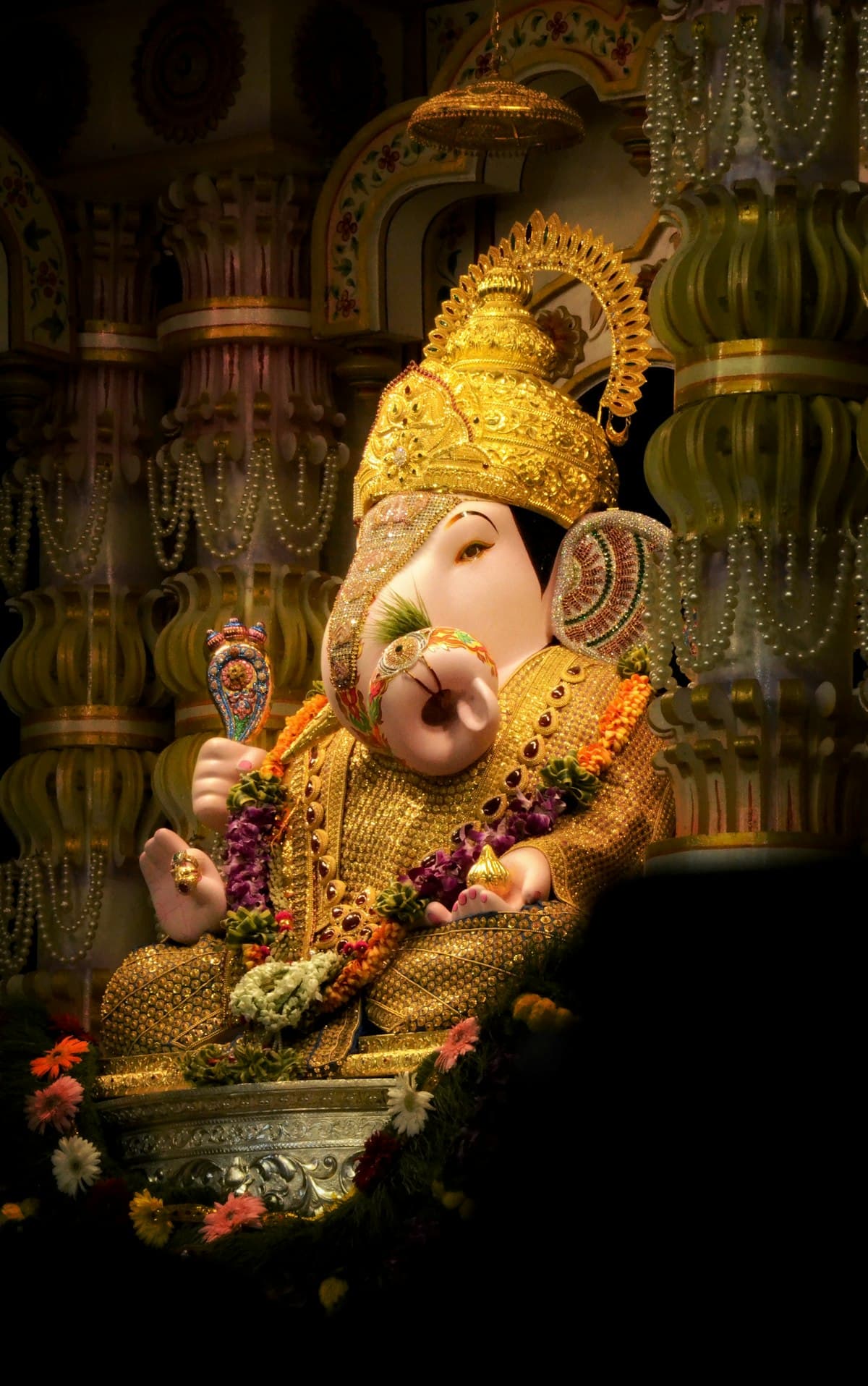
Ganesh Chaturthi 2026, which began on Monday, September 14, concludes with Anant Chaturdashi visarjan on Friday, September 25. The 10-day festival — the longest of all Hindu festivals — marks Lord Ganesha's stay in devotees' homes and community pandals before returning to Mount Kailash. This wrap-up covers Anant Chaturdashi's religious significance, the visarjan (immersion) rituals, the shift toward eco-friendly immersion, and how NRI diaspora communities marked the festival this year.
What is Anant Chaturdashi?
Anant Chaturdashi falls on the Chaturdashi (14th day) of the Shukla Paksha (bright fortnight) of Bhadrapada month — the 10th day of Ganesh Chaturthi. It is:
- The day Lord Ganesha (represented by the clay idol) is ceremonially immersed in a water body
- Devotees pray to Lord Anant (a form of Lord Vishnu) on this day and tie a 14-knotted sacred thread (Ananta Vratha)
- Symbolises the cyclical journey of the divine — Ganesha departs to Kailash, blessing devotees to return next year
- Considered spiritually auspicious for making vows and offering devotion to Ananta (the infinite)
The Visarjan Ritual
Traditional Ganesh visarjan involves:
- Uttarpuja — a farewell puja to Ganesha with flowers, kumkum, akshat, aarti, and modak
- Formal visarjan procession — the family/community carries the idol to a water body accompanied by dhol, cymbals, dance, and chants of
Is Ganesh Chaturthi 2026 today?
Ganesh Chaturthi 2026 is Monday, September 14, 2026. If you are reading this on September 14, then yes — Vinayaka Chavithi is today. If you are reading between September 14 and September 25 (Anant Chaturdashi), the 10-day festival is ongoing. NRIs in Australia + New Zealand may observe on Tuesday, September 15 depending on their Panchang.
What time is Ganesh Chaturthi puja muhurat for 2026?
The Madhyahna muhurat (mid-day worship window) on Monday, September 14, 2026 is the traditional window for Ganesha idol pran-pratishtha. Exact times vary by location — verify with your local Panchang or temple. NRIs abroad typically time their puja to fit local family schedules while observing the mid-day window in their time zone.
"Ganpati Bappa Morya, Pudhchya Varshi Lavkar Ya!" (Lord Ganesha, come again soon next year!)Advertisement - Immersion (visarjan) — the clay idol is submerged in flowing water (river/sea/lake or tank), symbolising Ganesha's return to Kailash
- Anant vratha katha — reading of the Anant Chaturdashi story, tying the 14-knot sacred thread
Eco-Friendly Visarjan — The 2026 Reality
Traditional Ganesh visarjan uses Plaster-of-Paris (PoP) idols painted with heavy-metal pigments, which severely pollute water bodies. In recent years, there has been a strong shift toward eco-friendly alternatives:
- Clay Ganesha idols — biodegradable; dissolves in water within hours without pollution
- At-home immersion — devotees immerse the clay idol in a large bucket at home; the resulting water + clay is either used to water plants or gently dispersed in a garden
- Municipal artificial visarjan tanks — dedicated tanks in Delhi, Mumbai, Bengaluru, Hyderabad, Chennai to reduce natural water-body contamination
- Symbolic visarjan — NRI communities abroad often use symbolic backyard immersion, temple tanks, or beach dispersal (where local rules permit)
Mumbai's Ganesh Visarjan vs Diaspora Observance
Mumbai (the epicenter)
- Lakhs of families and community pandals conduct visarjan on Anant Chaturdashi
- Iconic Lalbaugcha Raja and Ganesh Galli visarjan processions draw millions
- BMC deploys thousands of personnel for crowd management, immersion coordination, and safety
- 2026 visarjan concludes on Sept 25 with typical late-evening + all-night processions
Diaspora NRI observance (this year)
- BAPS Akshardham America (Robbinsville NJ) — 10-day festival with grand community aarti + prasad throughout
- Sri Venkateswara Temple (Bridgewater NJ) — traditional puja + symbolic visarjan on Sept 18
- ISKCON temples (Global) — Vaishnav-style Ganesh celebrations culminating in symbolic visarjan
- Toronto (BAPS Etobicoke, Vishnu Mandir Richmond Hill) — community 10-day observance + symbolic visarjan in temple tanks
- Sydney (Sri Venkateswara Helensburgh, BAPS Sydney) — grand festival culmination Sept 18
- London (BAPS Neasden) — Vaishnav-tradition Ganesh observance + Anant Chaturdashi
- Melbourne (Shri Shiva Vishnu Carrum Downs) — 10-day observance + community visarjan
The Ananta Vratha (Sacred Thread Ritual)
Anant Chaturdashi is also observed as Anant Chaturdashi Vrat — a vow to Lord Vishnu (Anant, the Infinite). Devotees:
- Take a ritual bath and wear clean clothes (traditionally yellow)
- Establish a small kalash with mango leaves + coconut representing Ananta
- Perform archana with 108 names of Vishnu
- Tie a 14-knotted sacred thread (Anant Suthram) on the right wrist (men) or left wrist (women)
- Read the Ananta Vratha Katha (story from Mahabharata)
- Break fast with a full satvik meal shared with family
"Ganpati Bappa Morya, Pudhchya Varshi Lavkar Ya!"
The traditional visarjan chant translates to "Lord Ganesha, come again soon next year!" It embodies the emotional heart of the festival — the joy of Ganesha's stay, tempered by the sadness of goodbye, and the hope of his return.
For NRIs abroad, this chant carries an extra layer of longing — for home, for family, for the community pandal, for the Mumbai monsoon-tinged air. Ganesh Chaturthi is one of the few festivals where the diaspora observance visibly borrows from the Maharashtra tradition of daily aartis and community involvement.
After Visarjan — What Comes Next in the Festival Calendar?
- Ashwin month begins (~Sept 20) — leading to Pitru Paksha (ancestor-remembrance fortnight)
- Navratri starts Oct 13, 2026 — 9 nights of Durga worship; see our Dussehra Navratri 2026 Complete NRI Guide
- Dussehra (Vijayadashami) — Oct 21, 2026
- Diwali (Lakshmi Puja) — Sunday, Nov 8, 2026
Complete Ganesh Chaturthi 2026 NRI Coverage — All 10 Guides
Ganesh Chaturthi 2026 begins on Monday, September 14 and concludes with Anant Chaturdashi on Friday, September 25. Explore our complete 10-part NRI coverage:
- Ganesh Chaturthi 2026 Puja Vidhi + Muhurat + 21 Modak Complete Guide
- Ganesh Chaturthi 2026 in Toronto — Temples + Community Events
- Ganesh Chaturthi 2026 in Sydney + Melbourne Australia
- Ganesh Chaturthi 2026 in New Jersey + NYC — Biggest USA Events
- 21 Modak Varieties + Recipes for NRI Families
- Ganesh Chaturthi Mantras, Slokas + Sanskrit Chants
- Ganesh Chaturthi for Kids Born Abroad — Activities + Stories + Crafts
- Sri Vinayaka Chavithi vs Ganesh Chaturthi — Regional Differences
- Ganesh Visarjan Abroad 2026 — Country-by-Country Rules (US/UK/CA/AUS/Gulf)
Related NRI Globe Ganesh Chaturthi Coverage
- Ganesh Chaturthi 2026 Puja Vidhi + Muhurat + Mantras Guide
- Ganesh Chaturthi 2026 in Toronto
- Ganesh Chaturthi 2026 in New Jersey + NYC
- Ganesh Chaturthi 2026 in Sydney + Melbourne
- 21 Modak Recipes for NRI Families
- Dussehra Navratri 2026 NRI Guide (Next Festival)
Frequently Asked Questions
When is Anant Chaturdashi 2026?
Anant Chaturdashi 2026 falls on Friday, September 25 — the 10th day of Ganesh Chaturthi. It marks the ceremonial visarjan (immersion) of Ganesha idols and is also observed as a vow to Lord Anant (Vishnu).
Why is Ganesh visarjan done in water?
Visarjan in water symbolises Lord Ganesha's return to Kailash after his 10-day visit to devotees' homes. Water represents the eternal source; the dissolving clay idol represents the transient physical form returning to the cosmic ocean.
What is the Ananta Vratha sacred thread?
The Ananta Suthram is a 14-knotted sacred thread tied on Anant Chaturdashi as part of a vow to Lord Anant (Vishnu). Men tie it on the right wrist, women on the left. The 14 knots represent Vishnu's 14 forms.
Can NRIs do Ganesh visarjan at home?
Yes. NRIs with clay Ganesha idols perform symbolic home visarjan by immersing the idol in a large bucket at home. The dissolved clay + water is then used to water plants or gently dispersed in a garden or private waterway (check local rules).
How do NRI communities abroad conduct Ganesh visarjan?
Most NRI temples conduct symbolic visarjan in temple tanks rather than natural water bodies. BAPS, ISKCON, Sri Venkateswara, and community temples in USA/UK/Canada/Australia hold community aarti + symbolic immersion on Anant Chaturdashi.
The chant
What is the correct date for Ganesh Chaturthi 2026?
Ganesh Chaturthi 2026 is Monday, September 14, 2026 per widely-referenced Hindu Panchang. Some far-eastern time zones (Australia + New Zealand) may observe on Tuesday, September 15, 2026 depending on their specific Panchang. Confirm with your local temple or family purohit.
When does Ganesh Chaturthi 2026 conclude?
The 10-day festival concludes on Anant Chaturdashi — Friday, September 25, 2026 — with the visarjan (immersion) ceremony. Bhajans, kirtans, and community celebrations run throughout the 10-day observance.
Why do NRI temples hold main events on the weekend rather than September 14?
Since Ganesh Chaturthi 2026 falls on a Monday and Anant Chaturdashi on a Friday, most NRI diaspora temples in USA, UK, Canada, and Australia hold their main public celebrations on the surrounding weekends (Sept 12-13 and Sept 26-27, 2026) so working families and schoolchildren can attend. Check your temple's calendar for their specific event date.
"Ganpati Bappa Morya, Pudhchya Varshi Lavkar Ya!" means: "Lord Ganesha, come again soon next year!"Deeper Devotional Reading on Hindutone
For the ritual, scriptural and spiritual side of Ganesh Chaturthi — mantras, katha, spiritual meaning, temple lore and community devotion — our sister publication Hindutone covers Ganesh Chaturthi in depth:
- Ganesh Chaturthi Hub on Hindutone — the complete festival category with pujas, aartis, katha and rituals.
- Ganesh Mandapam Dos and Don’ts — a traditional guide to correct mandapam setup and worship etiquette.
- Ganesh Nimajjanam in Mumbai — the world’s largest Visarjan and its living traditions.
- Ganesh Nimajjanam in Hyderabad — Khairatabad, Tank Bund and the Telangana Visarjan story.
- The Deeper Spiritual Meaning of the Syamantaka Story — a contemplative reading of the moon-viewing avoidance and mithya dosha.
- Importance of the Ganesh Mantra “Vakratunda Mahakaya” — the meaning and power of the foundational Ganesh sloka.
- The Birth Story of Lord Ganesha — the classical Puranic account of the elephant-headed God.
- The Five Stories of Ganesh Chaturthi — the myths and legends behind the ten-day festival.
- Ganesh Festival’s Role in India’s Freedom Struggle — how Lokmanya Tilak transformed it into a public celebration.
- Shree Siddhivinayak Temple — the story and darshan of Mumbai’s most-visited Ganesh shrine.
NRI Globe focuses on diaspora practicalities — permissions, kits, community celebrations, recipes, songs and city guides. Hindutone focuses on the deeper devotional side — mantras, katha, temples and rituals. Together they cover the full Ganesh Chaturthi experience for Hindu families around the world.
Related NRI Globe Coverage
- Ganesh Visarjan on Anant Chaturdashi (September 25, 2026): Home + Community Tank Guide for NRIs in the USA
- Ganesh Chaturthi to Ananta Chaturdashi: The Cycle of Creation and Dissolution
- How NRIs Can Perform Ganesh Nimarjanam (Visarjan) in the USA — Complete Eco-Friendly Guide 2026
- Top Telugu, Tamil and Kannada Ganesh Songs for NRI Families | Ganesh Chaturthi 2026
- Best Bollywood Ganesh Chaturthi Songs for NRIs — The Ultimate Ganpati Playlist (USA, UK, Canada, Australia, Dubai)
- The Moon on Ganesh Chaturthi 2026 — Why It Must Not Be Seen, the Syamantaka Katha & the Mantra If You Do
- Ganesh Visarjan Permissions for NRIs 2026 — State-by-State City Guide (USA, UK, Canada & Australia)
- Ganesh Chaturthi and NRI Kids — The Questions Nobody Prepares You For (Answering the Hard Ones)
Fresh from NRI Globe
- YouTuber Nandu's World (Rama Nandana) UK Visa & Job Fraud Case: Full Details + Key Lessons for NRIs (2026)
- Dussehra / Vijayadashami 2026 Events Country-Wise — Global NRI Directory (Ram Lila, Ravana Dahan, Durga Puja Pandals, Ayudha Puja Venues + Booking)
- Diwali 2026 Events Country-Wise — Global NRI Directory (White House, Leicester, London Trafalgar, Toronto, Auckland, Sydney Parramasala, Fiji, Mauritius, Trinidad, South Africa and More)
- Diwali / Deepavali 2026 Country-Wise NRI Celebrations — Complete Global Guide (USA, UK, Canada, Australia, Fiji, Mauritius, Trinidad, South Africa, UAE and 30+ Countries)