
TL;DR
- On December 13, 2025, a gunman opened fire at Brown University's Barus and Holley building, killing two students and injuring nine others.
- The prime suspect, Claudio Manuel Neves-Valente, 48, is also linked to the December 15 shooting death of MIT nuclear fusion researcher Nuno F.G. Loureiro in Brookline, Massachusetts.
- Neves-Valente was found dead from an apparent self-inflicted gunshot wound in a storage unit in Salem, New Hampshire, ending a multi-state manhunt.
- Authorities found firearms and additional evidence at the scene; no accomplices have been identified.
- The incidents have heightened campus safety concerns among international students and NRI academic communities across the United States.
What Happened at Brown University
Finals week at Brown University turned catastrophic on December 13, 2025. A gunman entered the Barus and Holley building on the Providence, Rhode Island campus and opened fire inside an auditorium where students had gathered.
Two students were killed: 19-year-old Ella Cook and 18-year-old Mukhammad Aziz Umurzokov. Nine others were wounded. Most of the injured have since been discharged from hospital, according to university officials.
The attacker fled the scene immediately after the shooting, triggering a coordinated, multi-state law enforcement response involving Rhode Island state police, the FBI, and local agencies across New England.
Brown University President Christina Paxson later confirmed that the suspect, Claudio Manuel Neves-Valente, had briefly enrolled in the university's physics Ph.D. program in 2000–2001 before withdrawing. No further academic or professional connection between Neves-Valente and the Brown victims has been established.
The Barus and Holley building is a central hub for Brown's School of Engineering and houses lecture halls, faculty offices, and research laboratories. Its location on the main academic corridor of the campus means it draws heavy foot traffic during exam periods — a detail that likely contributed to the number of people present at the time of the attack. Brown's campus emergency alert system dispatched notifications to enrolled students and staff in the immediate aftermath of the first reports, consistent with the university's standard public safety protocols.
The MIT Professor's Killing Two Days Later
On December 15, 2025, prominent MIT plasma physicist and nuclear fusion researcher Nuno F.G. Loureiro, 47, was shot dead at the entrance of his home in Brookline, Massachusetts. Loureiro was a full professor at MIT and director of the Theory Group at MIT's Plasma Science and Fusion Center.
Investigators identified three key pieces of evidence connecting Neves-Valente to both crimes:
- A rental car registered in Neves-Valente's name was spotted near both crime scenes.
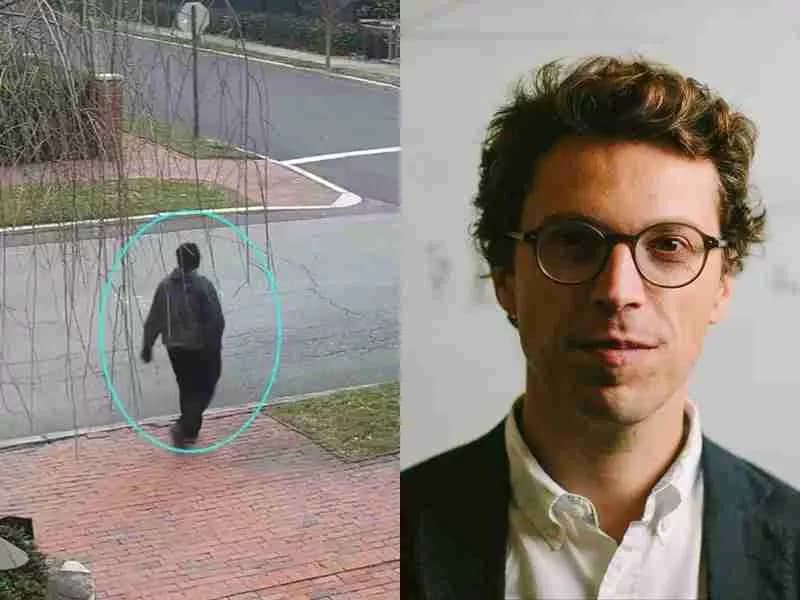
- Surveillance footage from the Brookline area matched the suspect's physical description.
- Both Neves-Valente and Professor Loureiro had studied in Lisbon, Portugal, years earlier — a detail that led investigators to consider a personal motive in the MIT killing.
Loureiro was widely recognised within the international fusion research community for his contributions to plasma science. MIT's Plasma Science and Fusion Center, where he led the Theory Group, is affiliated with the U.S. Department of Energy's fusion energy sciences program, and his work addressed foundational challenges relevant to the development of commercial nuclear fusion reactors. MIT News and the Plasma Science and Fusion Center have both acknowledged his standing as a leading figure in the field.
Authorities have stated publicly that no known connection exists between Neves-Valente and the Brown University victims, and the motive for that attack remains under active investigation, according to officials cited by multiple news outlets covering the case.
How the Manhunt Ended
Public tips proved decisive. Social media alerts about a suspicious rental vehicle helped investigators narrow their search to Salem, New Hampshire. Law enforcement traced the car to a commercial storage facility in the town.
Upon entering the storage unit, officers discovered Neves-Valente's body. He had died from what authorities described as a self-inflicted gunshot wound. Firearms and additional physical evidence tying him to both the Brown shooting and the Loureiro killing were recovered at the scene.
Rhode Island Attorney General Peter Neronha, Providence Mayor Brett Smiley, and senior law enforcement officials from multiple agencies commended the inter-agency coordination that brought the case to a close within six days of the initial attack. Both officials addressed the public following the discovery of the suspect, expressing relief that the immediate threat had ended and reaffirming the commitment of their offices to a thorough investigation into motive and circumstances.
The six-day interval between the first shooting and the suspect's discovery is notable in the context of active-threat investigations. The FBI's involvement alongside state and local agencies reflects a protocol established under the bureau's Active Shooter Resources program, which coordinates multi-jurisdictional responses when incidents cross state lines or involve federal interests such as university research facilities. The recovery of multiple firearms at the Salem storage unit, as reported by law enforcement sources, suggests Neves-Valente had prepared for an extended period of evasion.
Timeline of Events
| Date | Event | Location |
|---|---|---|
| December 13, 2025 | Shooting at Barus and Holley building; 2 killed, 9 injured | Brown University, Providence, RI |
| December 15, 2025 | MIT Professor Nuno Loureiro shot dead outside his home | Brookline, MA |
| December 15–19, 2025 | Multi-state manhunt; public tips identify rental vehicle | New England region |
| December 19, 2025 | Suspect Neves-Valente found dead in storage unit | Salem, NH |
Who Was Claudio Manuel Neves-Valente
Neves-Valente was a 48-year-old man of Portuguese origin. He briefly attended Brown University's physics doctoral program in 2000–2001 but did not complete the degree. His activities and whereabouts in the intervening decades are still being reconstructed by investigators.
His shared background with Professor Loureiro — both men had studied in Lisbon, Portugal — has led authorities to explore whether a long-standing personal grievance drove the targeted killing of the MIT scientist. That line of inquiry remains open, and no formal conclusions about motive had been publicly announced as of the time of reporting.
Investigators are examining the nature and extent of any prior contact between the two men, though no confirmed details have been released by law enforcement or verified through named newsroom reporting. The shared Portuguese academic background remains one of the few publicly established links between Neves-Valente and his alleged victim.
The gap between Neves-Valente's departure from Brown in 2001 and the 2025 attacks spans nearly a quarter century. Investigators and forensic psychologists consulted by law enforcement in similar cases have noted that grievances rooted in academic failure or perceived professional injustice can persist for decades before manifesting in violence — though no such profile has been officially confirmed as applicable here. What is confirmed is that Neves-Valente left no known public record of employment, academic publication, or professional affiliation in the years following his withdrawal from Brown.
Impact on NRI and International Academic Communities
The back-to-back attacks at two of America's most prestigious research universities sent an immediate ripple through Indian and broader international student communities. Brown University and MIT together host thousands of students and faculty from India and South Asia — many of them in STEM doctoral programs similar to those at the center of these events.
Several NRI community organizations in the Boston and Providence areas have circulated mental health and counseling resources in the days since the shooting. The Indian Consulate in New York and the Consulate General in Boston have both encouraged students and faculty to register their contact details through the MADAD portal maintained by India's Ministry of External Affairs, which provides consular assistance to Indian nationals abroad.
For Indian students on F-1 or J-1 visas, a campus emergency can create practical complications beyond the immediate trauma. Visa status is tied to enrollment continuity; if a university suspends in-person instruction or closes a department temporarily in the aftermath of a violent incident, students should contact their Designated School Official (DSO) promptly to understand how any enrollment interruption is recorded with U.S. Citizenship and Immigration Services. The Study in the States portal maintained by the U.S. Department of Homeland Security provides guidance on maintaining lawful student status during institutional disruptions.
Campus safety has become a sharper concern. Reports drawing on FBI Uniform Crime Report data suggest that active-shooter incidents on U.S. college campuses have increased in frequency over the past decade, though elite research universities have historically reported lower rates than community colleges and open-campus institutions. Families and students are encouraged to consult resources published by the FBI Active Shooter Resources program for the most current guidance.
For NRI families with children enrolled at U.S. universities, these events reinforce the value of staying connected with campus emergency alert systems. Most major universities, including Brown and MIT, operate opt-in SMS and email alert programs that notify students and staff of active threats in real time. Families based in India can also monitor real-time safety advisories issued by the Ministry of External Affairs for Indian nationals in the United States.
The death of Professor Loureiro carries particular resonance for the Indian academic diaspora. India has a substantial presence in U.S. plasma physics and fusion research communities, with Indian-origin scientists holding senior positions at national laboratories and university fusion centers affiliated with the DOE's fusion energy sciences program. The targeted killing of a senior researcher at his home raises questions about personal security protocols that many academics — accustomed to open, publicly accessible professional profiles — have not previously had reason to consider. It has also prompted informal conversations within NRI professional networks about the adequacy of safety measures for researchers whose institutional affiliations and home addresses are publicly listed.
What Brown and MIT Have Said
Brown University President Christina Paxson issued a statement confirming Neves-Valente's brief enrollment history and expressing condolences to the families of Ella Cook and Mukhammad Aziz Umurzokov. The university has pledged ongoing support for students and staff affected by the tragedy. Reports from Brown's official communications indicate that expanded counseling services and dedicated support for international students have been made available, with students directed to relevant campus offices for assistance.
MIT released a statement mourning Professor Loureiro, describing him as a leading figure in plasma physics and nuclear fusion research whose work had significant implications for clean energy development. The MIT Plasma Science and Fusion Center also issued a separate tribute acknowledging his contributions to the Theory Group and the broader fusion science community. The full text of both statements is available through MIT News and the university's official channels.
Both universities have indicated they are reviewing their campus access and visitor screening protocols in light of the incidents. Brown, in particular, faces questions about how a former student who withdrew more than two decades ago was able to enter a campus building during a high-traffic exam period without triggering any prior alert. Reports suggest a formal security review is underway, though specific policy changes had not been publicly announced as of the time of writing. Updates are expected to be published through Brown University's official communications.
Next Steps
- Follow official updates from the Rhode Island Attorney General's office as the investigation into motive continues.
- International students and NRI faculty at U.S. universities should register with the MADAD consular portal for emergency assistance.
- F-1 and J-1 visa holders affected by campus disruptions should consult their DSO and review guidance on the DHS Study in the States portal to protect their enrollment status.
- Enroll in your university's campus emergency alert system — check your institution's public safety website for opt-in instructions.
- Those experiencing distress following these events can contact the 988 Suicide and Crisis Lifeline (call or text 988 in the U.S.) for free, confidential support.
- Monitor updates from Brown University and MIT for campus safety policy changes in response to these events.
Sources
- Rhode Island Attorney General — Official Statements
- Brown University — Official Communications
- MIT News — Official University Statements
- MADAD Portal — Ministry of External Affairs, Government of India
- 988 Suicide and Crisis Lifeline — SAMHSA
- FBI Active Shooter Resources Program
- Study in the States — U.S. Department of Homeland Security
- Ministry of External Affairs, Government of India