
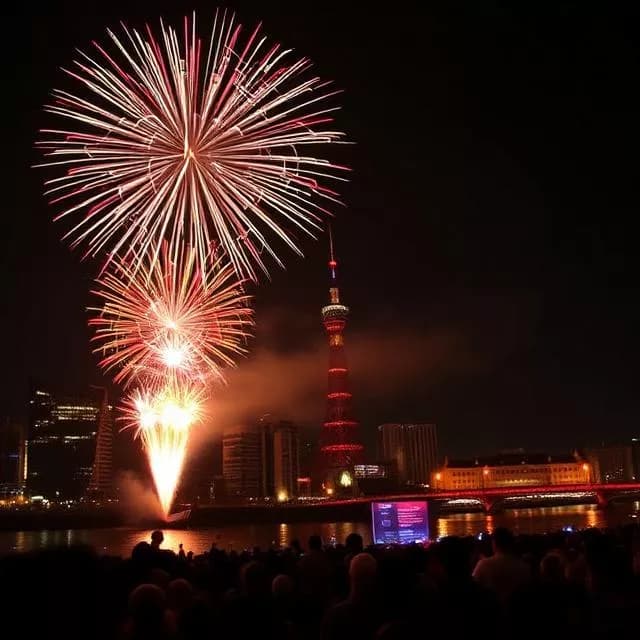
For NRI households, Christmas is one of the few global celebrations that lands consistently across the major destination markets — and the country-by-country differences in how it's observed shape NRI family logistics every year. This is a 2026 country-by-country guide for NRIs covering how Christmas unfolds in the USA, UK, Canada, Australia, Germany, Switzerland, New Zealand, and other major NRI markets — what stores stay open, where Indian community celebrations happen, how family-time-with-parents-in-India coordinates with the season, and the practical patterns that consistently work.
Why this matters for NRIs specifically
Christmas season runs from late November through early January and overlaps with the Indian festival calendar — Margashirsha month, the Sankashti / Vaikuntha Ekadashi observances, and the December-January transition. For NRI households this creates specific planning constraints:
- December India visits — often the chosen month for parent visits + grandchild bonding + winter weddings, but the airline pricing peaks and Indian wedding season collides with country-of-residence school breaks.
- Store-hour patterns differ wildly by country on Christmas Eve and Christmas Day — affects last-minute purchases, prescription pickup, grocery runs.
- Indian community events happen across the major metros in each NRI destination — local temple celebrations, community potlucks, regional sammelans.
- Time-difference family calls with parents in India — Christmas Eve dinner in the US coincides with very early Christmas morning in India.
USA — Christmas 2026
The store-hour reality
- Christmas Eve (December 24): Most national retailers operate reduced hours, typically closing by 5–7 PM. Walmart, Target, Costco, Trader Joe's, Whole Foods follow this pattern.
- Christmas Day (December 25): Most major retail closed. Exceptions: gas station convenience stores, select pharmacy chains in major metros, hospital pharmacies, and many ethnic grocery stores (Indian / Asian / Latin) in major metros stay open.
- December 26 onwards: Resumes regular hours; Boxing Day sales not as universal as in Canada / UK / Australia.
Indian community celebrations
- Major Indian temples (BAPS, Sri Venkateswara temples, ISKCON) typically schedule Christmas-eve / Christmas-day pujas + community lunches across the major metros — New Jersey / Houston / Dallas / Bay Area / Chicago / Atlanta / Seattle.
- Regional cultural organisations (Telugu/Tamil/Hindi/Bengali/Gujarati sammelans) often run year-end gatherings overlapping with the December break.
- Christian Indian communities (Kerala / Goan / North-East Indian) hold parish midnight mass services with carol singing in Malayalam, Hindi, Tamil.
NRI family planning patterns
- Many H-1B and Green Card holders coordinate end-of-year India trips with December break — but airline pricing is highest of the year (often 60–100% above shoulder-season rates).
- Cross-trip alternative: parents-to-US visits coinciding with December (B-2 visa cycle planning + winter clothing).
- Tax-year-end financial coordination: Roth IRA conversions, FBAR-related disclosures planning, year-end Indian-source-income reconciliation.
UK — Christmas 2026
The store-hour reality
- Christmas Eve (December 24): Most major supermarkets and high-street stores close by 4–6 PM. Tesco, Sainsbury's, Asda, Morrisons, Waitrose follow this pattern.
- Christmas Day (December 25): Almost complete retail shutdown. Most supermarkets, high-street chains, restaurants closed. Exceptions: gas-station convenience and some petrol stations, select cinemas, hospital cafés.
- Boxing Day (December 26): Major sales day with most stores opening — but variably; many start later (10–11 AM) and close earlier.
Indian community celebrations
- BAPS Swaminarayan Mandir Neasden, ISKCON Bhaktivedanta Manor, and major regional temples (Birmingham, Leicester, Manchester) typically schedule community gatherings.
- Sikh gurudwaras run langar throughout December; many open Christmas Day to serve community + non-Indian neighbours.
- Indian-origin Christian congregations (Malayalee / Goan / Anglo-Indian) celebrate midnight mass and Christmas morning services across London / Birmingham / Manchester / Leicester.
- Leicester's substantial Indian Gujarati community runs significant year-end gatherings overlapping with festive season.
NRI family planning patterns
- UK NRIs commonly travel to India over the December break — Heathrow / Gatwick / Manchester direct connections to Delhi / Mumbai / Hyderabad / Bangalore / Chennai / Cochin.
- Returning UK-domiciled NRIs coordinate Self Assessment + UK / India tax-year-end planning around the festive break.
- School break aligns with travel — UK schools typically close mid-December through early January.
Canada — Christmas 2026
The store-hour reality
- Christmas Eve (December 24): Reduced hours; most major chains close by 5–6 PM.
- Christmas Day (December 25): Major retail closed by provincial regulation in most provinces (Ontario, Quebec, Manitoba, Saskatchewan, BC). Some convenience and ethnic grocery stays open.
- Boxing Day (December 26): Major sales day across all provinces.
Indian community celebrations
- Toronto / Mississauga / Brampton — substantial Indian / Punjabi / Tamil populations; multiple temples + gurudwaras schedule community events.
- Vancouver / Surrey — large Punjabi-Sikh community; gurudwara community langar through the festive week.
- Montreal / Calgary / Edmonton / Ottawa — smaller but active Indian diaspora communities.
- BAPS Toronto, ISKCON Toronto, Vishnu Mandir Richmond Hill, several large Sikh gurudwaras across GTA all run scheduled events.
NRI family planning patterns
- Canadian NRIs commonly time India visits with December break for combined family + winter relief.
- Toronto-to-Delhi / Mumbai direct flights peak in pricing across this window.
- Permanent Residency / citizenship-track residents balance Canadian winter logistics with India trip planning.
Australia — Christmas 2026
The store-hour and seasonal reality
- Christmas is summer in Australia — beach celebrations, BBQ Christmas dinners, summer fashion, very different climate-driven aesthetic from northern-hemisphere countries.
- Christmas Eve (December 24): Most stores close earlier (typically 6 PM); some extended retail until 8 PM in major metros.
- Christmas Day (December 25): Major retail closed; petrol stations and select convenience open. Beach culture means many Australian families spend the day outdoors.
- Boxing Day (December 26): One of the biggest retail sales days; very busy.
Indian community celebrations
- Sydney / Melbourne / Brisbane / Perth — substantial Indian / Sri Lankan / Pakistani communities; multiple temples + cultural organisations schedule events.
- Indian Australian Christian communities run carol services and midnight mass.
- Year-end Garba / Diwali-extension events common in some Gujarati communities.
NRI family planning patterns
- Australian NRIs balance summer-school-break + tropical climate enjoyment — many local Christmas + early January India trips.
- Direct flights Sydney / Melbourne / Perth to Delhi / Mumbai / Chennai peak in pricing.
- Australian financial year (1 July–30 June) means tax year-end is not aligned with Christmas — less calendar-end financial coordination.
Germany — Christmas 2026
The store-hour reality
- Heilige Abend (December 24): Most retail closes by 1–2 PM — earliest closing in major NRI markets.
- Weihnachten (December 25–26): Major retail closed both days (Erster + Zweiter Weihnachtstag — two-day public holiday).
- Christmas markets (Weihnachtsmärkte) across Munich / Berlin / Hamburg / Frankfurt / Cologne run mid-November through Christmas Eve.
Indian community celebrations
- Frankfurt / Berlin / Munich — growing Indian IT-professional populations; cultural organisations + temples run year-end events.
- BAPS / ISKCON / Tamil cultural organisations have presence in major German metros.
- Indian Christian communities run festive services.
NRI family planning patterns
- Indian H-1B / Blue Card / EU Blue Card families have growing presence in German tech hubs.
- Travel patterns to India through Frankfurt / Munich — Lufthansa is the main carrier; peak-pricing December break.
Switzerland — Christmas 2026
- Strong Christian-traditional Christmas culture; Christmas markets in Zurich / Geneva / Basel / Bern.
- Stores close early on December 24; major retail closed December 25 (and often December 26 — depending on canton).
- Indian community in Zurich / Geneva — growing tech and finance professional cluster; cultural organisations run year-end events.
- Family-tier visa planning patterns similar to Germany.
New Zealand — Christmas 2026
- Christmas Day public holiday; Boxing Day public holiday.
- Auckland / Wellington / Christchurch — growing Indian / Punjabi / Tamil populations.
- Direct flights to India limited (typically via Singapore / Hong Kong / Sydney); plan accordingly.
- Summer Christmas — similar climate dynamics as Australia.
Other NRI destinations — quick country notes
- UAE / Dubai: Christmas observed with hotel + restaurant celebrations; not a public holiday in the same way; most retail operates normal hours; Indian-Christian community celebrates parish services.
- Singapore: Christmas Day public holiday; Orchard Road decorations major attraction; strong Indian-Singaporean community gatherings.
- Ireland: Strong Christian-traditional Christmas; major retail shutdown December 25 + St Stephen's Day December 26; growing Indian community in Dublin / Cork.
- Hong Kong: Christmas Day public holiday; strong Indian-Hong-Kong-business community.
- Japan: Christmas not public holiday but commercially observed; Indian community growing in Tokyo / Yokohama.
Country-by-country reality check — quick reference table
| Country | Christmas Eve store hours | Christmas Day major retail | Boxing Day sales | India direct flight peak |
|---|---|---|---|---|
| USA | Until 5–7 PM | Mostly closed | Less universal | Highest of year |
| UK | Until 4–6 PM | Almost all closed | Major sales day | Peak pricing |
| Canada | Until 5–6 PM | Provincially closed | Major sales day | Peak pricing |
| Australia | Until 6 PM (later in metros) | Mostly closed | One of biggest of year | Peak pricing |
| Germany | Until 1–2 PM | Closed (2 public holidays) | Closed | Peak via Frankfurt |
| Switzerland | Until 1–2 PM | Closed | Varies by canton | Limited direct |
| NZ | Until 6 PM | Closed | Major sales day | Via Singapore / Sydney |
NRI-specific Christmas planning tips
- If traveling to India: Book flights 4–6 months ahead for the December break to lock prices before the late-November surge.
- If parents visiting from India: Coordinate B-2 (US) / standard visitor visa (UK / Canada / AU) timing 2–3 months ahead.
- If staying in country of residence: Identify local Indian temples + cultural-organisation events early (often booked out by mid-December).
- For financial planning: Year-end is the natural break for FBAR / Schedule FA / Self Assessment / T1135 reconciliation; coordinate with your cross-border tax advisor before Christmas break.
- For families with school-going children: Coordinate India visit + grandparent time + school break — the December window remains the highest-value family-coordination time of year.
Final thoughts
Christmas in NRI households across the major destination markets is a layered occasion — the country-of-residence celebrations + the Indian community gatherings + the India family coordination all happen simultaneously. The country-by-country store-hour patterns, community celebration calendars, and travel-pricing realities each shape practical NRI family planning. The most-leveraged NRI Christmas practice is treating the season as a 4–6-week planning window rather than a 1-day event — book flights early, identify local temple / community events early, coordinate financial year-end consistently.
For broader NRI festival framework, NRI Globe's 2026 festival calendar covers the year-round patterns. For India-travel coordination, see the NRI annual compliance calendar. For NRI banking and tax planning that lands in the year-end window, see the NRI tax filing guide.
Informational only — store hours, public holiday observances, and community event schedules change year-to-year. Verify current schedules with specific store websites and local Indian community organisations before planning.
Continue reading — NRI Globe pillar guide: Canada Express Entry for Indians
Related NRI Globe Coverage
- Ganesh Chaturthi Celebrations Around the World: How USA, UK, Canada, and Beyond Honor Lord Ganesha
- Krishna Janmashtami 2026 Around the World: NRI Global Guide (UAE, Singapore, Malaysia, New Zealand, South Africa, Europe & More)
- 100 Sacred Lord Shiva Temples Around the World
- Beyond India: How Diwali is Celebrated Around the World
- Diwali / Deepavali 2026 Country-Wise NRI Celebrations — Complete Global Guide (USA, UK, Canada, Australia, Fiji, Mauritius, Trinidad, South Africa, UAE and 30+ Countries)
- Dussehra / Vijayadashami 2026 Country-Wise NRI Celebrations — USA, UK, Canada, Australia, New Zealand, UAE, Singapore, Germany, Netherlands and More
- Dussehra / Vijayadashami 2026 NRI Guide — Puja, Ravana Dahan, Family Celebrations (USA, UK, Canada, Australia)
- Diwali 2026 Complete Guide for NRIs — Dates, Puja Vidhi, Decorations, Gifts, Family Celebrations (USA, UK, Canada, Australia)
Fresh from NRI Globe
- YouTuber Nandu's World (Rama Nandana) UK Visa & Job Fraud Case: Full Details + Key Lessons for NRIs (2026)
- Dussehra / Vijayadashami 2026 Events Country-Wise — Global NRI Directory (Ram Lila, Ravana Dahan, Durga Puja Pandals, Ayudha Puja Venues + Booking)
- Diwali 2026 Events Country-Wise — Global NRI Directory (White House, Leicester, London Trafalgar, Toronto, Auckland, Sydney Parramasala, Fiji, Mauritius, Trinidad, South Africa and More)
- US Crime News 2026 — Top Trend Categories NRIs Are Watching (Organized Retail Theft, Auto Theft, Cybercrime, Hate Crimes, Fentanyl, AI-Enabled Fraud)